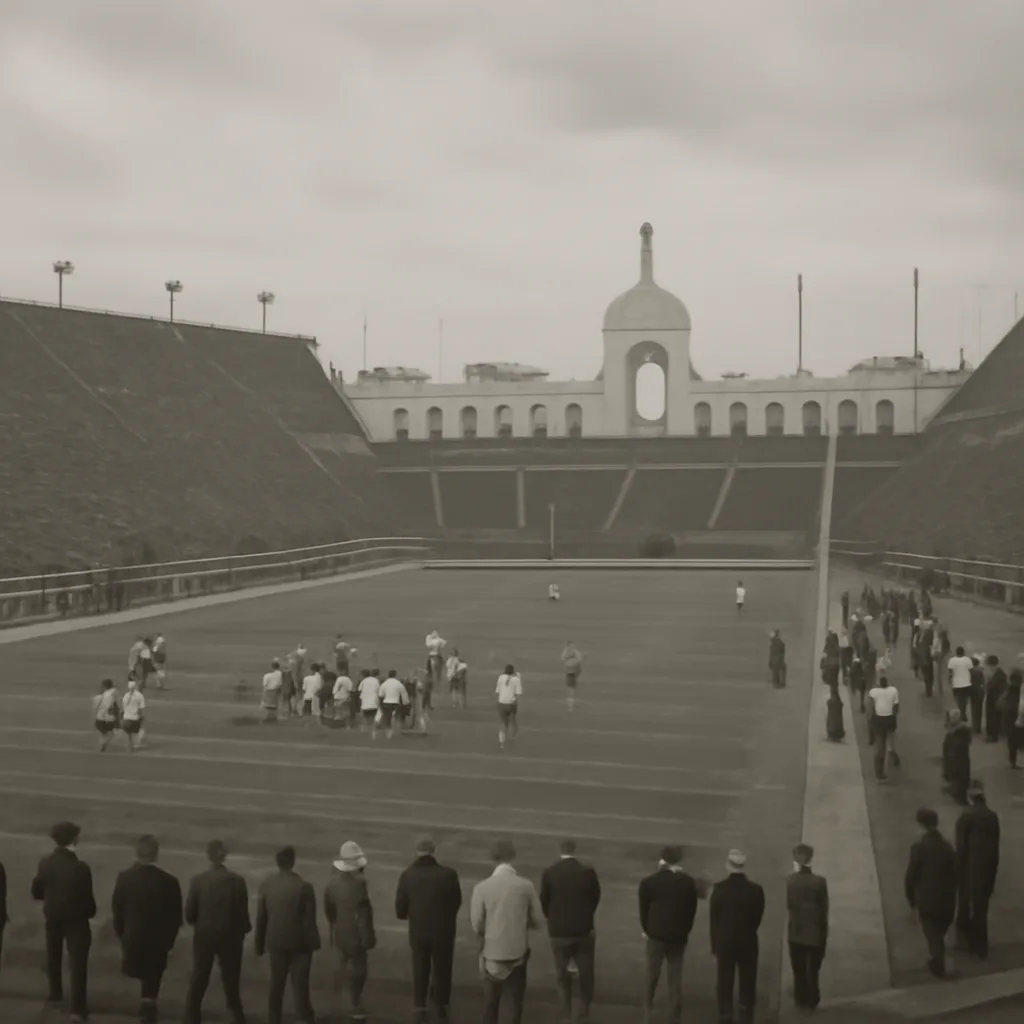
On January 15, 1967, the Los Angeles Memorial Coliseum hosted the inaugural AFL–NFL World Championship Game, a meeting between the National Football League (NFL) champion Green Bay Packers and the American Football League (AFL) champion Kansas City Chiefs. The game, organized amid growing competition between the two leagues, was billed officially at the time as the AFL–NFL World Championship Game; the name “Super Bowl” was popularized later and retroactively applied to this contest. Background By the mid-1960s, the established NFL and the upstart AFL were competing for players, fans, and television revenue. An agreement reached between league owners in 1966 called for their respective champions to meet in a postseason contest following the 1966 season; this event also served as a public demonstration of the leagues’ impending closer cooperation that would culminate in the full merger announced for 1970. Location and Attendance The game was played at the Los Angeles Memorial Coliseum, a large, multiuse stadium with a history of major sporting and civic events. Organizers chose Los Angeles in part because the Coliseum could accommodate a large crowd and because the host NFL team, the Los Angeles Rams, had a lease that made a local site practical. Official attendance for the game was recorded at 61,946, a figure that reflected many empty seats in the vast stadium; contemporary accounts noted that the crowd was smaller than expected relative to the Coliseum’s capacity. Teams and Outcome Green Bay, coached by Vince Lombardi, represented the NFL after winning the league title. The Packers entered as favorites and displayed a veteran roster built on a power running game and disciplined defense. The Kansas City Chiefs, coached by Hank Stram, were the AFL champions and showcased a more wide-open offensive style characteristic of the AFL. The Packers won the game decisively. Green Bay took an early lead and extended it through the first half, ultimately prevailing 35–10. Quarterback Bart Starr, the Packers’ efficient passer, led the offense; running backs and the defense contributed to a comprehensive team performance. The decisive nature of the victory reinforced perceptions at the time that the NFL remained the superior league, a narrative the AFL would challenge in subsequent seasons. Legacy This first championship meeting established a tradition that would become the Super Bowl, an annual sporting event that grew into a major cultural phenomenon. The initial game’s outcome shaped early narratives about league quality, but the AFL would soon close the competitive gap; AFL teams won multiple subsequent Super Bowls prior to the 1970 merger. The 1967 game is significant both as the first championship face-off between the leagues and as an early milestone on the path to a unified NFL. Historiography and Naming Contemporary records show the game was promoted as the AFL–NFL World Championship Game; usage of the term “Super Bowl” developed afterward and was retroactively applied to this contest as the event’s branding solidified. Sources differ in emphasis on attendance figures and the choice of Los Angeles as host, but scholars and sports historians agree on the game’s central role in professional football’s consolidation during the late 1960s. No fabricated quotations or unverifiable claims are presented here. This summary draws on widely documented facts about the January 15, 1967, championship game and its context within professional football history.