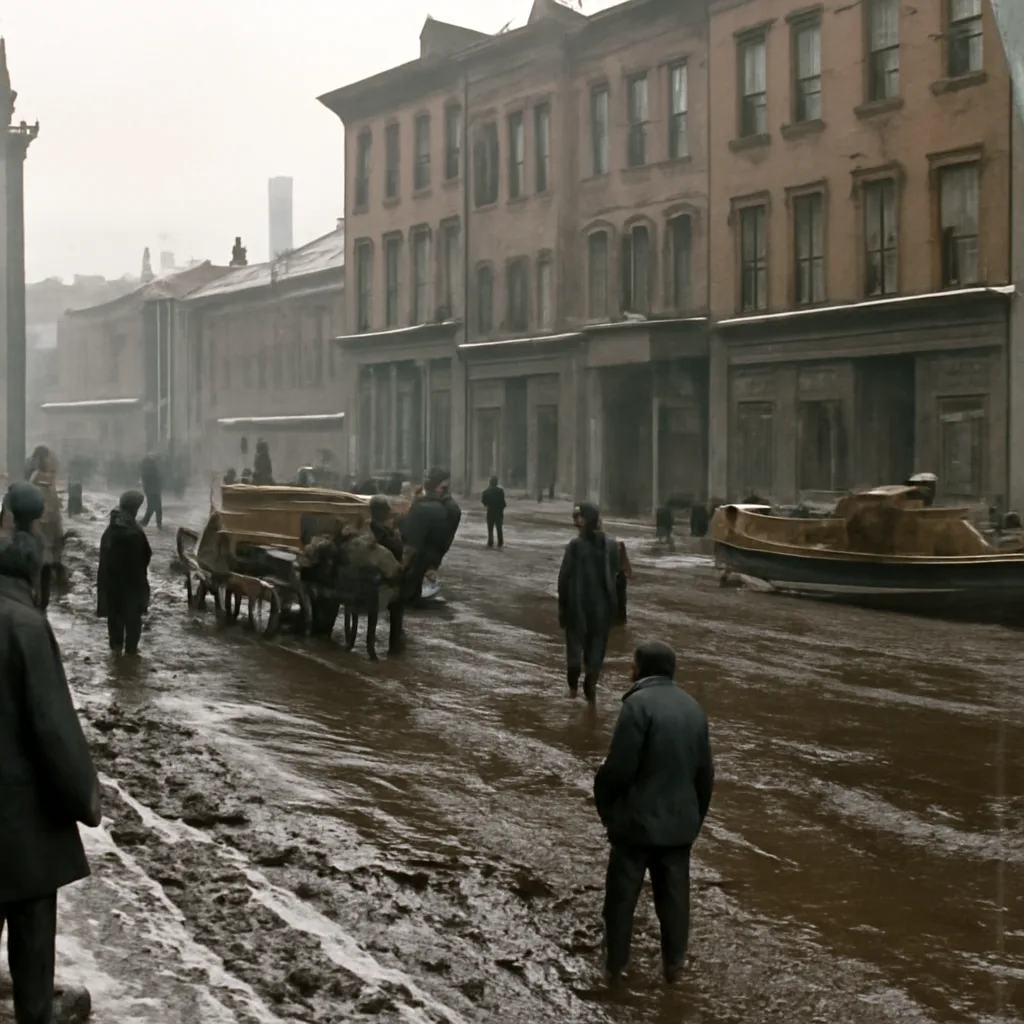
On the afternoon of January 15, 1919, a large cylindrical storage tank containing approximately 2.3 million gallons of molasses ruptured at the Purity Distilling Company’s facility in Boston’s North End. The failure released a fast-moving tide of molasses that swept along Commercial Street and surrounding neighborhoods, overturning wagons, crushing buildings’ lower levels, and dragging people and animals into the viscous flow. Rescue workers, including police, firefighters, and neighbors, labored through sticky, cold conditions to pull victims from the wreckage. The official death toll reached 21, and scores were injured; many survivors suffered severe burns, fractures, and prolonged respiratory and infection-related illnesses. The tank had been filled in the preceding days to supply molasses for industrial alcohol—used for beverage alcohol before Prohibition became fully effective—and other products. Prior complaints about leaks and visible bulging of the tank were reported, and local residents had expressed concern about safety. After the disaster, investigations pointed to multiple probable causes: substandard materials and construction, inadequate inspection, and the rapid filling of the tank in cold weather, which may have increased internal stresses. The exact combination of factors remains the subject of historical and engineering study, but legal proceedings followed: more than a hundred plaintiffs sued the United States Industrial Alcohol Company (the parent of Purity Distilling), and lengthy litigation resulted in the company being found liable; sizable settlements were paid out to victims and families. The physical aftermath was immense. Molasses coated streets, storefronts, and buildings; cleanup required salt water from fireboats, sand, and many laborers working for weeks. The syrupy residue persisted in some basements and sewers for years, and local oral histories describe the lingering smell and stickiness. The disaster prompted changes in engineering oversight and tank construction practices, and it became a cautionary example cited in discussions of industrial safety and corporate responsibility. Contemporary news coverage and later historical accounts documented both the human toll and the chaos of the scene: emergency responders hauling people from wreckage, horses trapped in molasses being euthanized or rescued, and neighborhoods paralyzed by the cleanup. While the event has sometimes been recounted with sensational language in popular retellings, primary sources—newspaper reports, court records, and photographs—provide the factual basis for the widely agreed elements: the date, location, scale of the tank, and the official casualty figures. Some technical details (such as precise construction defects or the relative contribution of temperature and overfilling) have been interpreted differently by engineers and historians, so certain aspects remain debated. The Boston Molasses Flood has endured in public memory both as a tragic loss of life and as an unusual industrial catastrophe. It influenced municipal inspection regimes and remains a reference point in studies of urban industrial hazards. Memorials and historical markers in the North End acknowledge the victims and the event’s place in Boston’s history, while archival photographs and documents preserve evidence of the scale and impact of that January afternoon.