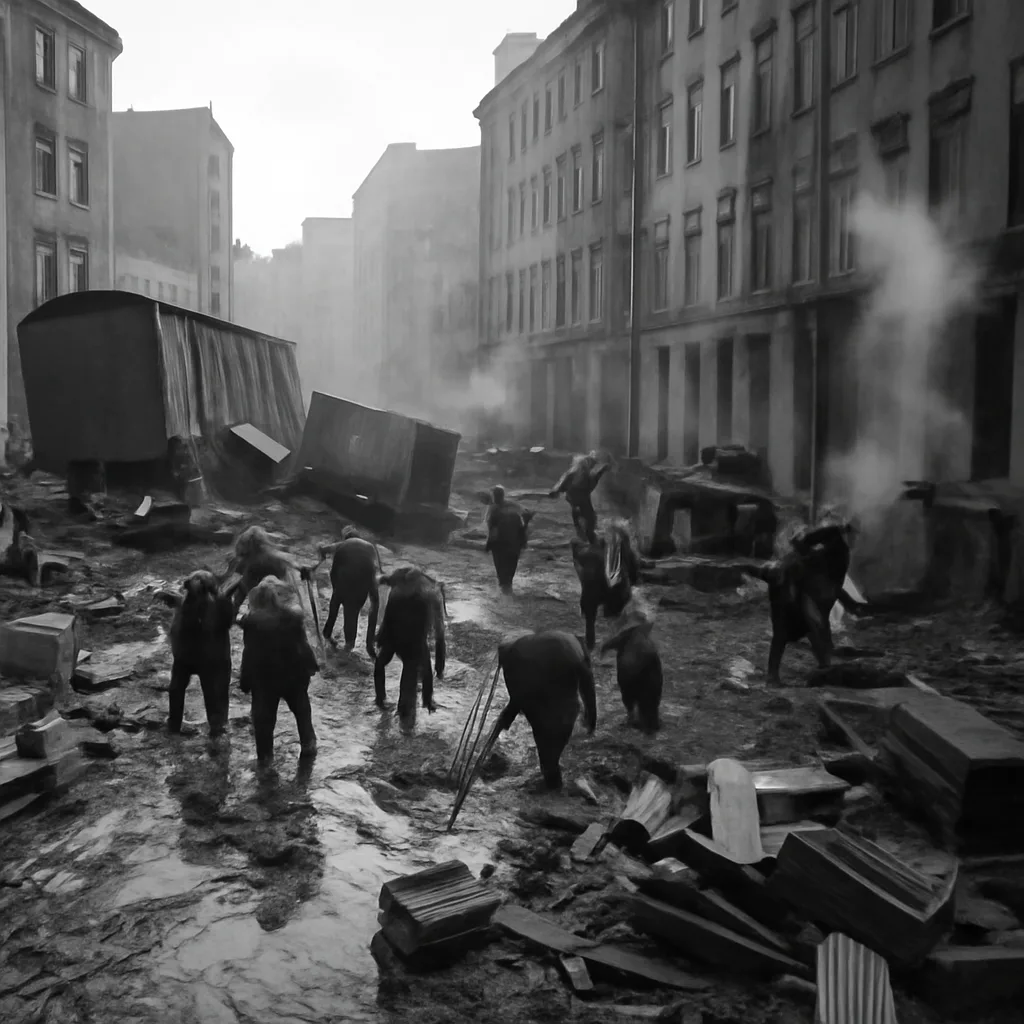
On January 15, 1919, a large molasses storage tank in Boston's North End burst, unleashing a wave of thick molasses that killed 21 people, injured scores, and damaged buildings and infrastructure in the surrounding neighborhood.
On the afternoon of January 15, 1919, a 50-foot-tall steel tank containing roughly 2.3 million gallons of molasses ruptured at the United States Industrial Alcohol Company plant in Boston’s North End. The sudden failure sent an estimated 15-foot-high wave of molasses racing through city streets at an estimated 35 mph, sweeping away horses, freight cars, and people, and causing widespread structural damage. By the time the molasses had settled, 21 people were dead and approximately 150 were injured. The disaster also disrupted commerce and transit in the neighborhood and left long-term physical and legal consequences for the company and the city.
Background
The molasses tank had been erected in 1915 to store molasses used in the production of industrial alcohol—an important commodity during World War I and its immediate aftermath. The North End was a dense working-class neighborhood with narrow streets and a mix of commercial and residential buildings. Contemporary observers later noted that the tank had been filled quickly and that the company made modifications that may have increased risk, such as adding heat to speed fermentation and repeatedly filling and emptying the tank.
The rupture and immediate effects
Eyewitness accounts and later investigations describe a sudden, thunderous collapse followed by a fast-moving, dark brown wave. The molasses forcefully knocked buildings off their foundations, derailed freight cars on nearby tracks, and crushed or trapped people and animals in its path. Rescue efforts were hampered by the sticky, viscous nature of the molasses, cold winter temperatures, and the difficulty of distinguishing victims in the muck. Firefighters, sailors, and residents worked for days to free survivors and recover bodies; cleanup required saltwater from the nearby harbor, hot water, and sand to remove hardened molasses from streets and buildings.
Casualties and property damage
Twenty-one people died from blunt force trauma, drowning in molasses, or exposure during rescue. Dozens more suffered broken bones, lacerations, and respiratory problems; many buildings sustained structural damage requiring repair or demolition. The cleanup continued for months—molasses seeped into basements, horse harnesses and clothing were ruined, and the smell lingered in the neighborhood.
Investigation and litigation
The disaster prompted investigations into the tank’s construction, maintenance, and the company’s practices. Engineers and material experts cited thin steel plates, inadequate foundations, and poor riveting as contributing factors; some testimony suggested that the tank leaked from the time it was built and had been patched repeatedly. Litigation followed: more than 100 plaintiffs brought suits against the United States Industrial Alcohol Company. After lengthy proceedings, the company settled many claims, and in 1925 a jury found the company negligent and awarded damages. The legal outcome influenced later regulations and municipal oversight of industrial storage tanks.
Legacy
The Great Molasses Flood left a lasting imprint on Boston’s history. It became a cautionary example in engineering and urban planning about the risks of large industrial storage in dense neighborhoods and of inadequate inspection and regulatory oversight. Physically, some of the affected infrastructure had to be rebuilt; socially, the disaster underscored tensions between industrial interests and community safety. The site where the tank stood later became part of the city’s evolving waterfront. Historians and local memory preserve the event as a tragic and unusual urban catastrophe rather than an anecdotal oddity.
Sources and reliability
This summary is based on contemporary newspaper reports, court records, engineering testimony from the period, and later historical studies of the 1919 Boston molasses tank disaster. Some specific details—such as precise wave height and speed—are estimates derived from contemporary descriptions and subsequent calculations; where figures vary among sources, historians note a range rather than a single definitive measurement.