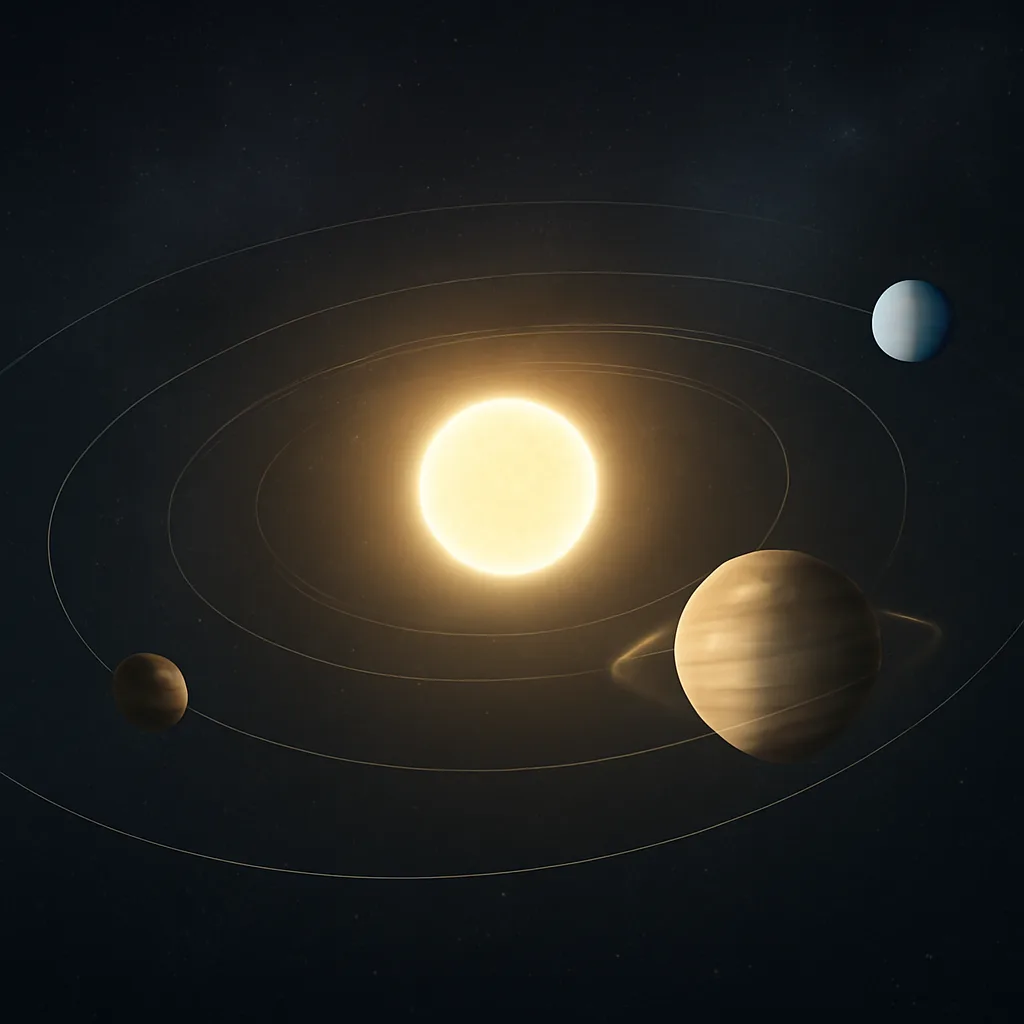
NASA announced the confirmation of multiple exoplanets detected orbiting stars beyond the Solar System. The findings add to a growing catalog of confirmed planets and reflect ongoing advances in detection techniques, data analysis, and follow-up observations that allow astronomers to validate candidate signals as bona fide planets. Detection and confirmation methods Astronomers use several established methods to detect exoplanets. The most productive to date has been the transit method, which identifies periodic dips in a star’s brightness when a planet crosses in front of it from our line of sight. Radial-velocity measurements, which detect the star’s motion induced by an orbiting planet, provide complementary mass estimates. Direct imaging and gravitational microlensing are less common but useful for particular types of systems. Confirmation typically requires follow-up observations or independent analyses to rule out astrophysical false positives (such as eclipsing binary stars) and instrumental artifacts. In recent years, NASA missions and ground-based observatories have worked together to confirm new planets. Space telescopes provide high-precision light curves that make detection efficient, while ground-based spectrographs and imaging campaigns verify signals and measure planetary masses, orbital parameters, or atmospheric signatures where possible. Scope and significance The newly confirmed planets expand the range of known planet sizes, compositions, and orbital configurations. Confirmations often include a mix of small, rocky worlds, larger sub-Neptunes, and gas giants. Each confirmed planet refines statistical estimates of how common different types of planets are around various kinds of stars. Larger samples improve models of planet formation and migration and help identify systems that merit detailed atmospheric study with facilities like the James Webb Space Telescope (JWST) or future observatories. Scientific follow-up and priorities Once confirmed, exoplanets are prioritized for additional observations based on factors such as host-star brightness, planet size, equilibrium temperature, and orbital period. Bright host stars and larger planet-to-star size ratios make atmospheric characterization more feasible. For small, temperate planets, determining mass and searching for atmospheric markers (for example, water vapor or molecular oxygen) remain challenging but are high priorities because of their relevance to habitability studies. Cataloging and community verification Confirmed exoplanets are added to public archives—such as NASA’s Exoplanet Archive and the European Extrasolar Planet Encyclopaedia—where researchers can access discovery parameters and follow-up data. Peer-reviewed papers and mission teams’ data releases provide the detailed analyses underpinning confirmation claims. The broader community often conducts independent checks using archival data or new observations to corroborate results. Uncertainties and ongoing work While confirmations reduce the chance that a signal is spurious, some system parameters remain uncertain until further observations refine them. Masses derived from radial velocities can be limited by stellar activity or instrument sensitivity, and atmospheric inferences depend on signal-to-noise ratios that may be marginal for faint targets. Continued observations, improved instrumentation, and advances in analysis methods will narrow uncertainties over time. Context in the broader search for exoplanets This announcement follows decades of exoplanet discovery that began with the first confirmed detections in the 1990s and accelerated with dedicated planet-hunting missions and improved ground-based facilities. Each new set of confirmed planets contributes to the long-term scientific goal of understanding the distribution of planetary systems and the potential for life elsewhere. Confirmed targets from NASA and partner observatories will inform future proposals for detailed atmospheric characterization and long-term monitoring. Notes on reporting This summary reflects the general process and significance of NASA confirmations of exoplanets. Specific details about the number of planets, their host stars, and their measured properties depend on the formal data release and peer-reviewed publications associated with the particular discovery announcement.