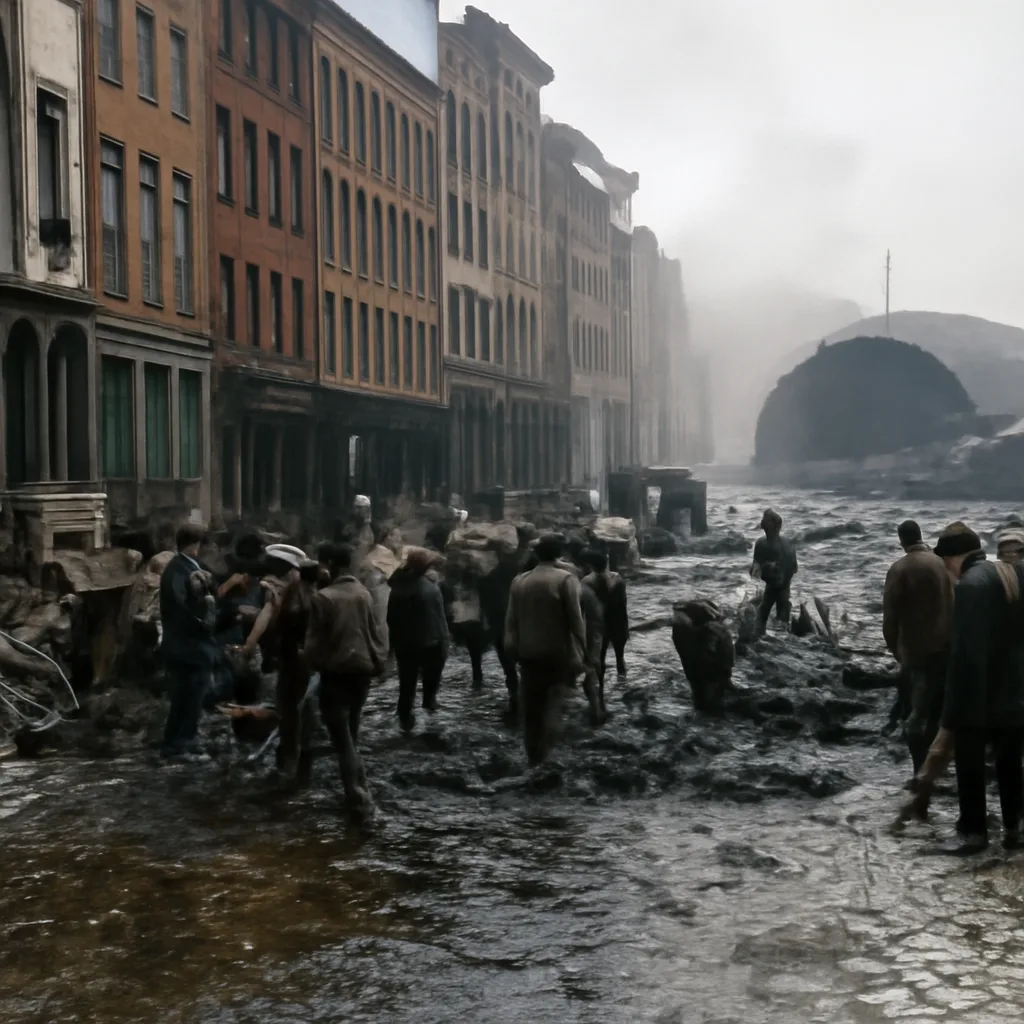
On January 15, 1919, a 2.3 million-gallon molasses storage tank in Boston’s North End burst, sending a deadly wave through streets and buildings; the disaster killed at least 21 people, injured scores, and highlighted industrial negligence.
On the afternoon of January 15, 1919, a large steel tank owned by the Purity Distilling Company ruptured in Boston’s North End, releasing an estimated 2.3 million gallons of molasses. The tank’s failure produced a fast-moving, waist- to head-high wave of molasses that swept through commercial and residential streets, demolishing structures, overturning vehicles, and trapping people and animals in sticky debris. Rescue and cleanup were hampered by cold winter temperatures that initially caused the molasses to thicken, complicating efforts to free survivors and recover bodies.
Casualties and immediate effects
At least 21 people died and dozens were injured; contemporary reports and later investigations also describe widespread property damage and several destroyed buildings. The exact toll on animals and long-term health effects on survivors varied across accounts. Emergency crews, local residents, and Coast Guard personnel participated in the search, rescue, and recovery operations that followed. Cleanup took weeks, requiring saltwater from fireboats, sand, and horse-drawn equipment to remove hardened molasses from streets, railcars, and buildings.
Causes and context
The tank had been built in 1915 and was 50 feet tall and 90 feet in diameter. Soon after the disaster, investigators and journalists raised questions about its construction and maintenance. Accusations included inadequate testing, thin steel, poor rivet work, and the decision to fill the tank rapidly. Industrial safety regulations and oversight were less developed at the time, and the tank had been erected in a densely populated urban area near workplaces and homes.
Legal aftermath
Survivors and the families of victims brought civil lawsuits against the United States Industrial Alcohol Company (which owned Purity Distilling) and related parties. After a protracted legal process, many claims were settled; the company ultimately paid damages to claimants. The litigation and public outcry contributed to increased attention on corporate liability and industrial safety, and the case is often cited in discussions of early 20th-century American tort law and regulatory reform.
Historical significance
The Great Molasses Flood became a notable example of an industrial disaster in a major American city. It exposed weaknesses in corporate accountability and municipal oversight and influenced later debates about building standards and public safety in urban industrial environments. Over the decades, the event has been documented in newspaper archives, court records, and historical studies; details such as the precise volume of molasses, the tank’s engineering flaws, and some eyewitness reports have been subjects of research and occasional dispute, but the core facts—tank failure, multiple deaths, extensive damage, and subsequent lawsuits—are well established.
Memory and legacy
The site in Boston’s North End is now a mixed residential and commercial neighborhood. The disaster is remembered through historical accounts, archival photographs, and local history projects that place the event in the broader context of Boston’s industrial past. The Great Molasses Flood remains a cautionary tale about industrial risk, urban planning, and the consequences of insufficient oversight.