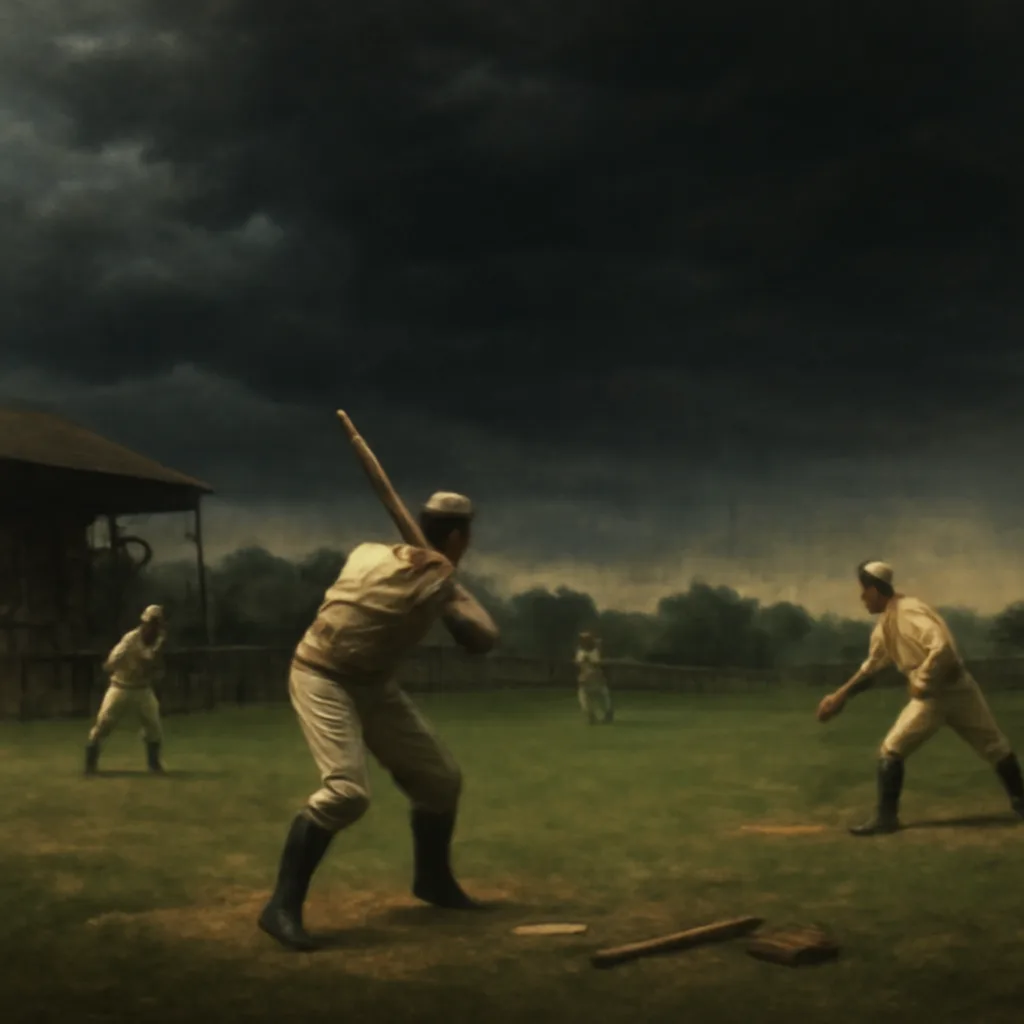
On August 24 in the late 19th century, a baseball game was interrupted by a severe thunderstorm that culminated in a player being struck by lightning and killed. Such incidents, while rare, were recorded in contemporary newspapers and local reports from the period when organized baseball was spreading across the United States and games were often played in open fields with little shelter. Contemporary accounts vary in detail. Several local newspapers of the era reported that during an afternoon or early-evening game, dark clouds and distant thunder prompted concern among spectators and players. As rain and lightning increased, one player—often described simply as an outfielder or fielder in different reports—was reportedly struck, collapsed immediately, and could not be revived despite prompt efforts by teammates and bystanders. Some accounts note that other people nearby received minor shocks or were knocked down by the blast. Medical understanding and reporting standards of the time were limited compared with today, and press reports sometimes relied on secondhand testimony. As a result, specifics such as the player’s full name, exact team affiliation, precise age, and the sequence of medical interventions differ across sources. In some cases later retellings conflated separate incidents or misdated them, which contributes to uncertainty about a single, definitive account tied to August 24. The broader historical context helps explain both the occurrence and how it was reported. Late 19th-century baseball was played outdoors on unshaded diamond fields without modern lightning detection or standardized safety protocols. Spectators often stood close to playing areas, and clubs rarely canceled games for weather unless conditions were obviously dangerous. Newspapers served as the primary recorders of local tragedies; while many reported the lightning fatality with immediacy, their reliance on wire services, brief eyewitness statements, and sometimes sensationalized prose means that historians must cross-check multiple papers and civic records to verify particulars. Surviving municipal death records, coroner reports, and cemetery registers can sometimes corroborate names and dates given in press accounts, but such documents are not always extant or accessible. Where those vital records exist, they can confirm that a death occurred on or near the reported date and location. In other cases, inconsistencies in periodicals or gaps in official records leave aspects of these incidents ambiguous. This episode is a reminder of how hazardous recreational life could be before modern safety measures and communications. It also illustrates the limits of 19th-century reporting: tragic events were documented, but without the forensic and archival completeness expected today. For readers seeking to verify a particular name or team tied to an August 24 lightning death during a baseball game, consulting local 19th-century newspapers, coroner or death registers, and historical society collections for the relevant town or county is the recommended approach.