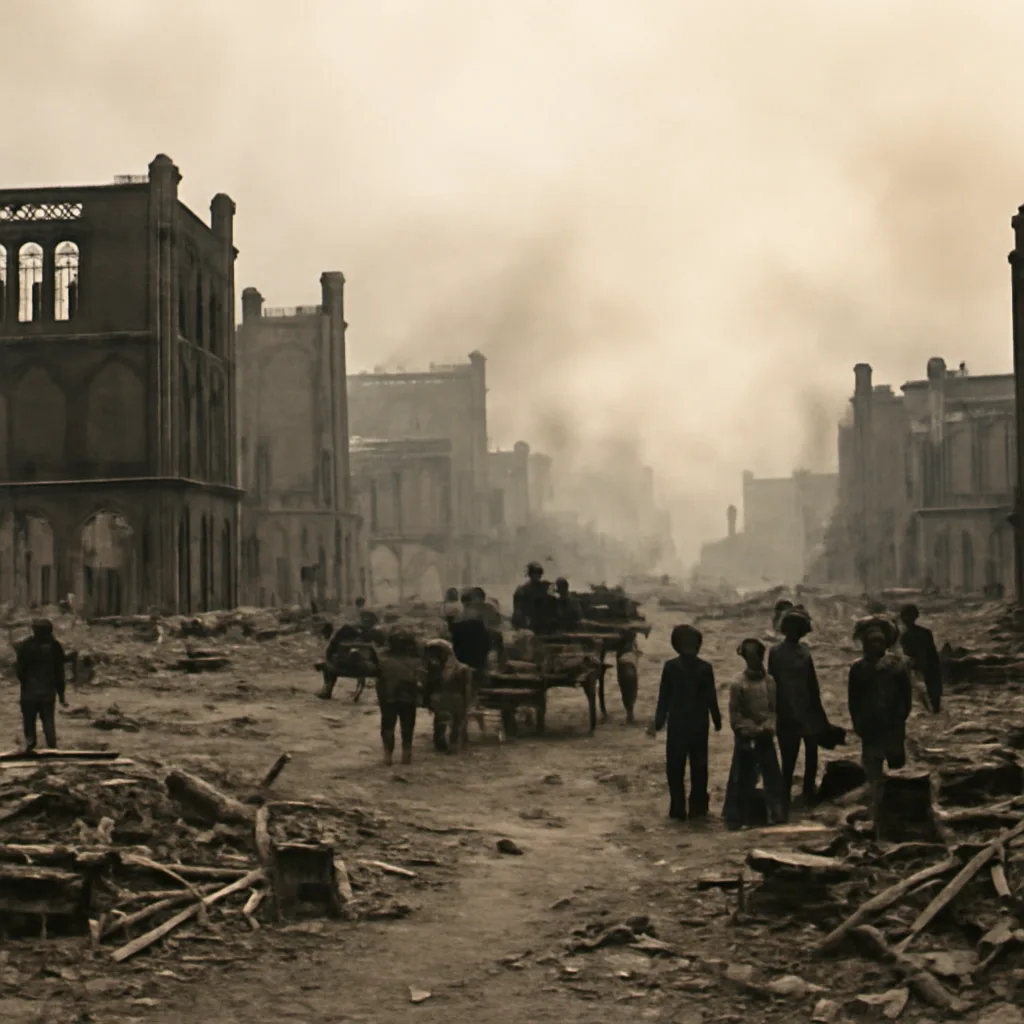
For more than a century the Great Chicago Fire has been recounted as one of 19th-century America’s most deadly urban disasters, with widely repeated figures of several thousand fatalities. A careful reassessment by historians working with contemporary records, newspapers, municipal documents and cemetery registers has led to a consensus that the number of confirmed deaths is substantially lower than many popular accounts have claimed. The fire began on October 8, 1871, and raged through the city for roughly two days, destroying large swaths of Chicago’s central neighborhoods and displacing tens of thousands of residents. Contemporary reports were chaotic: telegraph lines were strained, newspapers rushed to press, and the scale of destruction was difficult to ascertain amid ongoing relief efforts. In the immediate aftermath, some reports and public statements offered provisional casualty estimates that were later repeated without scrutiny. Modern researchers have revisited primary sources—coroner’s records, death certificates, burial lists, orphanage and hospital registers, and municipal aid logs—seeking to reconcile conflicting tallies. These sources show many named fatalities attributable to the fire, but also reveal duplication in reporting (the same individual listed multiple times across different records), misattributions of cause of death, and a tendency in some 19th-century reportage to conflate people rendered homeless or injured with those killed. In addition, some bodies were never recovered or identified, leading to both undercounts and speculative additions in later retellings. As a result of this archival work, scholars now estimate a lower confirmed death toll than the most sensational figures that circulated in the late 19th and 20th centuries. Exact numbers remain subject to interpretation because of gaps in surviving documentation: municipal record-keeping in 1871 was not comprehensive, and many records have been lost or remain ambiguous. Historians emphasize the distinction between confirmed deaths—the individuals for whom there is documentary evidence linking their death to the fire—and broader estimates that attempt to account for missing or unidentified persons. The reassessment does not diminish the catastrophe’s human or urban impact. Thousands of Chicagoans lost homes, businesses and livelihoods; the economic and social consequences reshaped the city’s development and prompted major changes in building codes, fire prevention measures and municipal organization. The fire also became a formative moment in the city’s identity and memory, repeatedly invoked in both civic commemoration and popular culture. Scholars caution against treating a single revised number as the final word. Historical casualty estimates often change with new evidence, methodological refinements and critical readings of existing sources. Ongoing digitization of 19th-century archives and improved access to records may further refine the tally. For public accounts and educational materials, historians recommend distinguishing clearly between "confirmed deaths" based on surviving documentation and broader estimates that include probable but undocumented fatalities. In short, the current scholarly consensus favors a lower, more carefully documented figure for deaths directly attributable to the Great Chicago Fire than many traditional accounts, while reaffirming the event’s status as a devastating episode in Chicago’s history with long-lasting consequences for the city and its inhabitants.