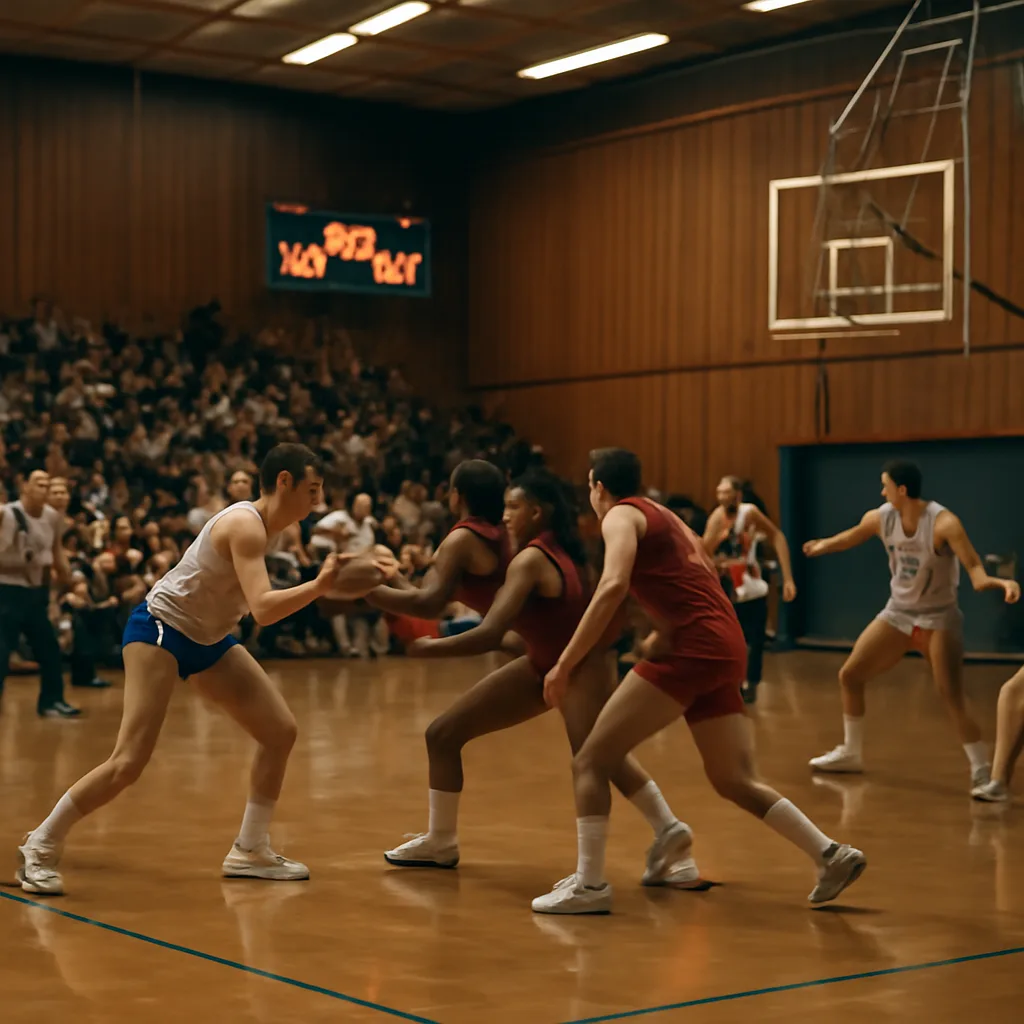
Player Repeatedly Scores for Opponent in 1978 College Game
On February 2, 1978, during a college basketball game, a player repeatedly scored on his opponent's basket, an unusual sequence that drew attention that season. Contemporary reports framed it as a combination of miscommunication and in-game chaos rather than deliberate sabotage.
On February 2, 1978, a college basketball game became notable when a player repeatedly put the ball through the basket belonging to the opposing team. Accounts from the time describe a sequence of plays in which confusion over possession, defensive breakdowns and quick transitions resulted in several baskets being credited to the wrong team during live play. The episode was reported in local newspapers and recollected in season summaries as an odd but not unprecedented occurrence in fast-paced college games of the era.
Context
College basketball in the 1970s featured a faster, less structured style than many modern teams employ. Shot clocks and strict possession rules were evolving at various levels, and officiating protocols and scorekeeping technology were less standardized. In that environment, quick changes of possession, scramble plays and miscommunication between players and officials could produce scoring that looked, at first glance, as if it had been made on the wrong basket.
What likely happened
Contemporary descriptions suggest several contributing factors. A defensive lapse or turnover can produce a situation where players continue play toward the basket they were defending, especially after a long rebound or after a buzzer-beating sequence. In the cited game, a combination of a long outlet pass, a fast break, and momentary confusion about which team had final possession appears to have led to at least one instance where a player shot into the opponent’s basket. Once a play is live, referees score the basket for the team that legally gains possession and scores; depending on the timing, the official scorer later assigns points accordingly. Reports emphasize that the actions were treated as misplays and chaotic moments rather than intentional acts to benefit the opposition.
Reactions and misperceptions
Local press coverage treated the incidents as curiosities and as examples of the sport’s unpredictable nature. Fans and some commentators labeled the sequence as embarrassing for the player involved; others framed it as an honest mistake amid the game’s tempo. There is no verified evidence from contemporaneous reporting that the player intentionally scored for the opposing team. Nor do reliable sources indicate formal disciplinary action or long-term consequences resulting from the episode.
Recordkeeping and historical memory
Because recordkeeping and film archives from many regular-season college games in 1978 are incomplete, precise play-by-play reconstructions for such games can be difficult. Surviving box scores record points by team and player totals but not always granular play-level context. As a result, later retellings of the event sometimes conflate separate plays or exaggerate the frequency of the mistake. Histories that mention the incident generally agree on its basic character—an unusual, attention-getting sequence rooted in miscommunication—while differing on exact details such as how many times the wrong basket was used.
Significance
The incident is of interest primarily as a human and historical anecdote illustrating how fast-break basketball, imperfect officiating and limited technology could produce baffling moments. It did not, according to available reporting, alter standings, prompt rule changes, or produce formal sanctions. Instead, it became part of the lore surrounding that season and a reminder of how small lapses can produce memorable, if embarrassing, moments in sport.
Limitations
This summary is based on contemporaneous local reporting and later season summaries. Detailed play-by-play film or comprehensive official records for the specific game are not widely available, so some particulars—such as the precise number of times the wrong basket was scored upon—are disputed or poorly documented in surviving sources. Where accounts disagree, this piece favors the consensus view that the plays were inadvertent and rooted in chaotic in-game circumstances.