The Great White Hurricane of 1912 Strikes the U.S. Northeast
On February 2, 1912, a historic blizzard—later called the Great White Hurricane—brought heavy snow, severe winds, and widespread disruption across the Northeastern United States, closing railroads, cutting telegraph lines, and causing numerous deaths and economic damage.
On February 2, 1912, a major winter storm known contemporarily as the Great White Hurricane swept through the Northeastern United States, producing heavy snowfall, drifting, and powerful winds that paralyzed transportation and communications. The storm followed a pattern common to significant Nor’easters of the era: moisture from the Atlantic combined with cold air from the continent to produce widespread, often blizzard‑like conditions across multiple states.
Impacts and disruption
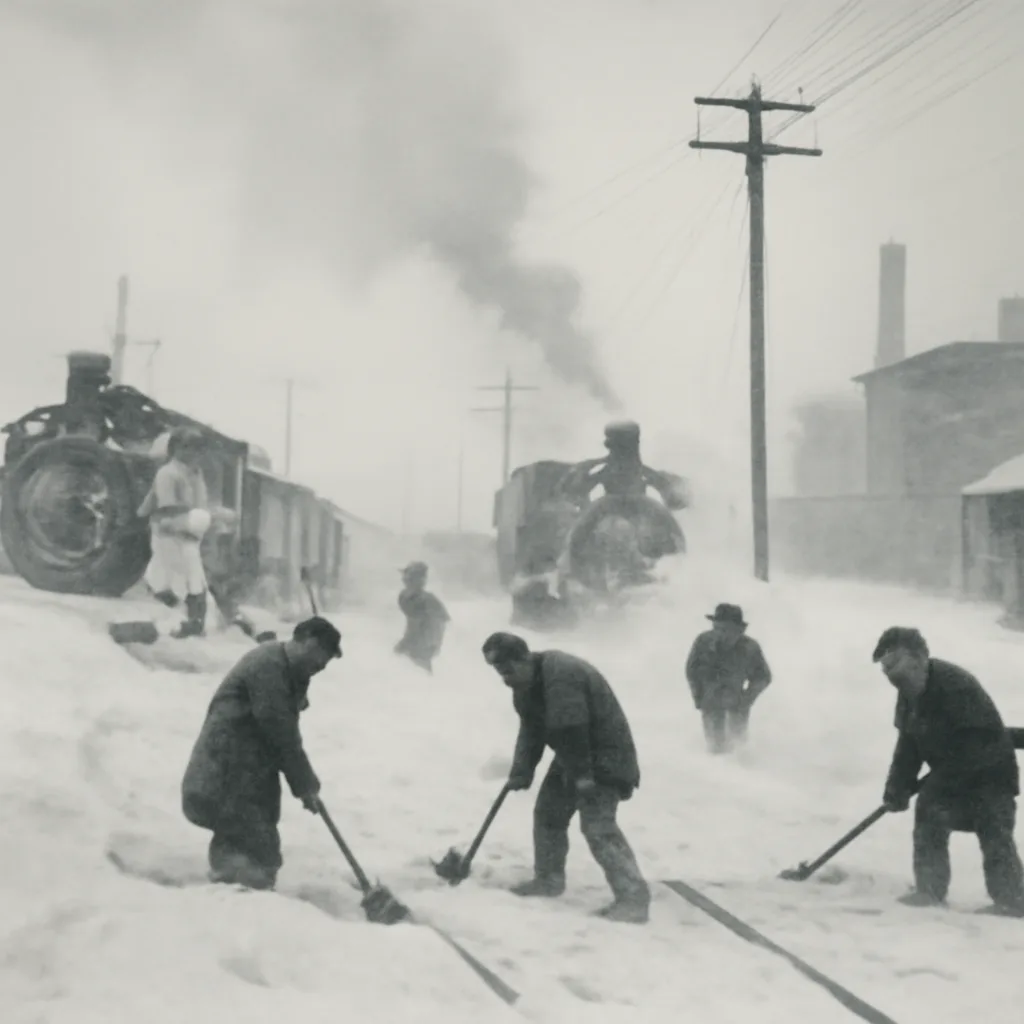
Communities from coastal New England through parts of the mid‑Atlantic experienced significant accumulations and drifting. Railroads were among the hardest hit: snow drifts buried tracks and disabled locomotives, leaving passengers and freight stranded for extended periods. Telegraph and telephone lines were damaged or downed by ice and wind, complicating coordination of relief and repair efforts. In many towns and cities, streetcar service was suspended and urban deliveries halted. Rural areas often fared worse, as isolated farms and villages could be cut off for days.
Human cost and response
Contemporary accounts and later historical summaries report multiple fatalities attributed to exposure, accidents while attempting to clear snow, and deaths linked to disrupted heating and medical services. Municipal and private crews worked to reopen main roads and rail lines, relying on steam‑powered plows, manual labor, and coordinated timetables where possible. Charities, local governments, and railroad companies organized shelter and assistance for stranded travelers and those whose homes were damaged or rendered inaccessible.
Economic and longer‑term effects
The immediate economic effects included delayed shipments of goods, interruption of commerce, and repair costs for infrastructure. For some industries—particularly railroads and coastal shipping—the storm highlighted vulnerabilities in winter operations and stimulated investments in snow‑clearing equipment and improved communication protocols. Newspapers of the period detailed lost wages, increased prices for some perishables, and the high cost of emergency labor.
Historical context and sources
The 1912 blizzard occurred during a time when rapid urbanization and expanding railroad networks made New England and the mid‑Atlantic more interconnected but also more susceptible to large storms’ cascading effects. Accounts of the storm appear in regional newspapers, railroad company records, and municipal reports from the period. Because reporting standards and recordkeeping varied by place, precise casualty and damage totals differ among sources; historians rely on contemporaneous press coverage, weather station data, and corporate archives to reconstruct the event.
Legacy
While not the only severe winter storm of the early 20th century, the Great White Hurricane of February 1912 remains notable for its breadth and for the acute disruptions it caused to transportation and communications at a time when those systems were central to economic life. The storm is part of a sequence of major Northeast winter storms that prompted gradual improvements in snow removal, emergency response, and infrastructure resilience in subsequent decades.