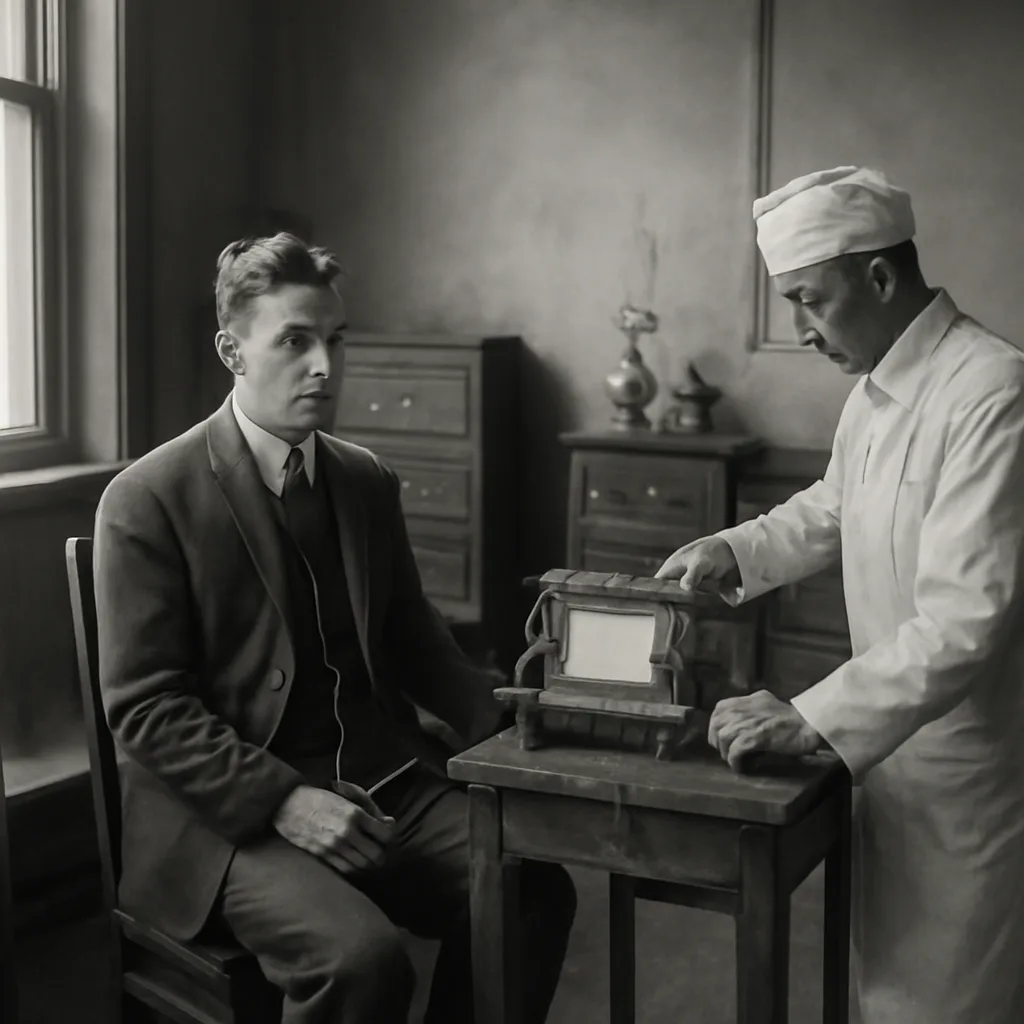
On 2 February 1921, a medically oriented recording apparatus was used in a legal/forensic context in a way later described as an early lie-detection experiment. The device—derived from physiologic recording technologies developed in the late 19th and early 20th centuries—measured changes such as blood pressure and pulse while subjects answered questions. This instance is widely cited as the first documented use that explicitly linked those physiological recordings to courtroom truth-finding, inaugurating a line of practice that would evolve into the polygraph and shape debates about evidence and interrogation. Background: late-19th-century physiologic recording By the late 1800s physicians and physiologists had developed instruments that could record respiration, pulse, and blood-pressure oscillations. Researchers such as James McKeen Cattell and others experimented with variational measurement of physiological responses to stimuli. Around the turn of the century, clinicians and inventors adapted these instruments for experimental and applied uses, including attempts to associate emotional states with measurable bodily changes. The 1921 event On 2 February 1921, a documented session occurred in which a recording device was used while a subject answered questions in connection with an investigation that touched on legal matters. Contemporary reports and later historians point to this date as the earliest recorded instance where such physiological recordings were explicitly employed to assess veracity in a quasi-forensic setting. The equipment used at the time predated the later consolidated “polygraph” apparatus: it typically included cardiovascular and respiratory gauges connected to a chart recorder that produced continuous traces for later inspection. Immediate impact and reception The 1921 use attracted attention because it framed physiological recording as a potential tool in adjudication and interrogation. Practitioners and observers were cautiously interested but also skeptical: the link between recorded bodily signals and a reliable indication of deception was not established. Legal authorities and scientists debated admissibility, reliability, and the ethical implications of introducing such instruments into courtrooms and police work. Evolution into the polygraph and contested status Throughout the 1920s and 1930s, inventors and researchers refined devices and protocols. Notably, John A. Larson, a police physician in Berkeley, California, developed a more integrated instrument in 1921–1923 that combined several measures and was labelled a “cardio-pneumo psychogram”—a direct antecedent of the modern polygraph. Later, other practitioners such as Leonarde Keeler further modified instruments and procedures and promoted their use by law enforcement. Over subsequent decades the polygraph became widespread in some jurisdictions and agencies, while scientific and legal communities continued to debate its validity and admissibility. Systematic research has since shown that physiological responses are influenced by many factors beyond deception, leading many courts and scientific bodies to view polygraph results as unreliable or inadmissible as sole evidence. Why the 1921 date matters Citing 2 February 1921 underscores the shift from laboratory curiosity to applied forensic technique. It represents a recognizable starting point for the history of lie detection as a tool tied to criminal justice, rather than only to medical or experimental psychology. Nonetheless, it is important to treat the event as an early and provisional step: subsequent technological and methodological developments—and persistent controversies—mean that the 1921 episode is best understood as the opening of a complex, contested chapter rather than the arrival of a settled forensic instrument. Limitations and sources Historical accounts vary in emphasis and detail; some narratives highlight subsequent innovations by Larson and Keeler as key milestones that followed quickly after the 1921 uses. The association of the 2 February 1921 session with the origin of forensic lie detection is widely cited in secondary histories of the polygraph, though primary-source documentation from that exact date can be limited in scope. Where specifics are disputed, historians note uncertainties about the exact equipment configuration, the setting (medical office versus courtroom adjunct), and how contemporaries interpreted the recordings. Overall, the 2 February 1921 instance is best regarded as the first well-documented bridging of physiological recording practices and legal truth-seeking—a milestone that precipitated decades of technological refinement and enduring debate over the nature of deception and the reliability of measuring it.