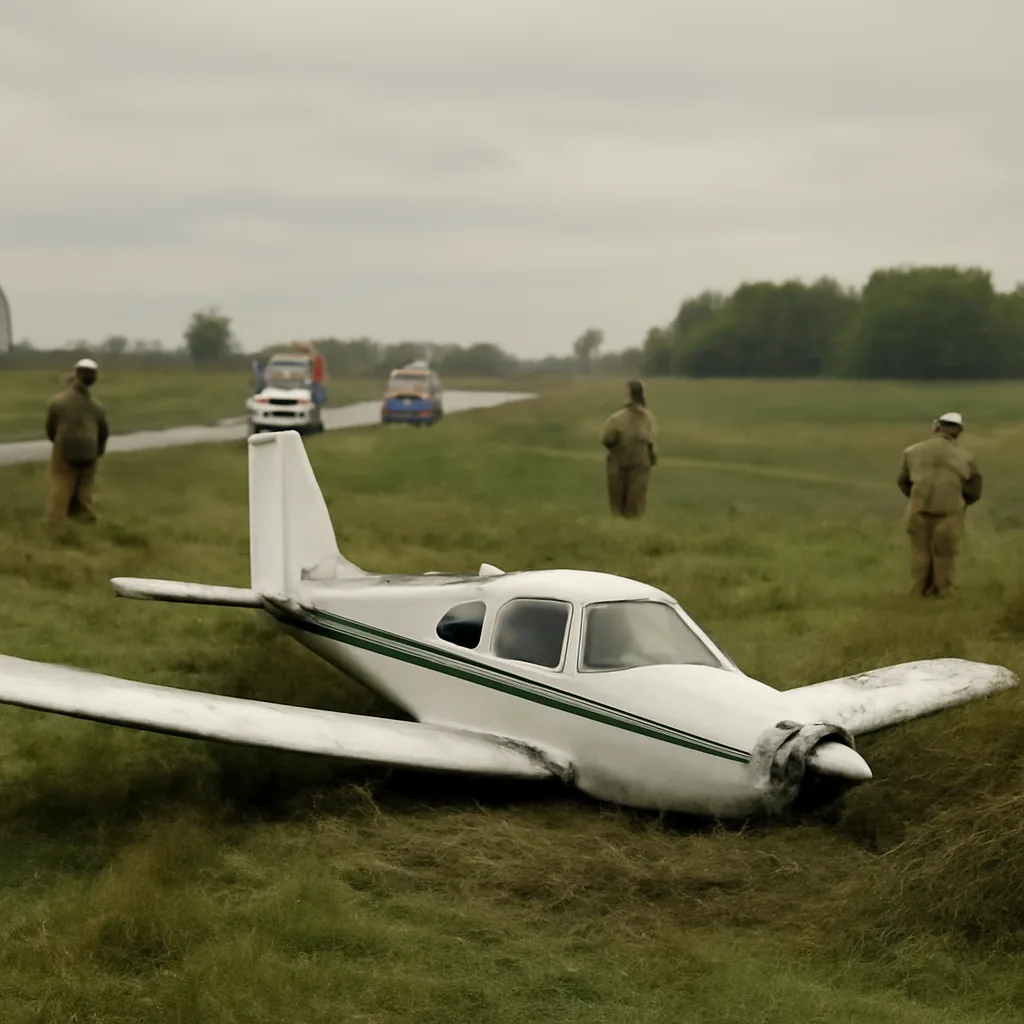
On August 2, a single-engine small aircraft went down in a rural field. Local emergency services responded to the scene, where first responders found the pilot conscious and uninjured. The pilot declined immediate transport to a hospital, and no other people or vehicles were reported involved. Eyewitnesses said the airplane came to rest on its wheels or fuselage in a grassy area adjacent to a local road. Responders established a perimeter to ensure safety and to allow investigators access to the wreckage. Agencies typically involved in such incidents include local fire and police departments, state aviation authorities, and the national transportation safety board; which specific agencies are handling this investigation has not been confirmed publicly. Small-plane crashes often prompt multiple lines of inquiry: mechanical failure, fuel issues, weather conditions, pilot medical events, and human factors such as decision-making or training. Investigators generally examine the airframe, engine, maintenance records, pilot logbooks, and any available radio or telemetry recordings. Officials also collect witness statements and review weather observations from the time of the flight. At the scene, responders commonly secure the aircraft to prevent fire risk and preserve evidence. If a fire did not occur and the pilot is uninjured, authorities still typically remove the aircraft to a secure location for detailed inspection. That process can take days or longer, depending on the condition of the wreckage and the complexity of the inquiry. No formal cause has been released. Investigations into small-aircraft mishaps frequently take months to complete and may culminate in a public report identifying probable cause and safety recommendations. In the interim, officials often caution the public against speculation until investigators have examined all available evidence. Community members and nearby residents often report hearing an engine sputter or seeing smoke in such events; whether those observations apply in this case has not been independently verified. The absence of injuries and the rapid response by emergency personnel are consistently cited as positive outcomes in otherwise serious incidents. Anyone with relevant information, photographs, or video of the flight or crash sequence is typically asked to share that material with investigating authorities to aid the inquiry. Further updates will depend on statements from the agencies conducting the investigation and any formal release of findings.