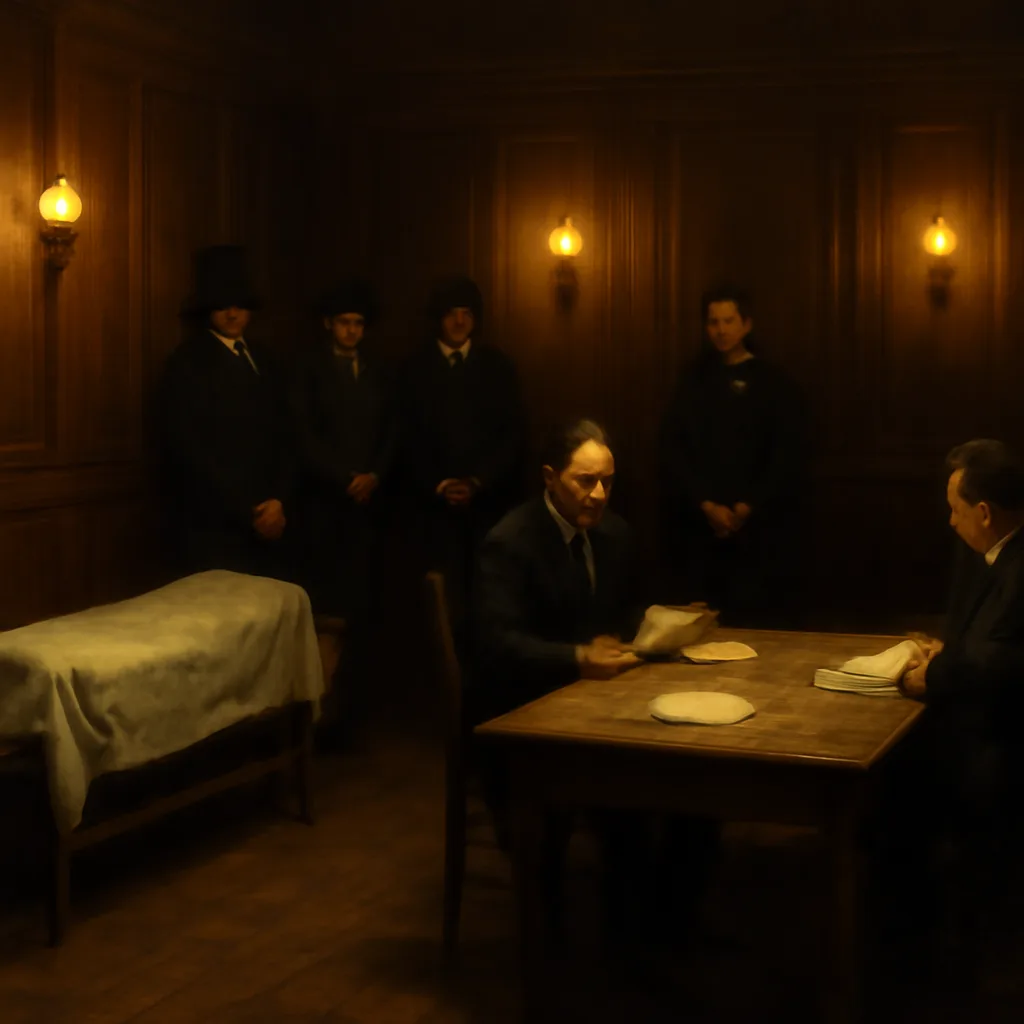
On 23 February 1846 a coroner’s inquest in the north of England investigated the death of a man who had been stabbed by his brother during the night. The case attracted attention because the accused claimed to have been sleepwalking at the time of the killing, and local reports described the proceeding as one of the earliest documented instances in which sleepwalking (somnambulism) was advanced as a defense or explanation for a homicide. Contemporary press accounts and later secondary discussions identify the episode as significant not because it produced a landmark legal ruling but because it exposed 19th-century uncertainties about responsibility, consciousness, and the boundaries between medical and legal expertise. Mid-19th-century Britain was a period when physicians increasingly attempted to classify abnormal states of sleep and consciousness, while coroners, magistrates, and juries remained reliant on often contradictory testimony from medical practitioners, clergy, and lay witnesses. At the coroner’s hearing the central factual disputes concerned the circumstances of the killing (timing, presence of witnesses, and any provocation) and the accused’s state of mind and bodily control. Witnesses described finding the accused at or near the scene and reported his later statements that he had no recollection of the act. Physicians called in for the inquest offered differing opinions on somnambulism: some treated it as a pathological condition that could produce purposive acts without conscious awareness, while others urged caution, noting the difficulty of proving unconscious intent retrospectively. The inquest concluded with an open verdict or a verdict reflecting lack of clear malicious intent (reports vary among contemporary newspapers), and the case did not immediately settle doctrinal questions about criminal responsibility. Rather, it fed into a broader conversation. Throughout the 19th century, jurists and medical writers debated whether automatism—actions performed without conscious volition—should excuse criminal acts and under what evidentiary standards. Cases like the 1846 inquest were cited in later medico-legal literature as examples of the evidentiary and moral complexities involved. Historians caution that characterizing the 1846 episode as the definitive "first" documented sleepwalking homicide can be misleading. There are earlier anecdotal and folkloric reports of violent acts said to have occurred during sleep, and later formal legal cases (notably in the late 19th and early 20th centuries) produced more fully developed legal treatments of automatism and insanity defenses. What makes the 1846 matter noteworthy is the combination of press coverage, medical commentary, and coroner-level adjudication that placed sleepwalking explicitly on the table as an explanation for lethal violence. The case also highlights limits of sources: surviving newspaper accounts vary in detail and tone, and coroner’s reports from the period are not always preserved in full. Where modern summaries or textbooks reference the 1846 incident, they often do so cautiously, noting it as an early documented example rather than a decisive precedent. Scholars of legal medicine and criminal law treat such episodes as part of a longer, contested evolution in how societies assign responsibility when volition and consciousness are in doubt. In short, the 23 February 1846 inquest is best understood as an early documented encounter between medical ideas about sleep disorders and the legal system’s need to attribute culpability. It did not resolve the issue, but it contributed to the continuing debate over automatism, setting the stage for later, more fully litigated cases and for the gradual development of forensic sleep medicine.