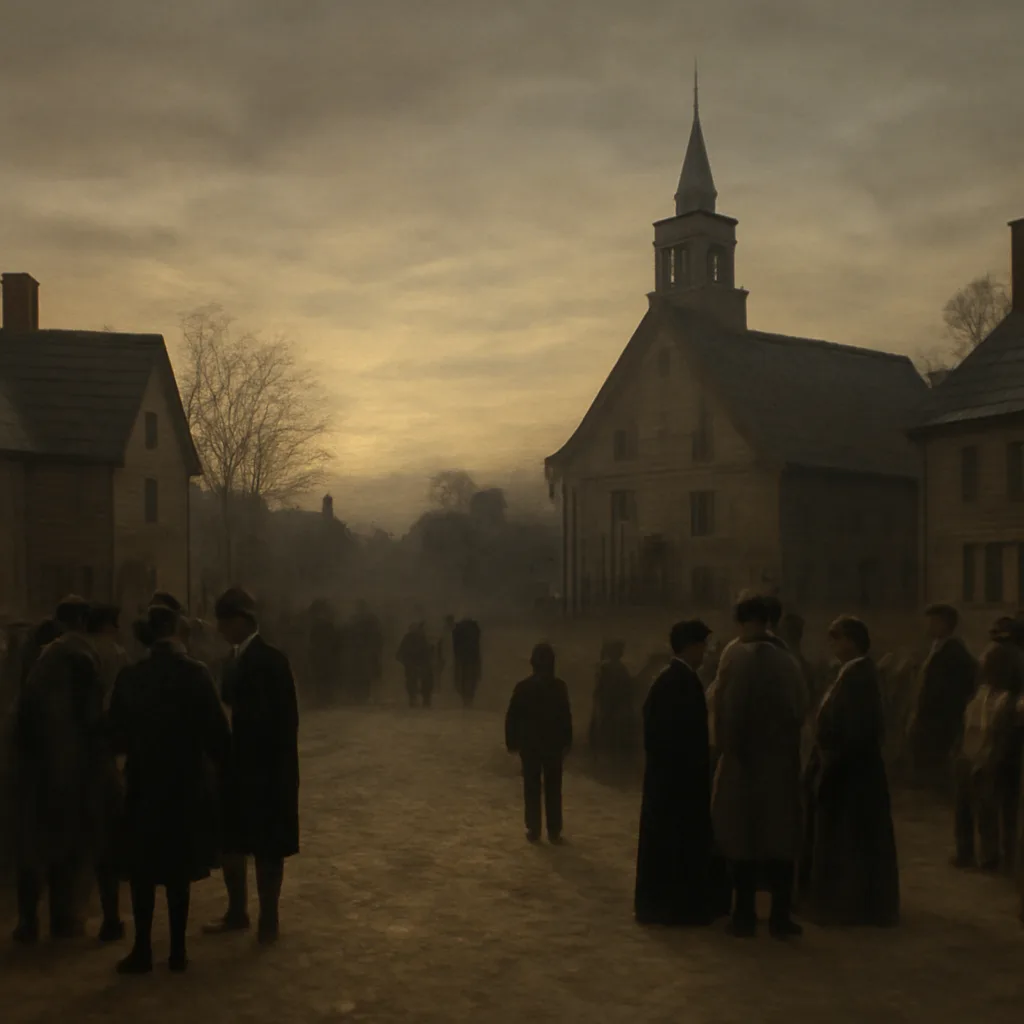
In late March, the community around Salem has encountered a surge of public doubt after several people were executed following convictions for witchcraft. The events have prompted sharper scrutiny of the recent prosecutions, the methods used to obtain confessions and accusations, and the role of local authorities in adjudicating spiritual crimes. Context and procedure The trials that led to these executions unfolded in a climate of religious fervor, fear of the supernatural and social tension. Accusations often originated with episodes of unusual behavior among local young women and children, interpreted at the time as signs of demonic affliction. Court proceedings relied heavily on spectral evidence—testimony that the spirit or specter of an accused person appeared to a witness—as well as on confessions, fits witnessed in court, and the testimony of neighbors. Sources of public unease Several factors are now driving public skepticism. First, the reliance on spectral evidence has been criticized by some clergymen and laypeople who argue such testimony cannot be objectively verified and may reflect imagination, coercion or suggestion. Second, the process by which accusations spread—through social networks, rivalries and suspicions—raises concerns that personal grievances and local disputes have been conflated with genuine criminal conduct. Third, accounts of the interrogation of some suspects and the circumstances of confessions have led observers to question whether pressure or promise of mercy shaped what people said. Voices within the community Clergy and officials are not united. While some ministers have continued to endorse the courts’ work as necessary to protect the godly community, others urge caution, warning that reliance on unverifiable signs risks condemning the innocent. Likewise, some magistrates defend the trials as lawful and essential to public safety; others privately express reservations about methods and outcomes. Neighbors of the executed and those still imprisoned have expressed grief and alarm, and a number of families are pressing local leaders for clearer standards of proof and fairer procedures. Broader implications The controversy has implications for how the colony balances religious conviction, communal order and legal safeguards. Courts dealing with alleged spiritual crimes face the dilemma of addressing genuine fear of malign supernatural influence while avoiding processes that permit conviction on ambiguous or private testimony. As public skepticism grows, officials may confront pressure to refine evidentiary standards, permit appeals or remand cases for further inquiry. The debate also touches on deeper social tensions—property disputes, family rivalries and generational divides—that can be amplified by the language of witchcraft. Next steps and uncertainty It remains uncertain whether the rising doubt will alter immediate legal outcomes for those still accused or imprisoned. Some officials are said to be reviewing recent proceedings, but concrete reforms have not been announced. Families of the executed continue to mourn, and the community is reckoning with whether the response to suspected witchcraft has produced justice or inflicted irreparable harm. Historical records of similar episodes show that shifts in public sentiment can lead to changes in legal practice over time, but such shifts are rarely quick or uniform. This account is based on contemporary reports and surviving court records regarding recent prosecutions in the Salem area. Where testimony and motivations are contested in surviving sources, this summary notes the dispute rather than asserting a definitive causal claim.