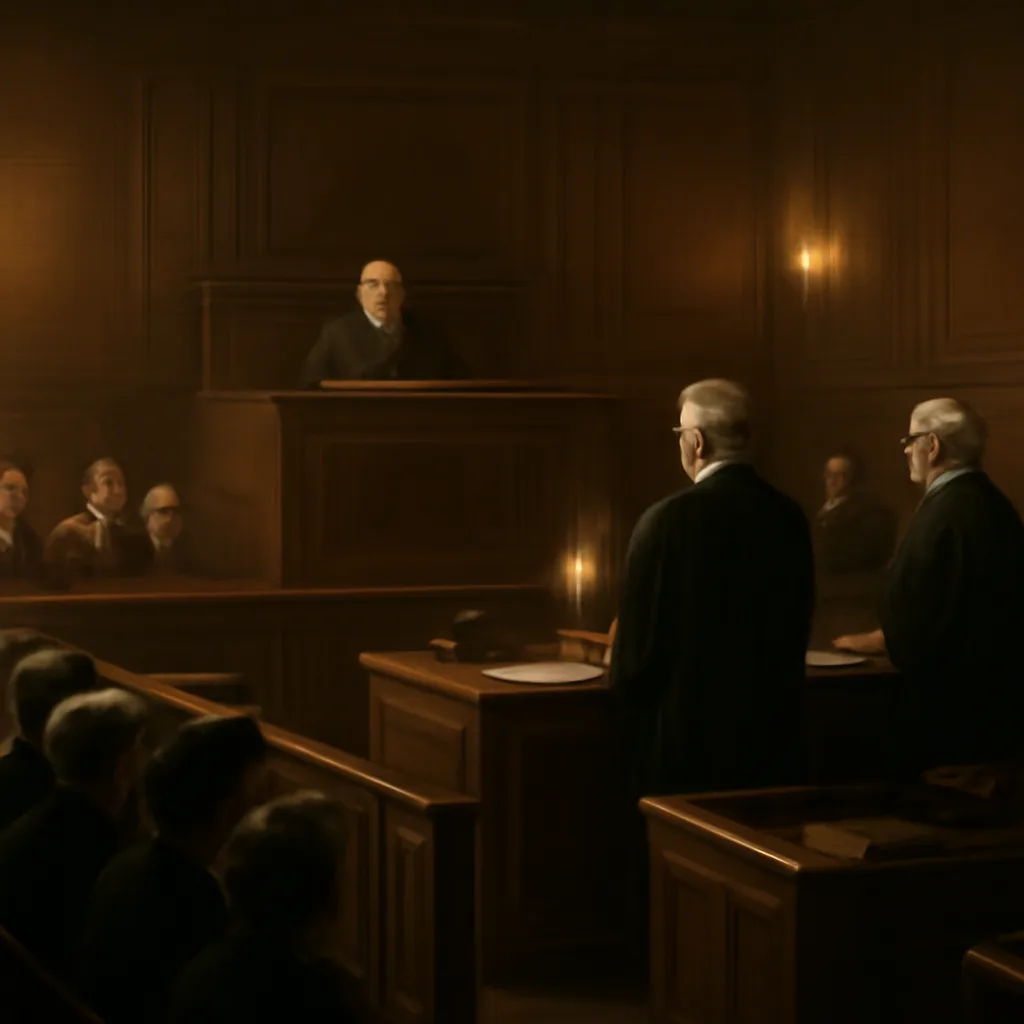
On 23 February 1846 a case commonly cited as the first documented sleepwalking homicide reached public attention in Britain. The incident involved a man who, according to contemporary reports and later medical discussions, killed another person while allegedly in a somnambulistic state. The event became a focal point for courts, physicians and the press as Victorian society grappled with how to understand actions committed during altered states of consciousness. Details of the incident and trial were reported in newspapers and medical journals of the period, which relayed testimony about the accused's prior history of sleepwalking, the circumstances of the killing and medical opinions offered to the court. Physicians who examined the defendant argued that somnambulism (then termed "sleepwalking") could produce complex, goal-directed behaviour without conscious awareness, a claim that posed a challenge to established legal concepts of intent and responsibility. Prosecutors and some commentators countered with skepticism, suggesting that claims of unconscious action might be fabricated or exaggerated to evade punishment. The case did not settle the matter. Instead it stimulated legal precedent and medical inquiry. Courts began to consider expert testimony on mental state and on conditions that might impair conscious control. Medical writers used the episode to illustrate somnambulism's potential severity and to call for systematic study of sleep disorders. Over the following decades, subsequent cases elsewhere would draw on the same medical-legal vocabulary, and the 1846 episode is often referenced by historians as an early documented instance in which sleepwalking was invoked in a homicide case. Historians and legal scholars note important caveats. Contemporary reporting could be partisan or sensationalist, and surviving accounts sometimes conflict on particulars—such as the precise identity of the accused, the victim, or the exact course of the trial. Medical understanding of sleep phenomena in the mid-19th century remained rudimentary compared with later neurology and psychiatry, so interpretations offered at the time reflected the limits and biases of Victorian science and law. Modern historians therefore treat the 1846 case as significant for its cultural and procedural impact rather than as a definitive medical proof that the killing occurred entirely without conscious intent. The legacy of the 1846 case lies in its role in shifting how courts and physicians approached unusual mental states. It helped bring sleep-related behavior into medico-legal discourse and encouraged courts to accept expert evidence on psychological and neurological conditions. That evolution has continued: contemporary legal systems now routinely consider forensic psychiatry and sleep medicine when evaluating claims of impaired consciousness during criminal acts. The 1846 incident remains a point of reference in discussions about culpability, expert testimony and the interplay of emerging scientific knowledge with legal responsibility.