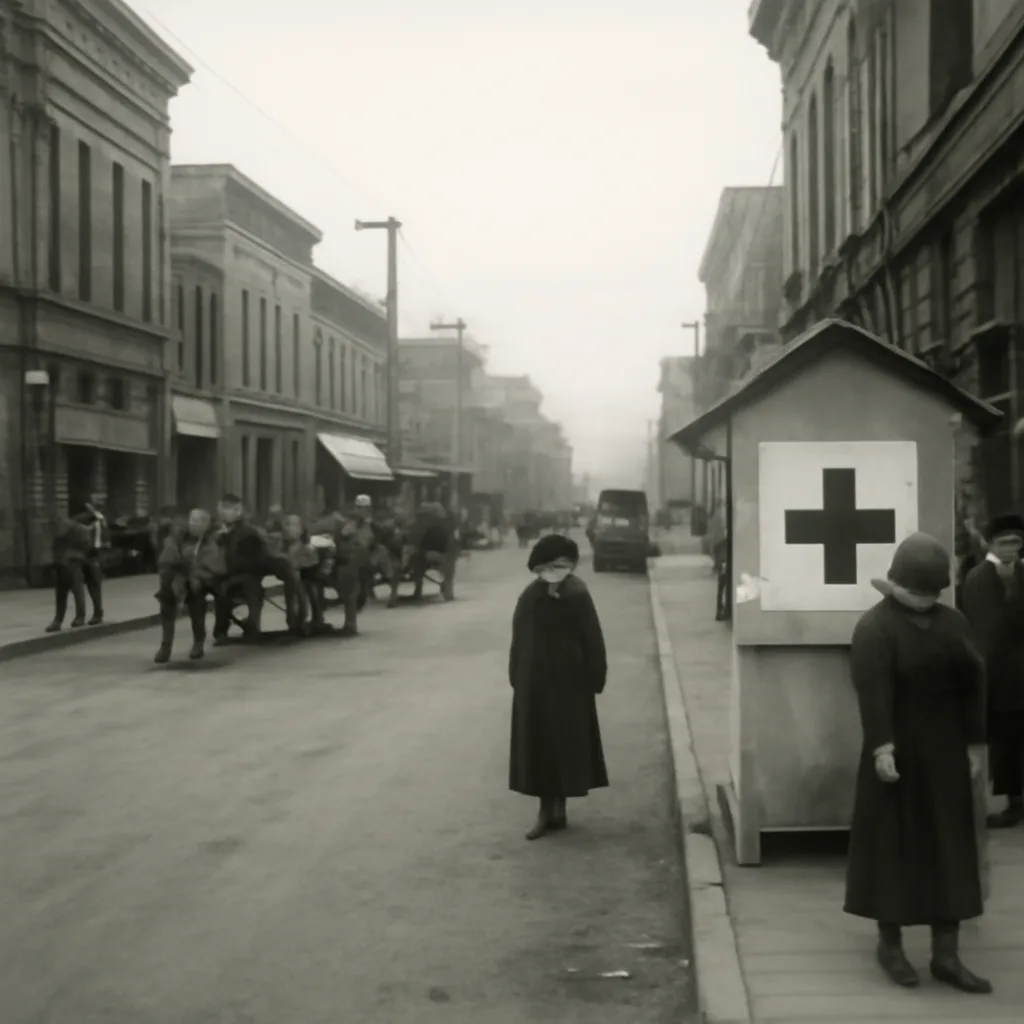
By early 1920 the deadly pandemic that began in 1918 had largely subsided in most regions. While waves of illness had waned in different places at different times, public health records and contemporaneous government reports show that by March 1920 excess mortality attributable to influenza and its complications had dropped to levels comparable with peacetime seasons in many nations, and the pattern of large, sustained epidemics had ended. Origins and course The pandemic emerged in 1918 and produced at least three major waves through 1919; mortality was especially heavy in 1918 and early 1919. The causative agent was an influenza A (H1N1) virus, identified retrospectively in later scientific work. Transmission was aided by wartime troop movements, crowded medical and civilian facilities, and the limited medical treatments available at the time. Public health responses included isolation, quarantine, closure of public spaces, and use of face coverings in some localities, with responses varying widely by city and country. Why March 17, 1920 is marked Different jurisdictions reported the end of their epidemic conditions at different dates. March 17, 1920 is often cited in secondary summaries as a convenient marker reflecting when many health authorities observed that epidemic activity had ceased and excess deaths had returned toward baseline. This date does not represent a single global proclamation but rather a temporal midpoint after which sustained, widespread waves were no longer occurring in most affected regions. Aftermath and continuing risks Even after the pandemic’s main waves ended, influenza did not vanish. Seasonal influenza returned in subsequent years, and localized outbreaks continued to occur. The pandemic left lasting impacts: a substantial death toll (estimates vary by source), disruptions to societies and economies already strained by World War I, and renewed emphasis on public health surveillance and infrastructure. Medical science learned from the experience, accelerating interest in influenza research, vaccine development in later decades, and international cooperation on disease monitoring. Historical uncertainties and interpretation Estimates of the pandemic’s global death toll and exact timeline differ among historians and epidemiologists because of incomplete records, inconsistent reporting standards, and the challenge of attributing deaths to influenza versus secondary bacterial complications. No single date can capture the complex, staggered waning of epidemic activity worldwide; March 17, 1920 serves as a useful reference point for when many officials considered the immediate emergency to have passed. Legacy The 1918–20 influenza pandemic remains a focal point in public health history for its scale and the lessons it offered about nonpharmaceutical interventions, the importance of surveillance, and the need for medical research and public health systems capable of responding to global outbreaks. Its conclusion in 1920 marked the end of the most acute phase, even as influenza continued to circulate and cause illness in the decades that followed.