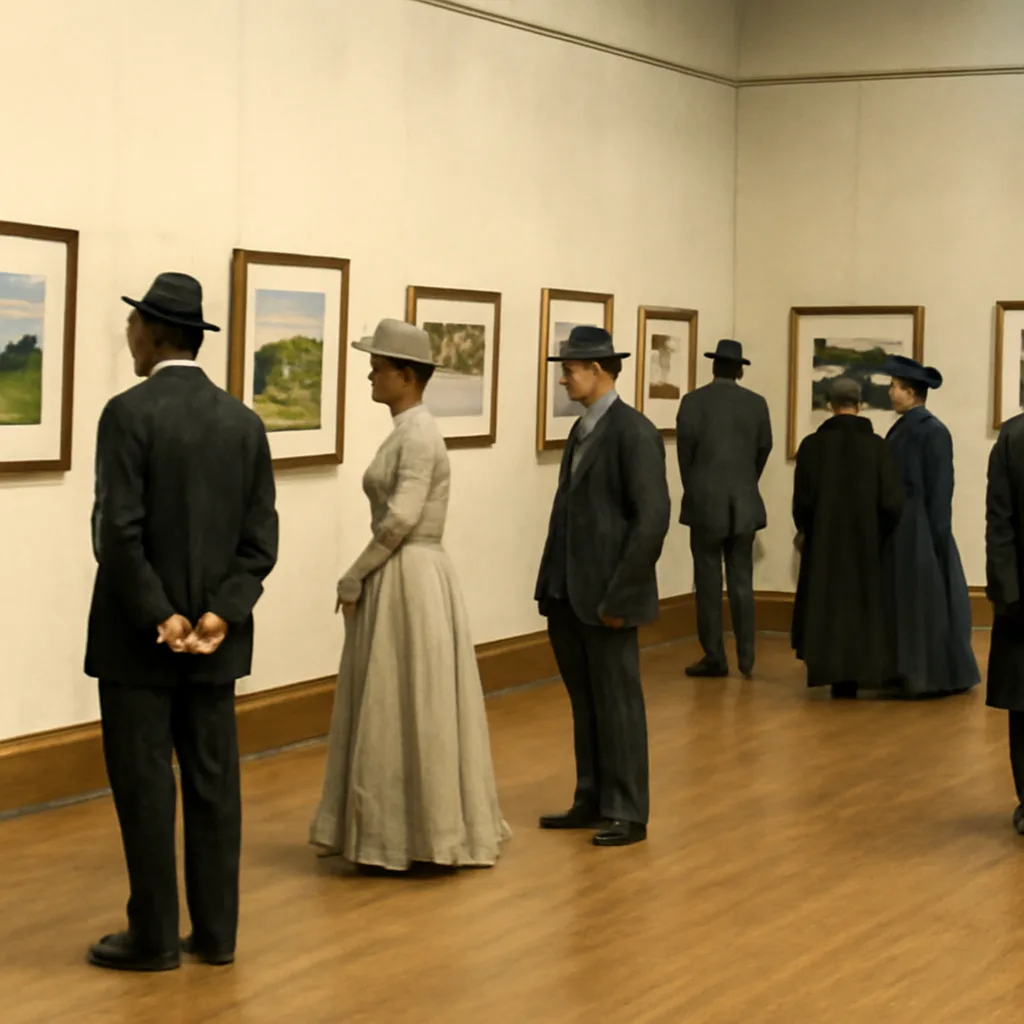
On March 17, 1904, inventors and photographic practitioners publicly demonstrated an early practical method for producing continuous-tone color photographs. The event drew attention because it translated decades of experimental work into a process that could render natural colors more faithfully than earlier color experiments and novelty hand-coloring techniques. Background Color photography developed through multiple parallel lines of research during the 19th century. Early color results included experiments with additive color screens, such as James Clerk Maxwell’s 1861 tricolor demonstration using three black-and-white exposures through red, green and blue filters, and various attempts to combine or layer dyed prints. Many processes were either laboratory curiosities or required laborious, multi-step work that limited wider use. By the late 19th and early 20th centuries, inventors sought more practical, single-step or simpler methods. Advances in emulsion technology, color sensitizers, and dye-transfer techniques converged to make demonstrations of usable color photographic prints increasingly feasible. The 1904 Demonstration The demonstration on March 17, 1904, presented a process that aimed to produce continuous-tone color photographs suitable for viewing by the general public rather than simply as scientific proofs. Contemporary reports emphasized that the images displayed a range of natural hues and tonal subtleties not typical of earlier hand-colored or simple additive-screen approaches. Accounts from the period identify several competing processes and demonstrations taking place in the early 1900s. While some demonstrations used refined tricolor separation and projection methods, others relied on subtractive dye-transfer prints or novel single-plate emulsions that captured multiple color records. The 1904 event is best understood in this wider context of incremental technical progress rather than as the single invention of modern color photography. Technical significance The practical importance of demonstrations like the one in March 1904 lay in making color photography more reproducible and accessible. Improvements included better color sensitivity of photographic emulsions (so different wavelengths registered more faithfully), more reliable methods to combine color records into a single viewable image, and refinements that reduced registration errors and color casts. These advances influenced later commercial color systems developed in the 1910s–1930s and ultimately the popular color films and processes that emerged mid-century. Legacy and caveats Historians treat the 1904 demonstration as a milestone among several early public showings and technical breakthroughs rather than the absolute origin of color photography. Earlier experiments (notably Maxwell’s tricolor proofs and the Autochrome process introduced by the Lumière brothers in 1907) and later commercial processes each contributed essential elements. Precise technical details and claims from specific demonstrations can be disputed in contemporary press coverage and patent filings, so the 1904 demonstration is best cited as part of an evolutionary trajectory toward practical color imaging. For readers tracing the history of color photography, the March 1904 public demonstration represents a clear sign that color processes were moving out of specialized laboratories and into broader technical and public discourse—an important step on the path to the widely available color photographs of the 20th century.