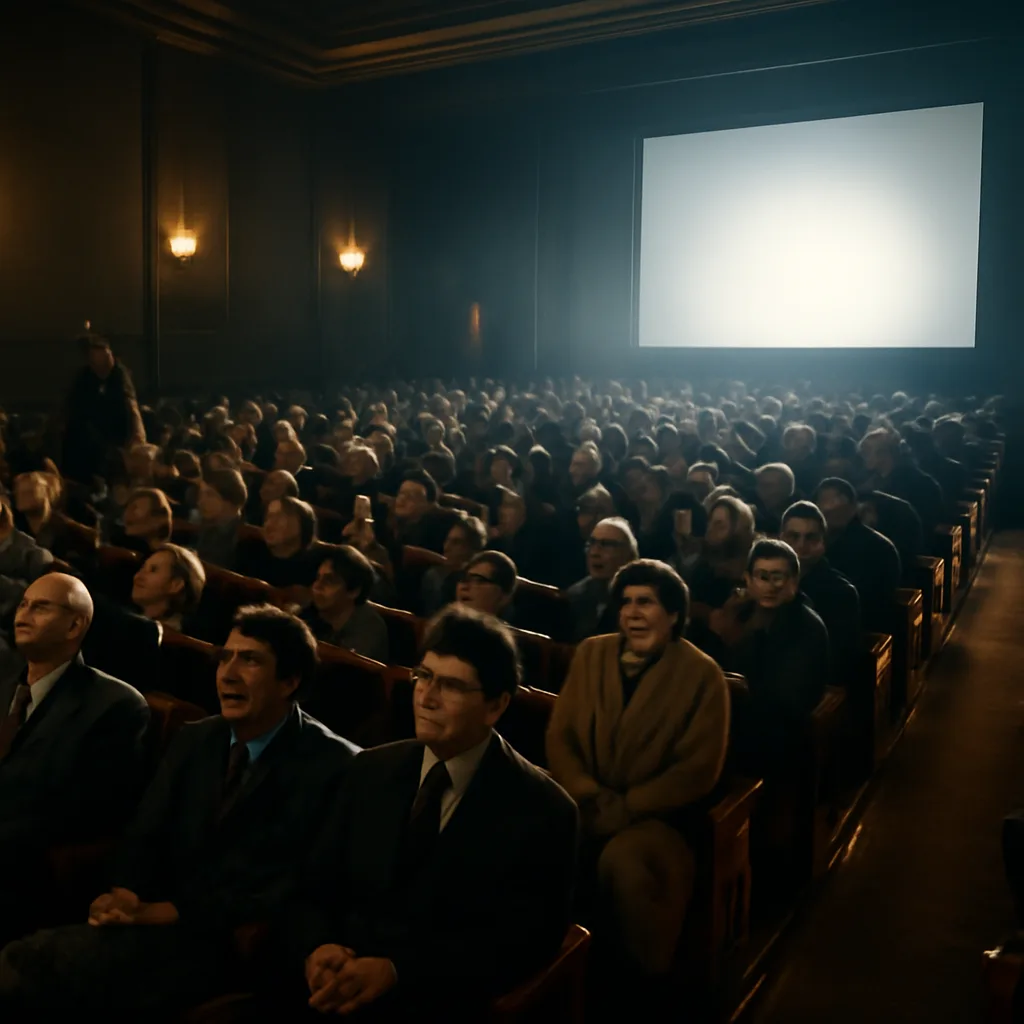
On May 27 (year reported in contemporary accounts as 1952), a showing of a stereoscopic, polarized 3D feature in New York City produced a brief but notable disturbance when several audience members reacted as if confronted with a real threat. The incident is remembered not as a tragedy but as an example of how new visual technologies and crowded urban theaters could generate confusion and alarm. In the early 1950s, commercial three-dimensional cinema—using dual-projector systems and polarized or anaglyph glasses—was undergoing a boom in the United States. The novelty of depth-enhanced images and newly widespread wearing of viewing glasses meant many patrons were still acclimating to the sensation that objects on-screen could appear to project into the auditorium. Reports from period newspapers describe a scene in which a realistic on-screen sequence, combined with smoke effects and rapid cuts, prompted several viewers to shout and move toward exits, believing an on-stage or auditorium hazard had occurred. Contemporary coverage indicates the commotion was limited and quickly contained by theater staff and police who inspected the house and confirmed there was no fire or other immediate danger. Theater management and local authorities subsequently attributed the disturbance to misperception: the powerful illusion of depth created by the 3D projection, possibly aggravated by darkened aisles, crowded seating, and nervous viewers unfamiliar with the format. No fatalities or serious injuries were reported in accounts available from the period. The episode fed into larger conversations at the time about cinema safety, crowd behavior, and the social reception of new entertainment technologies. Newspapers and trade publications used the event to advise theater operators to brief audiences on 3D glasses and projection quirks, improve aisle lighting, and train ushers to manage startled patrons. Exhibitors also learned that clearer pre-show instructions and calmer pacing during particularly startling sequences could reduce the risk of panic. Historians of film exhibition note that such incidents—while uncommon—were plausible in an era when theaters routinely hosted large, densely packed audiences and new spectacle technologies (3D, widescreen, and stereophonic sound) were making moviegoing more immersive. The 1952 screening is often cited as illustrative rather than exceptional: it underlines how sensory innovations can temporarily outpace public familiarity and how public venues must adapt procedures to new technologies. Primary-source accounts from the period vary in detail, and some contemporaneous reports amplified the level of alarm; later histories tend to treat the episode as a short-lived disturbance without wider consequences. No credible evidence links the incident to long-term policy changes beyond routine exhibitor advisories, but it remains a footnote in histories of midcentury cinematic spectacle and urban public reactions to emerging media experiences.