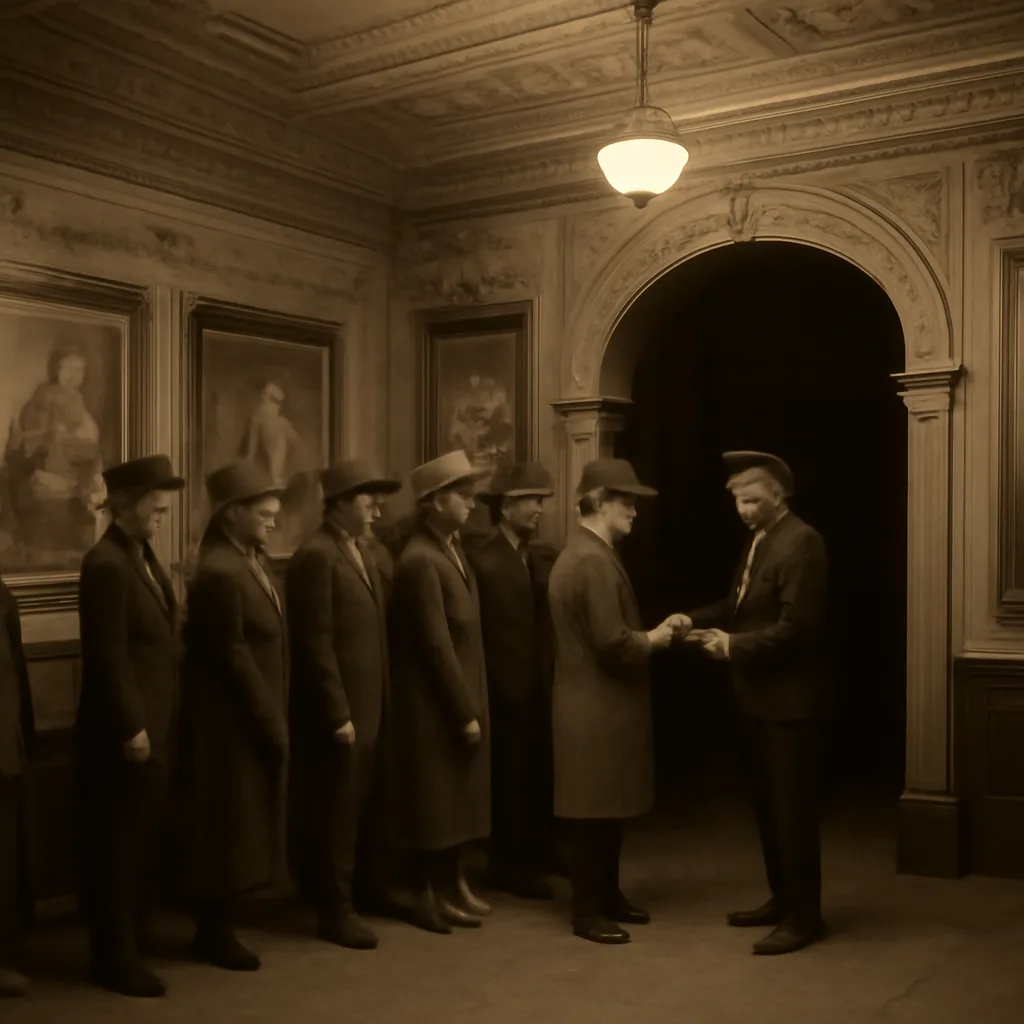
On June 4, the U.S. Supreme Court issued a decision that became one of the first major affirmations of state power to regulate motion pictures. In the early decades of the 20th century, movies quickly became a mass medium, provoking debates about moral influence, public order, and the appropriate scope of constitutional protections. States and municipalities responded by creating censorship boards and reviewing films for content deemed obscene, indecent, or harmful to public morals. The Supreme Court’s ruling upheld such state censorship authority, placing films in a distinct legal category from newspapers and other forms of expression that had earlier received stronger First Amendment protections. Background Motion pictures emerged as a new form of popular expression in the late 19th and early 20th centuries. As film audiences expanded, local and state governments moved to regulate content. By the 1910s and 1920s, many jurisdictions had established film censorship boards empowered to approve, reject, or require cuts to films before public exhibition. Those boards were defended as necessary to prevent social disorder, protect children, and maintain community standards. The Supreme Court’s decision The Court’s ruling addressed whether motion pictures were entitled to the same constitutional protection as written press and political speech. In affirming states’ rights to oversee and restrict films, the Court treated motion pictures as a business subject to regulation rather than as fully protected speech. The decision relied on contemporary views about film’s persuasive power and the state’s interest in safeguarding morals and public welfare. As a result, municipal and state censorship boards retained legal authority to license, ban, or demand edits to films shown within their jurisdictions. Legal and cultural impact The ruling had immediate and long-term consequences. Legally, it permitted continued governmental oversight of film content for several decades and reinforced a regulatory framework in which movie producers and distributors often complied with local boards to secure exhibition. Culturally, the decision influenced studio practices: self-censorship and industry guidelines emerged to avoid conflicts with local regulators and to secure wider distribution. The perceived need to satisfy diverse local standards contributed to the film industry's later development of national codes and voluntary rating systems. Later developments The Supreme Court’s early endorsement of film regulation was not permanent doctrine. Over time, the Court’s First Amendment jurisprudence evolved. By the mid-20th century, subsequent rulings extended greater constitutional protection to movies, treating them more like other forms of expression. Changes in legal standards, shifting social attitudes, and the rise of national distribution networks reduced the practical authority of local censorship boards. Ultimately, many state and municipal boards dissolved or became obsolete, and industry-led rating systems took their place. Historical significance The June 4 decision is historically significant for illustrating how new technologies and media test constitutional categories and for showing how courts, legislatures, and industries respond to public concerns about content. It underscores a period when courts were willing to permit content regulation in the name of community standards, a posture that the Supreme Court later modified as First Amendment protections broadened for audiovisual media. Notes on sources and interpretation This summary describes a well-documented phase in American legal history when the Supreme Court upheld state film censorship authority; specific case names, vote counts, and contemporaneous opinions are matters of public record and can be cited in a more detailed legal account. Where details or case attributions are uncertain, scholars point to the broader doctrinal trend: early 20th-century decisions treated movies differently from the press, a stance that shifted in mid-century jurisprudence.