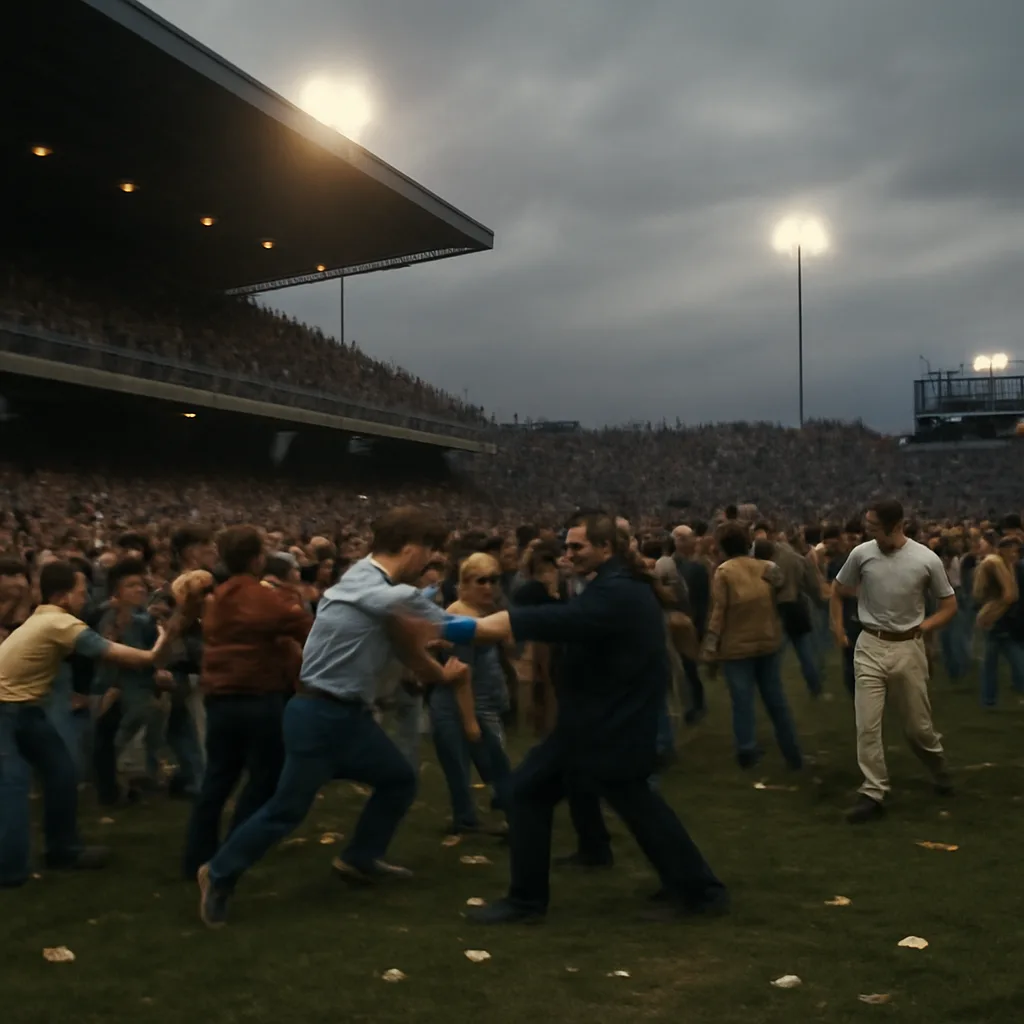
On June 4, 1974, Cleveland Stadium hosted one of Major League Baseball’s most notorious promotions: “Ten Cent Beer Night.” The Cleveland Indians offered heavily discounted beer to attract fans during a season of poor attendance. The idea, intended to boost gate receipts and create a lively atmosphere, instead contributed to a breakdown of crowd control and public order that night. The Indians played the Texas Rangers in a 7:35 p.m. game. Stadium policy and the promotion allowed fans to buy beer in large quantities for a dime per cup. Alcohol sales were later cited as a major factor in the evening’s escalation. Throughout the game, fans became increasingly intoxicated and rowdy. Incidents of obscene gestures, taunting, and throwing of bottles and debris at players and umpires occurred as tensions rose. By the ninth inning, with the Rangers leading, tensions peaked. Accounts from that night describe fans throwing items onto the field and one fan running onto the outfield grass. The situation rapidly deteriorated when a group of fans charged the field; some attempted to attack Rangers outfielder Jeff Burroughs and other players. In response, Texas players and coaches tried to defend themselves; some used bats and fists to repel fans. The melee involved both players and spectators, and police moved in to separate combatants. The umpires, citing player safety and the inability to restore order, declared the game a forfeit in favor of the Texas Rangers. Ultimately more than 60 arrests were reported and numerous people—fans, players, and police officers—sustained injuries of varying severity. Local news coverage at the time emphasized the role of excessive alcohol, inadequate crowd control, and an overly permissive promotional concept in producing the riot. The incident prompted immediate and long-term changes. The Indians and other ballparks revised their alcohol policies and event promotions. Stadiums tightened controls on intoxicated patrons, restricted refill policies, increased security presence for promotional nights, and altered ticketing and seating arrangements when offering discounted alcohol. Major League Baseball and team operations considered liability and public-safety implications for future promotions. Ten Cent Beer Night remains a cautionary example in sports management and crowd-control studies. It is frequently cited in discussions about the risks of alcohol-related promotions and the responsibilities of event organizers to anticipate and mitigate volatile crowd behavior. While reminiscences of the event sometimes emphasize the surreal or darkly comic elements, the immediate consequences—injury, arrest, and a forfeited game—underscore its seriousness.