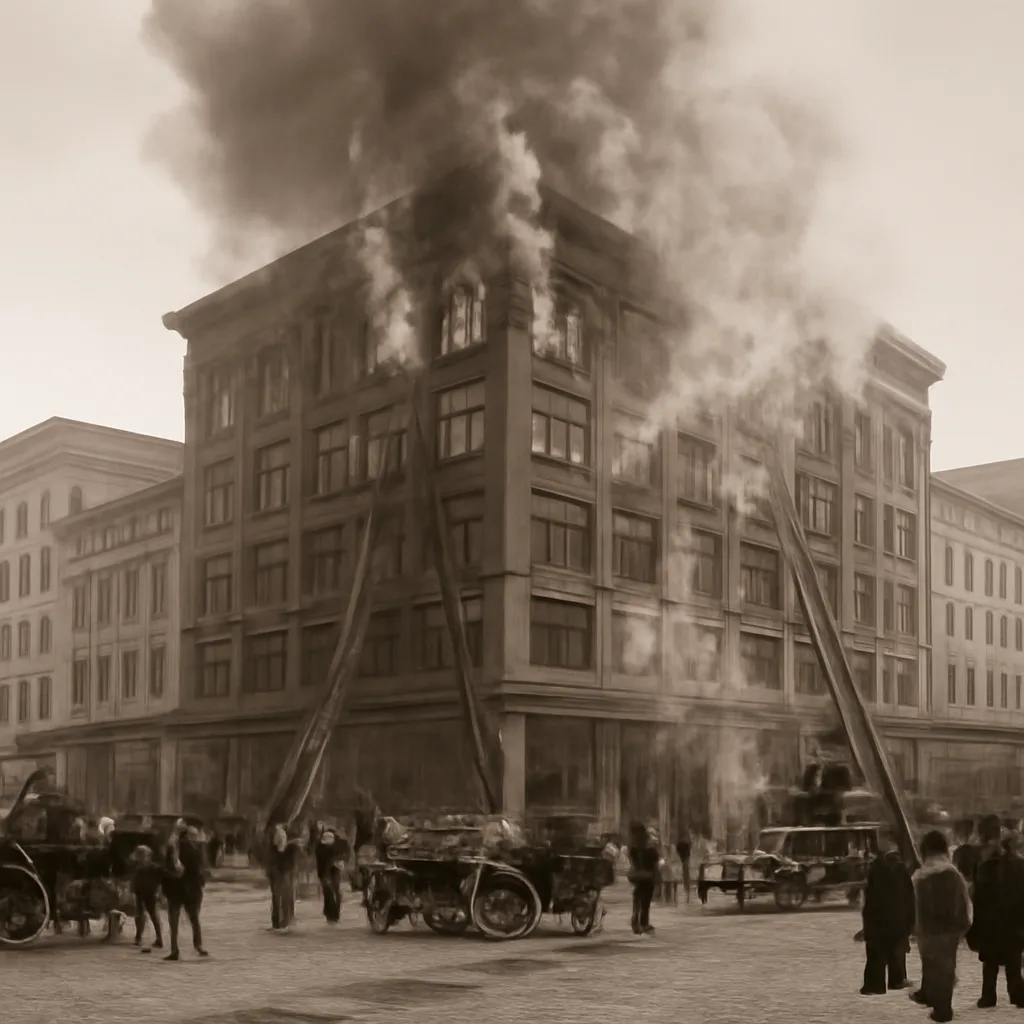
On May 11 (year varies by local record), a catastrophic high-rise fire highlighted vulnerabilities in early 20th-century construction and emergency response, setting in motion regulatory reforms that changed how taller buildings were designed, built and protected. Though exact dates and local details differ by city and building, fires in the first decades of the 1900s exposed the limits of combustible materials, inadequate means of egress, poor fireproofing, and the challenges firefighters faced when confronting blazes at height. Context and causes Turn-of-the-century urban centers were expanding upward. Steel-frame construction and elevators enabled taller commercial and residential blocks, but many high-rises incorporated combustible interior finishes, wooden staircases, inadequate compartmentation, and limited or poorly designed stairwells and exits. Electrical systems and heating also were often primitive by later standards. When a significant high-rise conflagration occurred in May (commonly reported as May 11 in several municipal archives), these factors combined to let fire spread rapidly and to hamper rescue and firefighting operations. Immediate consequences The human toll and property losses from the incident galvanized public attention and municipal authorities. Local fire departments documented operational problems—limited hose reach and water pressure at elevation, lack of internal standpipes, inadequate ladders and equipment for high floors, and difficulties directing ventilation and smoke control. Investigations of the time catalogued how building features facilitated fire spread and complicated egress. Regulatory and technological responses Municipal and state regulators responded by mandating a set of practical measures that became standard in subsequent building codes: - Means of egress: requirements for wider, better-located, and multiple protected stairwells; clearer exit signage and lighting; and limits on dead-end corridors. - Fireproofing and materials: expanded use of noncombustible interior finishes, fireproofing of structural steel, masonry shaft enclosures, and fire-resistive floor and ceiling assemblies. - Internal water supply and firefighting features: installation of standpipes and pressure-capable risers to serve upper floors, requirements for automatic sprinkler systems in certain occupancies, and provision for fire department connections. - Building services and compartmentation: rules for fire separations between occupancies, fire doors, and shaft enclosures for elevators and utilities to reduce vertical fire spread. - Equipment and tactics: upgrading fire department ladders and pumping apparatus, training for high-rise operations, and development of tactics for smoke control and staged evacuation. Longer-term influence on codes and practice These reforms fed into the evolution of national model codes and local ordinances during the 1910s–1930s. Over time, the principles established in response to early high-rise fires—redundant exits, active and passive fire protection, and requirements enabling firefighting at elevation—were refined and expanded, influencing standards such as the National Fire Protection Association (NFPA) guidance and model building codes. The incremental regulatory approach reflected lessons learned from multiple incidents rather than a single uniform law; many cities adopted measures at different paces and with local variation. Legacy and modern relevance Elements first emphasized after early 20th-century high-rise fires remain central to contemporary high-rise safety: automatic sprinkler systems, protected stairways, fire-resistive construction, and engineered smoke-control and evacuation planning. Fire departments today continue to adapt equipment and procedures for taller and more complex modern buildings, but the framework of combining active systems, passive barriers, and egress design traces back to reforms sparked by those early disasters. Uncertainties and local variation Contemporary accounts and later histories sometimes date individual incidents differently or attribute particular reforms to separate fires in different cities. Because municipal records and press reports from the period can vary, specific legislative timelines and the role of any single May 11 event differ by jurisdiction. The broad pattern—major early high-rise fires driving practical code and operational changes—however, is well documented across multiple cities and remains a consistent theme in the development of building-safety regulation.