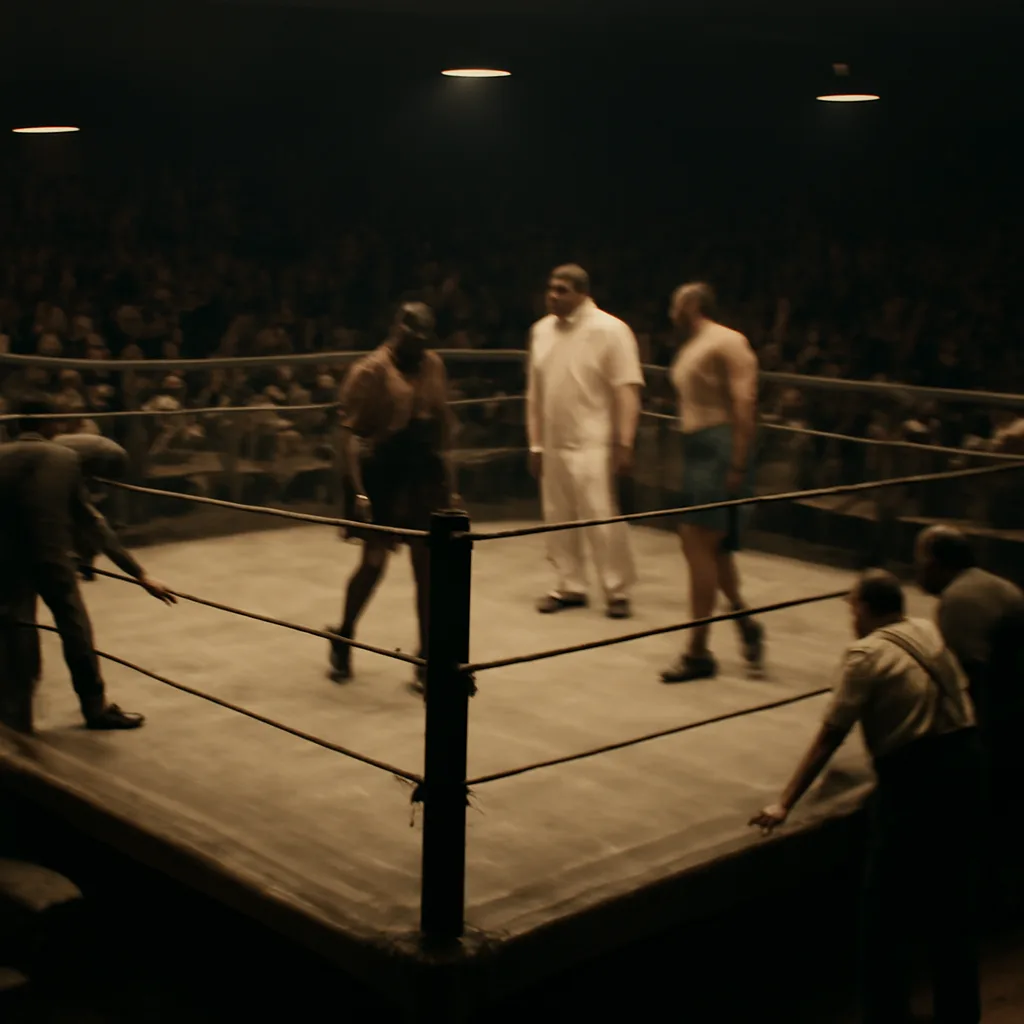
During an April 21, 1939, bout, a professional boxing ring partially collapsed, stopping the fight in the middle of a round and prompting an emergency response and an improvised restart; reports from the time describe confusion and concern but no fatal injuries.
On April 21, 1939, a professional boxing match was interrupted when the ring’s structure gave way during the middle of a scheduled round. Contemporary newspaper accounts and later summaries describe a sudden sagging or partial buckling of the canvas and supporting ropes, which made continued fighting dangerous and forced officials to halt the contest while venue staff assessed and shored up the ring.
The incident occurred in the context of a busy boxing circuit in the United States, where events in small arenas and bigger municipal auditoriums drew local crowds. Reports from the period indicate that audience members and participants reacted with surprise and alarm as the ring showed visible instability. Boxers were removed from immediate action by referees and handlers, and ringside attendants worked to secure the posts and tighten the ropes. Medical personnel examined the fighters; while some accounts mention minor scrapes or bruises, no authoritative contemporary source reports any life-threatening injuries arising directly from the collapse.
Boxing rings of the era typically sat on raised wooden platforms with spruce or pine boards and used turnbuckles, rope, and canvas that required regular maintenance. Overuse, inadequate inspection between events, or a defect in construction could cause sections to weaken. In 1930s venues—especially those hosting frequent shows with quick turnarounds—the risk of structural problems increased, and newspapers of the time occasionally covered such mishaps alongside more routine reports of knockouts and title fights.
After the stoppage, officials followed two immediate priorities: ensuring the safety of the fighters and restoring a ring surface adequate for regulated combat. Depending on the specific account, the contest either resumed after repairs and a brief delay or was declared a no-contest if officials judged the ring unsafe or if one fighter could not continue. Newspaper columns covering the incident emphasized the confusion in the minutes after the collapse and noted prompt action by ringside personnel. Promoters and venue managers frequently faced scrutiny afterward, with some publications calling for stricter oversight of ring construction and maintenance to prevent similar occurrences.
The April 21, 1939, incident attracted attention because it interrupted a live sporting event and highlighted infrastructure vulnerabilities in boxing at the time. While not among the most famous boxing emergencies of the era, it contributed to ongoing conversations—reported in sports pages and letters to the editor—about athlete safety, venue responsibility, and the need for standardized inspections. Over subsequent decades, regulatory bodies and athletic commissions introduced and enforced more rigorous standards for ring construction, platform stability, and pre-fight safety checks, partly in response to assorted incidents like this one.
Historical records for this specific date come primarily from contemporary newspaper reports and boxing periodicals; some details (such as exact venue, attendance figures, or the names of the fighters involved) vary between sources or are omitted in brief reports. Because available accounts differ and not all have survived digitization, researchers rely on multiple contemporaneous newspapers and boxing registries to corroborate particulars. The commonly agreed facts are the date (April 21, 1939), that a ring failure occurred mid-round, that officials halted the match to address safety concerns, and that there were no widely reported fatalities tied directly to the structural failure.
This episode serves as a reminder of the practical risks in early 20th-century sporting venues and the incremental improvements in safety protocols that followed. It also illustrates how routine maintenance and regulatory oversight—now standard practice—were matters of evolving concern in an era when professional boxing was a central feature of American popular sports culture.