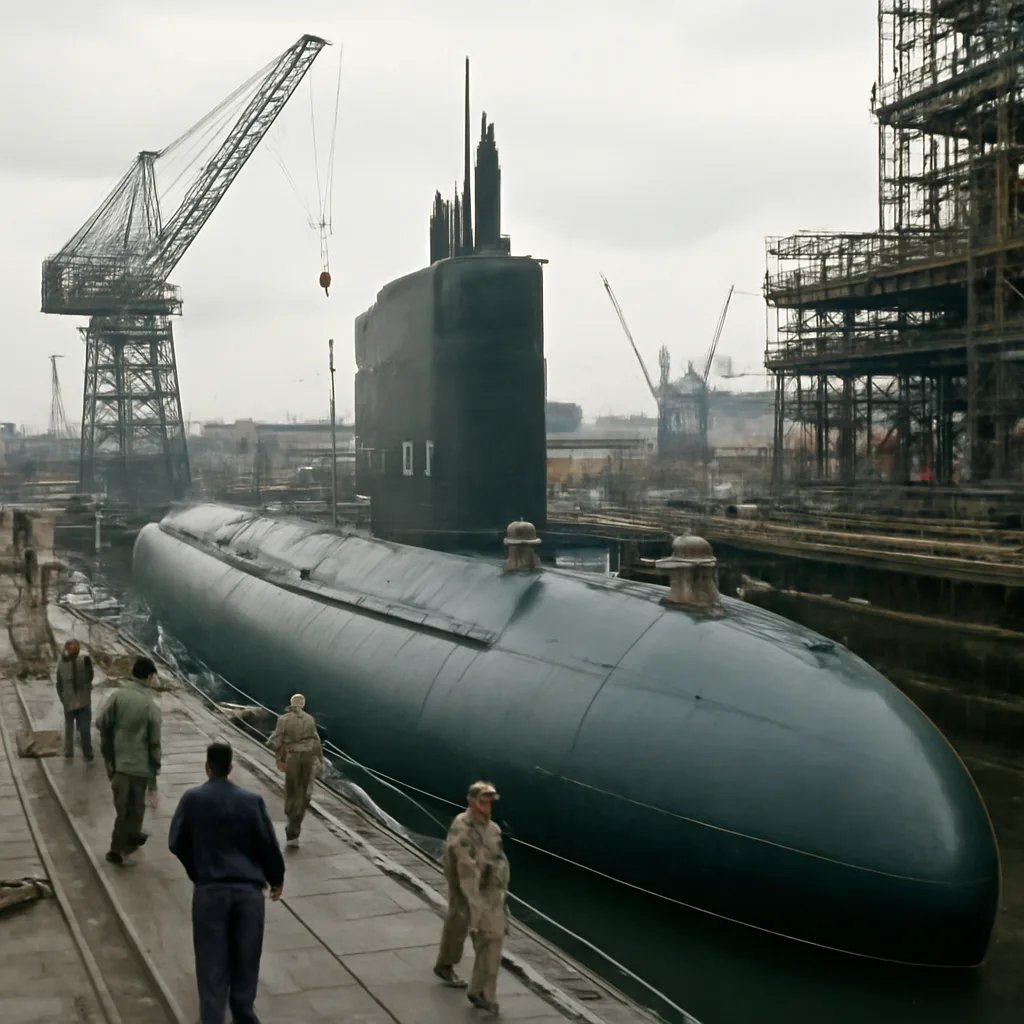
The USS Nautilus (SSN-571) represents a pivotal technological and strategic advancement in naval history as the first operational submarine propelled by nuclear power. Its development began during World War II and accelerated in the immediate postwar years, driven by advances in nuclear reactors and a desire for submarines capable of sustained submerged operations without reliance on atmospheric oxygen. Design and construction Construction of Nautilus drew on collaboration between the U.S. Navy, engineer Rear Admiral Hyman G. Rickover—who became the driving force behind naval nuclear propulsion—and private shipyards and reactor designers. The submarine was built by the Electric Boat Division of General Dynamics in Groton, Connecticut. Nautilus was designed with a pressurized-water nuclear reactor that provided steam for turbines, enabling continuous submerged propulsion at speeds and durations far beyond diesel-electric submarines of the era. Launch and commissioning Sources differ on how to describe a single fixed "launch" date for Nautilus in popular accounts because the vessel progressed through several milestone events—keel laying, launching (sliding into the water), and commissioning into active service. The submarine was launched (christened and floated) in January 1954 and was formally commissioned into the U.S. Navy on September 30, 1954. Those milestones marked Nautilus’s transition from construction to operational status and the start of an era in which submarines could operate submerged for weeks or months rather than hours. Operational impact Nuclear propulsion fundamentally changed submarine operations. Nautilus demonstrated that a nuclear-powered submarine could sustain high speeds and long endurance while submerged, enabling new tactics in stealth, reconnaissance, and strategic deterrence. Nautilus’s capabilities led navies worldwide to reconsider submarine design, doctrine, and fleet composition. The submarine also underscored the Navy’s need for specialized training, support infrastructure, and safety protocols for nuclear propulsion systems. Legacy Nautilus conducted numerous notable voyages that showcased its capabilities, most famously completing the first submerged transit of the North Pole in August 1958, a milestone in polar navigation and demonstration of unrestricted submerged operation. The success of Nautilus prompted the rapid development and commissioning of additional nuclear-powered submarines, both attack and ballistic-missile types, reshaping Cold War naval strategy. Preservation and historical recognition After active service, Nautilus was decommissioned in 1980 and later designated a National Historic Landmark. The vessel is preserved and displayed at the Submarine Force Library and Museum in Groton, Connecticut, where it is open to the public and interpreted as a milestone in naval engineering and Cold War history. Notes on dates and terminology Different sources sometimes emphasize different milestone dates—keel laying, launching, commissioning—so accounts that cite a single date for "launch" can vary. The widely accepted commissioning date is September 30, 1954; the commonly cited 1954 timeframe reflects Nautilus’s transition into active service and the early operational period that followed. Because the development of nuclear propulsion involved many individuals, institutions, and classified program aspects during the early Cold War, some technical and programmatic details were not fully public at the time and remain subject to historical research and declassification. The broad outlines above reflect established, verifiable milestones and the vessel’s demonstrable impact on naval operations and strategy.