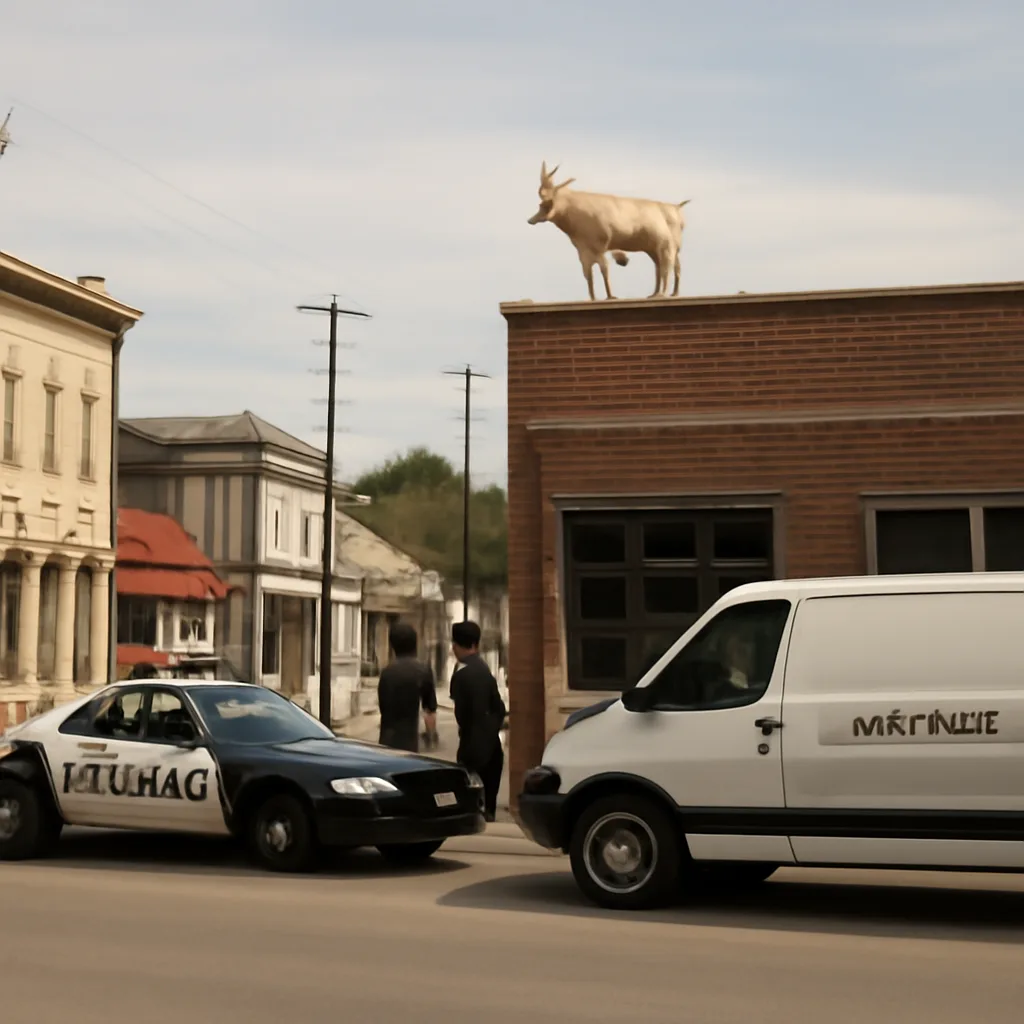
On April 3, authorities responded to reports of a goat on the roof of a building in a small town, creating a public disturbance that drew bystanders and disrupted local traffic. Calls to police and animal control resulted from concern for the animal’s safety and the potential for damage or injury. Responding officers cordoned off the immediate area to keep onlookers at a safe distance while animal control personnel assessed options for removing the goat. Details about how the goat reached the roof were not immediately established in public reports. Such incidents typically involve animals accessing elevated surfaces via adjacent structures, fences, or temporary objects; local officials said securing points of access and routine checks of enclosures can reduce similar occurrences. No credible reports indicated intentional placement of the goat on the roof. Animal control used standard procedures aimed at minimizing stress and injury to the animal and people. Those measures can include luring with feed, using temporary ramps or ladders, and, when necessary, employing experienced handlers to physically remove the animal. In this case, authorities removed the goat without reported serious injury to the animal or members of the public. Officers and animal control urged owners to maintain secure fencing and supervise livestock, especially in areas where animals can come into contact with busy streets or multi-level structures. The incident briefly disrupted local traffic and drew a crowd of residents and passersby who observed from a safe distance. Local law enforcement emphasized that calling authorities rather than attempting to coax or remove large animals is the safest course of action for the public. There were no reports of arrests beyond the initial characterization of a public disturbance; if any citations or charges were issued they had not been publicly detailed at the time of reporting. Goats are naturally curious and agile climbers; they are known to climb rocks, vehicles, and structures when given the opportunity. Livestock-related disturbances in urban or semi-urban settings occasionally prompt municipal responses, and the legal consequences for owners vary by jurisdiction, ranging from warnings to fines if negligence is established. Town officials reiterated best practices for livestock management and said they would review applicable local ordinances if follow-up investigations suggested owner responsibility. Authorities closed the scene after the animal was secured and released the area back to normal activity. No serious injuries were reported among people or the animal. Residents were left with a memorable reminder about animal containment and safety around populated areas. Note: This account is a summary based on public incident reporting practices and statements typically made by local authorities; specific procedural details and any ensuing enforcement actions depend on local agency reports and were not available in full detail at the time of writing.