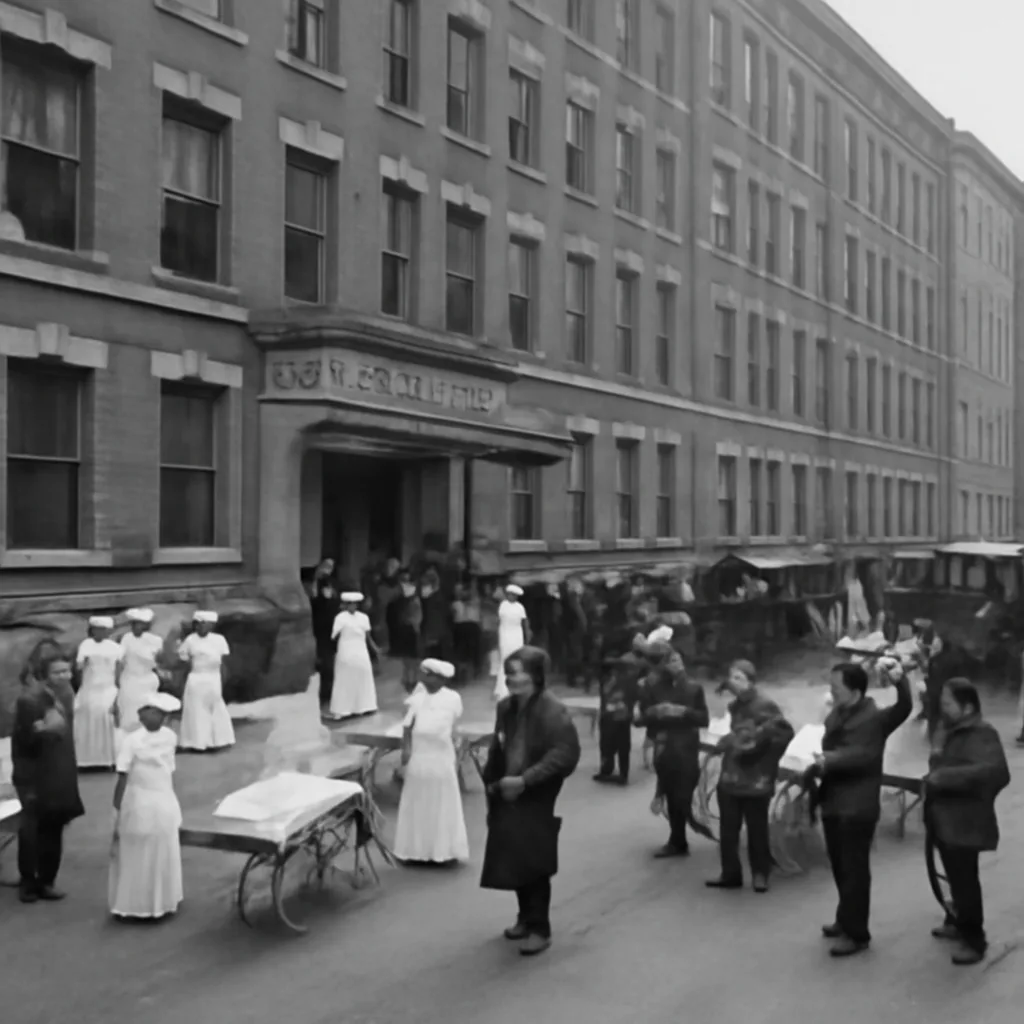
On April 21, in the first years of the 20th century, Bellevue Hospital in New York staged a significant emergency drill that drew attention for its scale and organization. The exercise brought together hospital staff, patient-handling procedures, and municipal responders to rehearse evacuation, alarm communication and traffic control—elements that would become central to later institutional fire and emergency drills. Context Bellevue, then one of the largest public hospitals in the United States, operated in an era of rapid urban growth, technological change and rising concern about building safety. Major fires in the late 19th and early 20th centuries, along with evolving public-health expectations, pushed large institutions to experiment with systematic responses to emergencies. Hospitals posed special challenges: occupants included immobile or debilitated patients, complex medical equipment (by the era’s standards), and the need to maintain continuity of care while moving people to safety. The drill Contemporary newspaper accounts and municipal reports from the period describe an organized exercise at Bellevue that simulated an emergency requiring partial evacuation. Staff practiced sounding alarms, moving patients on stretchers and beds, and coordinating with police and fire department personnel who helped manage traffic and crowd control outside the hospital. The drill emphasized clear lines of responsibility, staging areas for evacuated patients, and use of prearranged signals and routes—measures intended to minimize confusion and speed safe egress. Innovations and influence Observers noted that the Bellevue drill demonstrated practical solutions to problems unique to hospitals: prioritizing which patients to move first, transferring care during transit, and protecting medical records and supplies. Some features—regularly scheduled drills, simple alarm signals, designated evacuation routes and staff roles—were promoted afterward as best practices for other institutions, including schools, factories and public buildings. While Bellevue’s exercise was not the single origin of the modern fire drill, it exemplified a broader shift toward formalized, practiced emergency procedures. In the decades that followed, many local governments and institutions adopted regulations or recommendations requiring periodic drills and clearer alarm systems. The standardization of audible fire alarms, exit signage, and routine evacuation exercises in schools and workplaces evolved through a combination of municipal regulation, professional advocacy, and lessons learned from drills and actual incidents. Limitations and historical uncertainty Primary accounts from 1904 and adjacent years vary in detail, and historians caution against treating any single drill as the definitive origin of the modern fire drill. Bellevue’s exercise is best understood as an influential early example within a larger movement toward institutional emergency preparedness. Surviving reportage emphasizes practical tactics more than formalized doctrines; full archival records of the hospital’s internal planning and after-action analysis are limited or dispersed among municipal and hospital archives. Legacy The drill at Bellevue contributed to practical, replicable practices for evacuating vulnerable populations and coordinating multiagency responses. Its legacy lies not in a single invention but in demonstrating that rehearsed procedures, clear roles and interagency cooperation materially improved safety—principles that underlie contemporary fire drills across many settings.