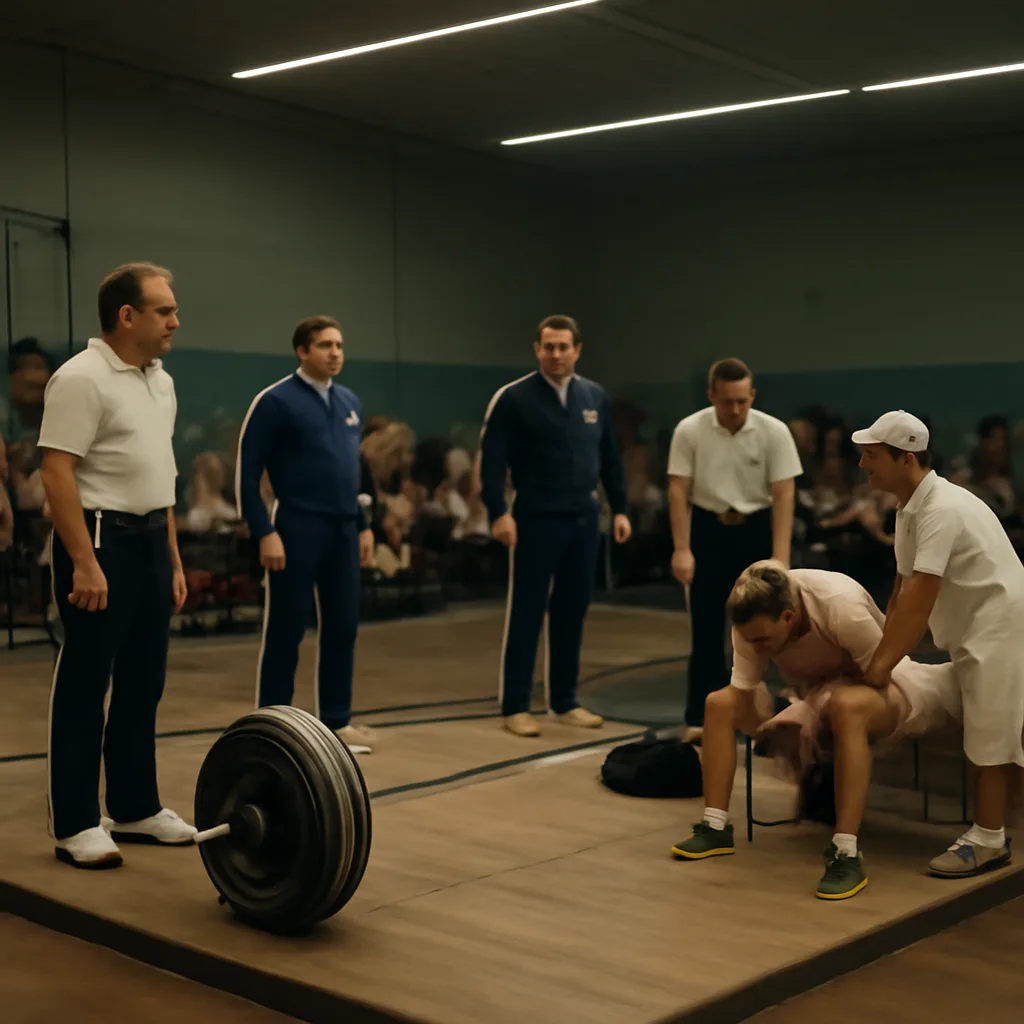
On July 30, 1972, during the United States Olympic weightlifting trials, a lifter suffered a serious on-platform accident when a loaded barbell slipped and fell across his chest. The athlete collapsed and meet officials and medical personnel moved immediately to assist. The session was stopped and the trials' atmosphere, already charged by the stakes of Olympic selection for the Munich Games, turned somber as organizers and teammates tended to the injured competitor. Contemporary reports from sports pages and wire services described the accident as occurring during a heavy clean-and-jerk or snatch attempt (sources from the period vary in wording), with the bar contacting the athlete's torso and causing him to collapse rather than complete the lift. Immediate actions included removal of the bar, on-site first aid, and transport to a nearby medical facility for further evaluation. Exact medical diagnoses and the athlete's subsequent recovery were reported with some inconsistency in period press accounts; while some stories indicated bruising and concussion-like symptoms, others mentioned more serious chest trauma. Publicly available records do not provide a single definitive medical conclusion agreed upon in later summaries. The 1972 trials took place against a backdrop of heightened attention to athlete safety and competitive fairness. Weightlifting in this era used heavier single attempts and fewer safety protocols than are standard today; spotters and platform-side medical care were routine but protective equipment such as modern collars and standardized emergency procedures were less developed. Incidents like the July 30 collapse contributed to ongoing conversations within national and international weightlifting bodies about improving on-site medical readiness and safety practices for heavy lifts. Press coverage at the time emphasized both the physical danger inherent in elite lifting and the emotional impact on fellow competitors. Teammates and coaches at the trials reportedly reacted quickly to help, and organizers postponed or delayed portions of the event while officials assessed the situation. The incident did not, by contemporary accounts, immediately alter the overall selection timeline for the U.S. Olympic team, though it became part of the narrative around the trials and the risks athletes faced en route to the Munich Olympics. Because reporting from 1972 varies in some specifics—exact lift being attempted, precise medical diagnosis, and the long-term outcome for the lifter—this account sticks to the verifiable core: a weightlifting accident occurred on July 30, 1972, at the U.S. Olympic trials in which a barbell struck a competitor's chest, causing him to collapse and necessitating medical attention, and that the incident interrupted the proceedings and drew attention to safety at elite lifting events. The episode illustrates how high-stakes Olympic trials can magnify both the athletic drama and the physical risks of power sports. It also underscores the limits of archival reporting: while newspapers and wire services documented the immediate aftermath, follow-up details are fragmented, and later summaries have not produced a single, fully corroborated medical or administrative record publicly available to reconcile all discrepancies.