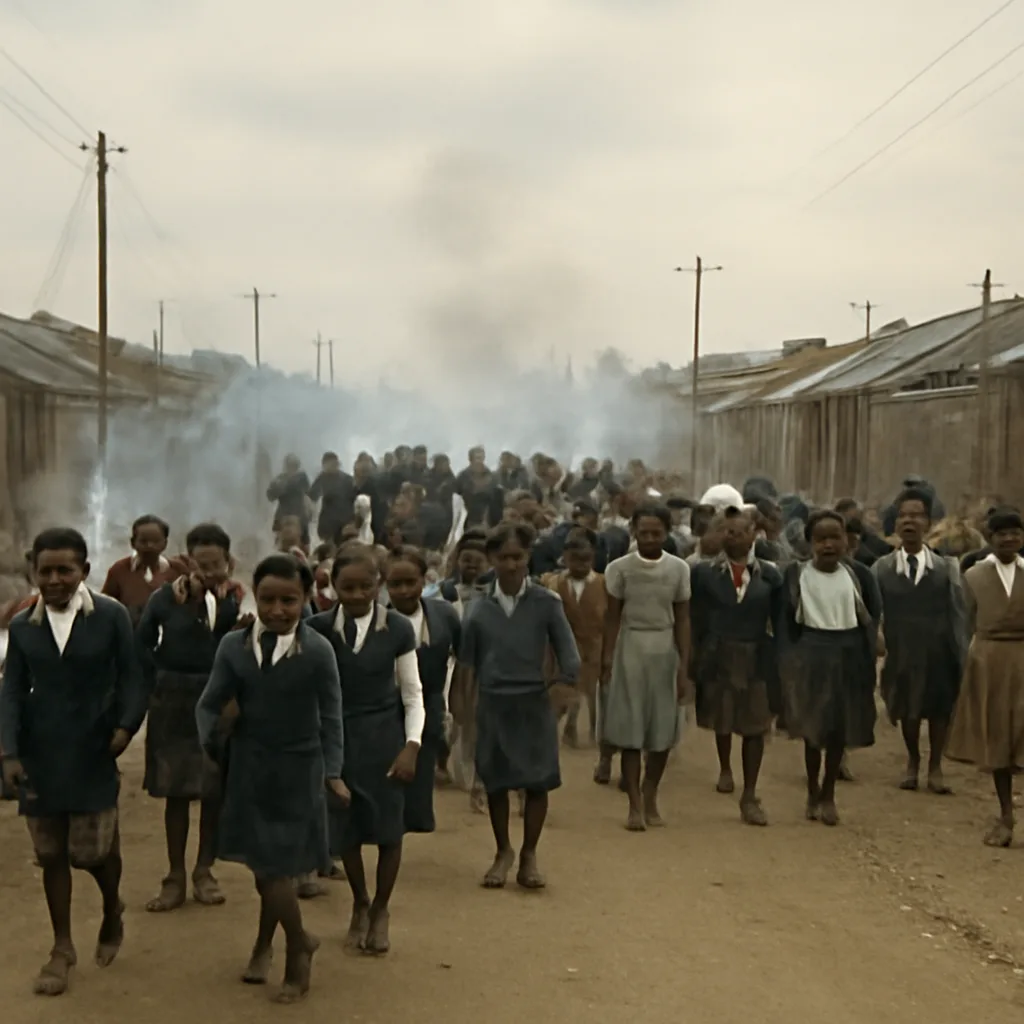
On 16 August 1976, a protest by schoolchildren in Soweto, a Black township outside Johannesburg, escalated into a confrontation with South African police that left scores dead and many more injured. The demonstration — initially organized to oppose the enforcement of Afrikaans as a medium of instruction in Black schools — brought into sharp relief the broader grievances of Black South Africans under apartheid: restricted political rights, pass laws, inferior education and socioeconomic marginalization. Events and immediate causes In the months leading up to August 1976, students and teachers across township schools increasingly resisted government policy requiring Afrikaans to be used alongside English in certain subjects. On the morning of 16 August, thousands of students from multiple Soweto schools began a planned march to Orlando Stadium to protest the language policy. The marchers carried signs and walked through township streets; the demonstration was meant to be peaceful but was unauthorized under apartheid law. Confrontation and casualties Police confronted the marchers along their route. Accounts from local witnesses, journalists and later historical studies indicate that police used tear gas, rubber bullets and live ammunition to disperse the crowds. Students and bystanders were shot; hospitals and morgues in Johannesburg reported a large number of dead and wounded. Estimates of the number killed on that day vary: contemporary reports and later investigations cite figures ranging from several dozen to several hundred, with precise totals remaining disputed due to chaotic conditions, delayed reporting and the apartheid government’s restrictions on information. The best-established fact is that the day produced a significant and consequential loss of life and many injuries among young protesters and civilians. Wider impact and aftermath News of the killings spread rapidly within South Africa and internationally. The Soweto shootings catalyzed wider protests, strikes and riots across multiple townships and cities in the ensuing weeks and months. The uprising intensified resistance to apartheid, drew greater international condemnation and contributed to increased recruitment into underground and exile-led movements opposed to the regime. The events also prompted more extensive coverage by foreign press and human rights organizations, which documented abuses and amplified calls for sanctions and political pressure on the South African government. Memory and historical assessment Historians and participants view 16 August 1976 as a pivotal moment in South Africa’s struggle against apartheid. Memorials, annual commemorations and educational curricula in post-apartheid South Africa mark the date as a turning point that exposed the brutality of apartheid repression and energized subsequent activism. Scholarly work has emphasized both the agency of the student organizers and the disproportionate violence used by security forces. While exact casualty counts for the day remain contested, the consensus among historians is that the police response resulted in substantial civilian deaths and played a major role in radicalizing segments of the anti-apartheid movement. Cautions on sources Contemporary government statements downplayed the scale of the violence and characterized the unrest as criminal; independent journalists, eyewitnesses and later historians have provided differing casualty estimates and reconstructions of events. Because apartheid-era authorities controlled media and access in many ways, some details remain contested, and researchers rely on multiple types of sources — press reports, medical records, eyewitness testimony and archival documents — to build a fuller picture. Legacy The Soweto uprising and the killings of 16 August 1976 endure in South Africa’s collective memory as a symbol of resistance against racial oppression and as a stark example of state violence against civilians. The date is commemorated annually and taught as part of the country’s modern history, underscoring its role in the long process that eventually led to the dismantling of apartheid in the early 1990s.