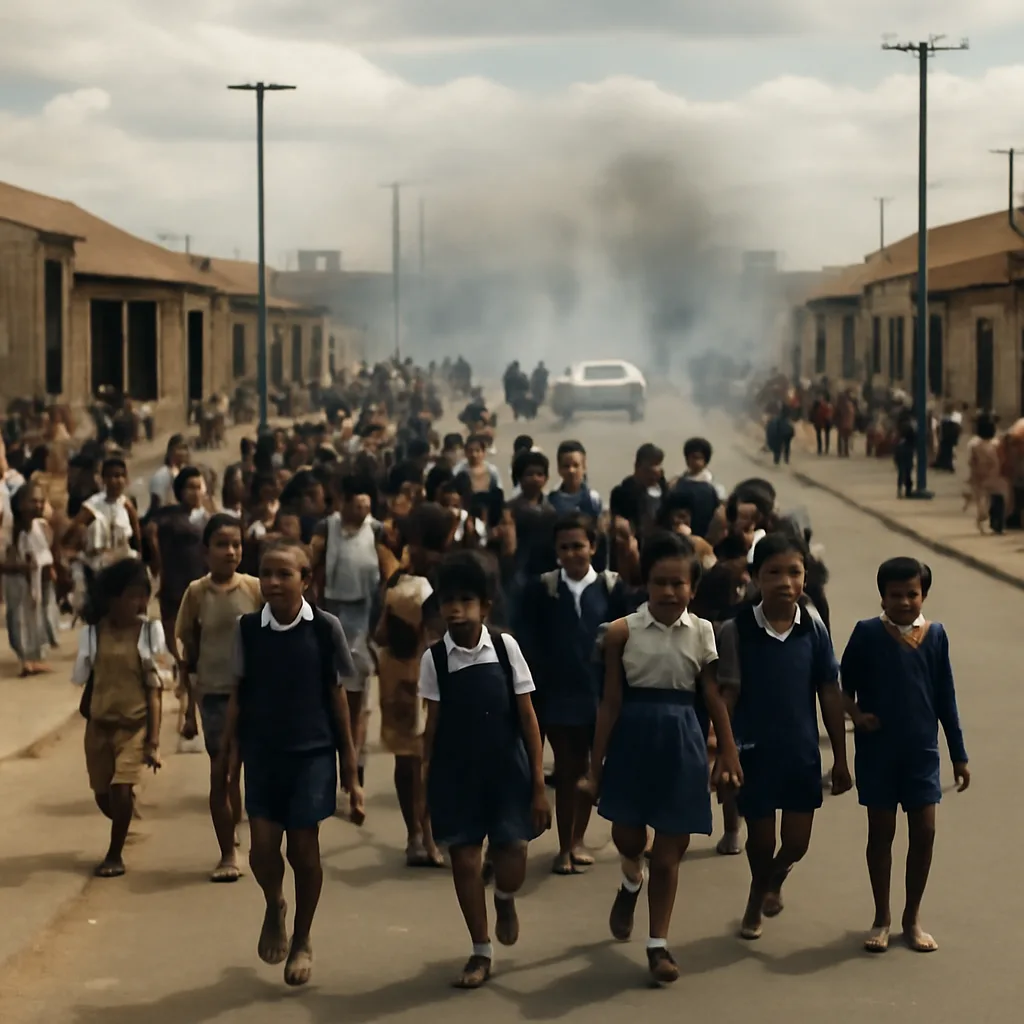
On the morning of 16 August 1976, thousands of black schoolchildren in the Soweto township near Johannesburg organized a peaceful demonstration to protest a government decree requiring that some subjects be taught in Afrikaans, the language of the ruling white minority. The protest, planned as a march to Orlando Stadium and other local gathering points, brought together students from several Soweto schools and reflected broader frustrations with apartheid-era education policies that limited opportunities for black South Africans. Tensions escalated when police moved to disperse the crowd. In accounts from survivors, journalists, and researchers, authorities responded with batons, tear gas and, ultimately, live ammunition. The first widely reported fatalities included Hector Pieterson, a 12-year-old boy whose death was photographed and publicized internationally; his killing became a potent symbol of the crackdown. Exact casualty figures for 16 August and the immediate days that followed vary among sources: estimates of those killed on the day range from dozens to more, while hundreds were wounded and many arrested. Scholars note that reliable counts are difficult because of chaotic conditions, restricted reporting, and subsequent government efforts to control information. The killings on 16 August ignited further protests and unrest across Soweto and other urban centers, and over the following weeks the violence escalated as security forces and protesters clashed. The events exposed the brutality of apartheid policing to an international audience and intensified both domestic and global opposition to apartheid. In the years that followed, the Soweto Uprising became a touchstone in South African history, commemorated annually and cited by historians as a key moment in the widening resistance movement. Historical assessments emphasize both the immediate trigger—the language policy—and deeper structural grievances including overcrowded, underfunded schools, restrictions on political activity, and the broader system of racial segregation. While the initial march was organized by students, the scale and ferocity of the response transformed it into a broader popular uprising. Details such as exact death tolls and the sequence of some actions remain subjects of research and debate; different contemporary and later sources offer varying numbers and interpretations. What is clear from multiple independent accounts is that on 16 August 1976 police used lethal force against protesting students in Soweto, with consequences that reshaped South Africa’s anti-apartheid struggle and drew sustained international condemnation.