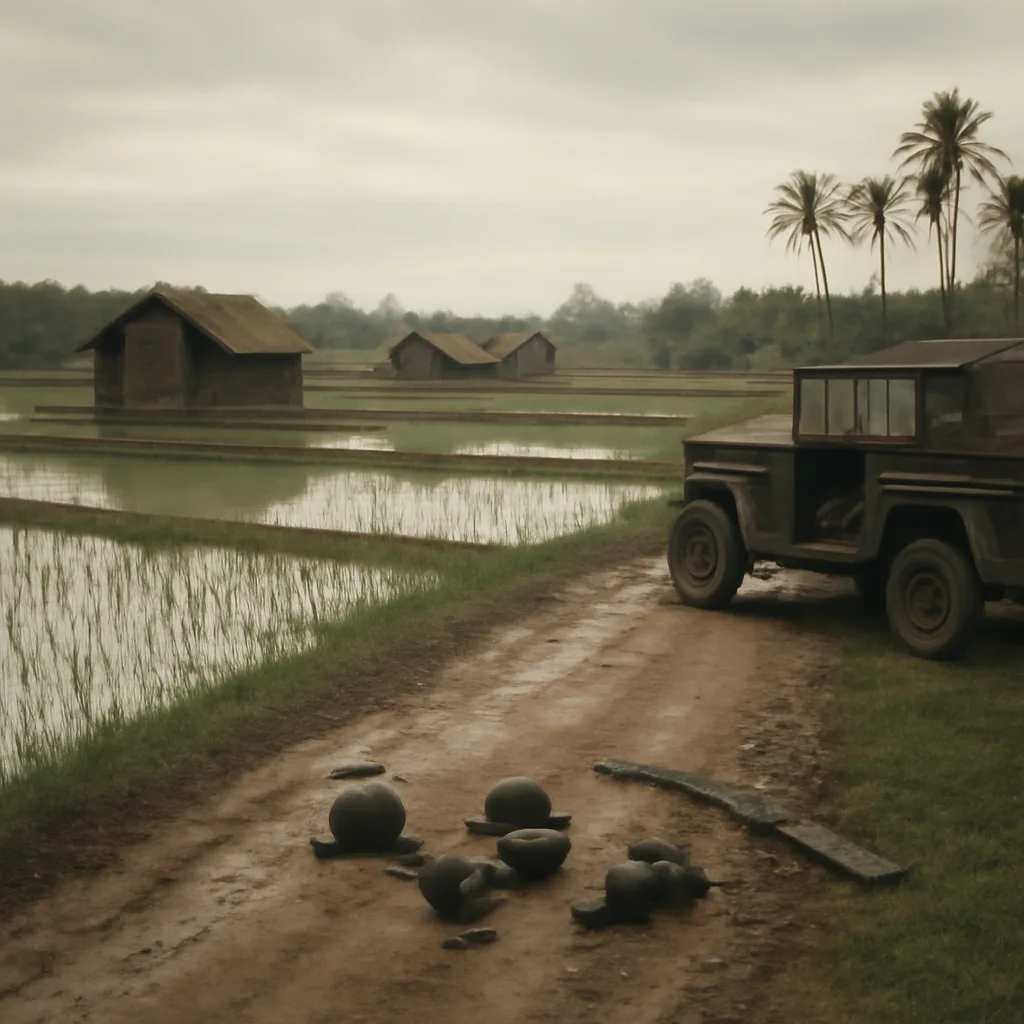
On February 16, 1970, U.S. Army investigators released material from their inquiry into the March 16, 1968, My Lai events, bringing to public attention sworn statements, photographs, and reports that documented the mass killing of Vietnamese civilians by elements of U.S. forces in Sơn Tịnh District, Quảng Ngãi Province. The disclosure followed internal Army investigations, media reporting, and mounting political pressure that had kept many details from full public view until that date. Background In late 1969 and early 1970 the My Lai story had already begun to surface in American media and Congress. Initial reports had been delayed and fragmented; some Army personnel had reported crimes earlier, and in November 1969 investigative reporter Seymour Hersh published a major account that brought widespread attention. The Army convened a formal inquiry—led by the Peers Commission (a board of officers headed by Lieutenant General William R. Peers)—to examine allegations of criminal conduct and possible cover-ups. The Peers investigation collected testimony from soldiers, officers, and civilians and reviewed operational records and photographs. What was released The February 16 release included transcripts of sworn statements from soldiers involved in the operation, after-action reports, and other investigative materials assembled by Army investigators. These documents detailed orders, ground conditions, and individual actions during the operation by elements of the Americal Division’s 11th Infantry Brigade (often referred to in subsequent accounts as involving Charlie Company, 1st Battalion, 20th Infantry Regiment, among other units). The released materials documented killings of unarmed civilians, instances of sexual assault reported by witnesses, and efforts by some officers and soldiers to conceal or minimize the scale of the incident in subsequent reports. Public and legal impact Making the investigation public intensified national debate over the conduct of U.S. forces in Vietnam and over military accountability. The disclosures contributed to criminal prosecutions, most notably the court-martial of Lieutenant William L. Calley Jr., a platoon leader convicted in 1971 of murder for his role at My Lai. Calley’s conviction, the narrow focus of prosecutions, and perceptions of limited accountability prompted further controversy and protest across the United States. The public release also influenced congressional scrutiny of the war and military policy, and it fed broader antiwar sentiment. For many Americans, the documented evidence shifted perceptions of the war’s conduct and the moral responsibilities of military leadership. Historiography and ongoing debate Scholars and journalists have continued to study the Peers report and the released materials to understand command responsibility, the role of orders and rules of engagement, and the mechanisms by which the massacre and subsequent reporting unfolded. While the central facts of large-scale civilian killings at My Lai are well established by multiple investigations and eyewitness accounts, debate has persisted over the extent of higher-level knowledge and the adequacy of subsequent prosecutions and disciplinary measures. Legacy The public release of the investigation on February 16, 1970, marked a turning point in how the My Lai events were understood in the United States and internationally. It underscored the tensions between military secrecy and public accountability during wartime and left a lasting impact on military law, journalism, and public memory of the Vietnam War. Memorials, continued research, and official acknowledgments in later decades reflect ongoing efforts to document the victims’ experiences and to reckon with the incident’s moral and legal implications.