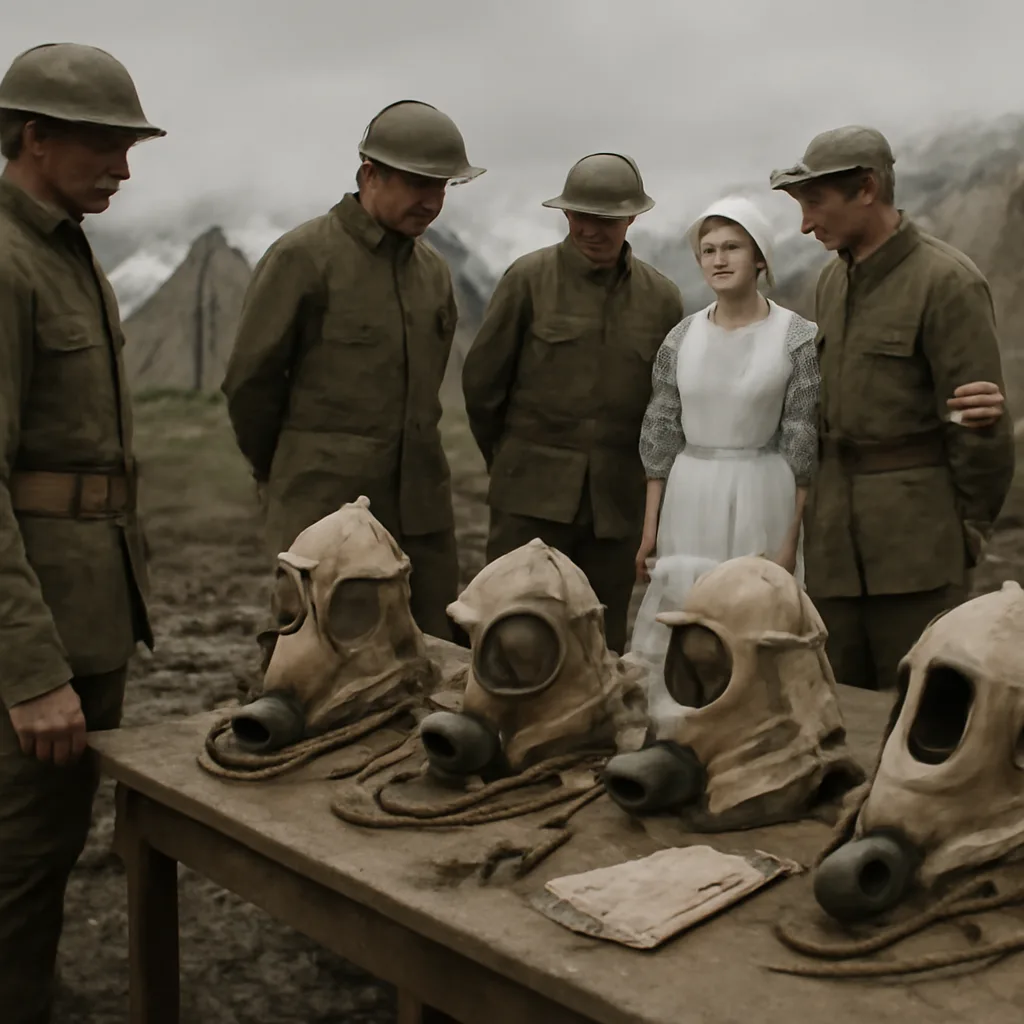
On March 25, 1915, an early patent application for a protective respiratory device was recorded, reflecting urgent wartime efforts to protect soldiers and civilians from chemical agents introduced on World War I battlefields. The appearance of poison gas in 1915—most notably chlorine at the Second Battle of Ypres in April—prompted rapid development and formalization of respirator designs. Inventors, military surgeons, and industrial workshops moved quickly to create practical devices that could filter or otherwise prevent inhalation of toxic gases. The patent activity of 1915 built on earlier experiments with respirators and breathing apparatuses from the 19th century, including smoke hoods and industrial respirators. What made the patent filings of 1915 notable was their direct response to battlefield conditions and the need for equipment that could be mass-produced and issued to troops. Many of the early wartime designs combined fabric hoods or masks with absorbent materials—such as activated charcoal, bicarbonate, or other chemical impregnations—intended to neutralize choking agents. Patent records from this period are diverse and international: inventors in Britain, France, Germany, and the United States submitted variations on hoods, masks, and canister systems. Military authorities often collaborated with civilian manufacturers to standardize elements like fit, sealing, ease of donning, and the chemical effectiveness of absorbents. The result of this flurry of innovation was not a single definitive “first” gas mask but a rapid evolution of multiple designs that influenced later standardized models. Contemporary accounts and later histories show that early patented respirators varied considerably in effectiveness. Some offered only partial protection or were cumbersome in combat conditions; others proved more practical and formed the basis for improved models introduced later in the war. Over time, testing and battlefield feedback led to refinements in materials, sealing techniques, and filter media. It is important to note that attributing a single “first” gas mask to one patent is contested. The development of protective respirators was incremental and international, with numerous inventors and militaries contributing improvements. Patent dates such as March 25, 1915, mark important moments in this process—formalizing designs, protecting intellectual property, and enabling production at scale—but do not alone settle questions of precedence or comparative effectiveness. By the end of World War I, the widespread issuance of improved gas masks and filters had become standard practice for armies and was mirrored by civilian measures in some countries. The patent filings of 1915 therefore represent a turning point: the transition from ad hoc respirators to more systematic, patent-protected designs that shaped 20th-century approaches to chemical protection in military, industrial, and emergency contexts. For readers seeking primary sources, patent office records and contemporary military procurement documents from 1915–1918 provide verifiable details about specific designs, inventors, and filing dates. Academic histories of chemical warfare and equipment development also trace the connections between early patents and later standardized gas-mask models.