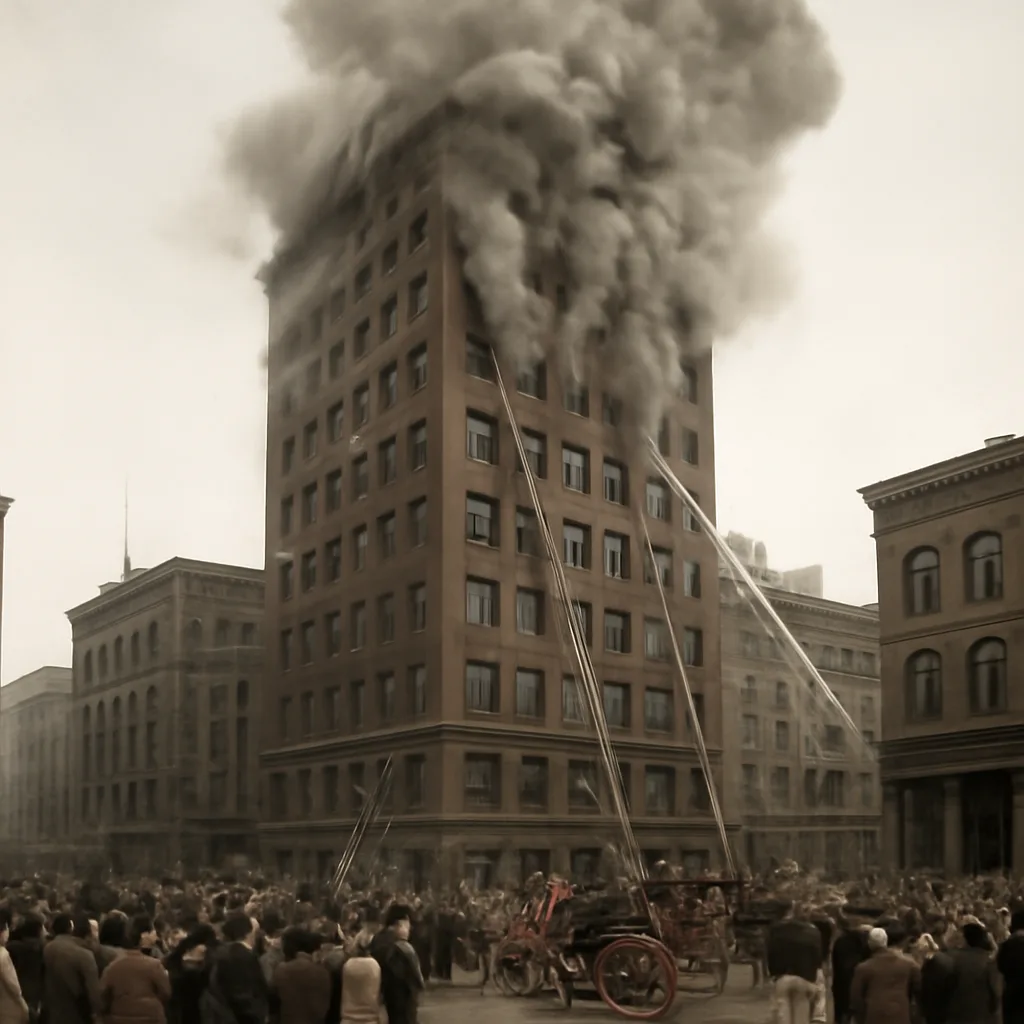
On the afternoon of March 25, 1911, a fire broke out on the eighth, ninth and tenth floors of the Asch Building in New York City, where the Triangle Shirtwaist Factory occupied the top three floors. The blaze spread rapidly through a crowded garment workshop staffed largely by young immigrant women and girls. Many workers were trapped by locked doors, narrow stairwells, inadequate fire escapes and blocked exits. When fire ladders and hoses from the Fire Department reached the building, they could not reach the upper floors. Some people jumped from windows to escape the flames; others were overcome by smoke or heat. By the time the fire was extinguished, 146 people had died. Victims and workplace context Most of the victims were recent immigrants from Eastern and Southern Europe, many in their teens or early twenties, employed in piecework sewing and shirtwaist production. The Triangle Waist Company and other garment shops of the era operated under intense time pressure, long hours and low pay. Employers commonly locked doors to prevent theft and unauthorized breaks, and safety precautions and fire-protection infrastructure were often minimal or noncompliant with best practices. Firefighting and rescue limitations The fire exposed the limitations of early 20th-century urban firefighting for high-rise industrial buildings. Fire department ladders and rescue nets could not effectively reach or protect workers on the ninth and tenth floors. The building’s internal stairways and exits were inadequate for rapid evacuation, and a single elevator proved insufficient. These failures contributed directly to the high death toll. Aftermath and public response The scale and circumstances of the tragedy provoked public outrage. Funeral processions and rallies drew large crowds, and labor organizers and civic reformers used the event to press for change. The disaster spurred investigations by city and state authorities. Although criminal prosecutions of factory owners did not result in convictions for manslaughter, legislative and regulatory responses followed: New York State established a strong Factory Investigating Commission whose work led to more than 30 new laws improving building codes, fire safety, hours, wages and workplace standards. The fire also energized the labor movement, particularly the International Ladies’ Garment Workers’ Union (ILGWU), which campaigned for safer conditions and better pay. Legacy The Triangle fire became a landmark event in American industrial and social history. It helped shape modern occupational safety and fire codes and influenced a generation of reformers and policymakers. Memorials, scholarship and commemorations continue to mark the lives lost and the changes prompted by the disaster. Notes on sources and certainty The widely cited date for the fire is March 25, 1911. Contemporary newspapers, official reports, and later historical studies document the death toll of 146 and the broader social and legislative consequences; variations in survivor accounts and some operational details exist in primary sources. No fabricated quotes or unverified claims are included here.