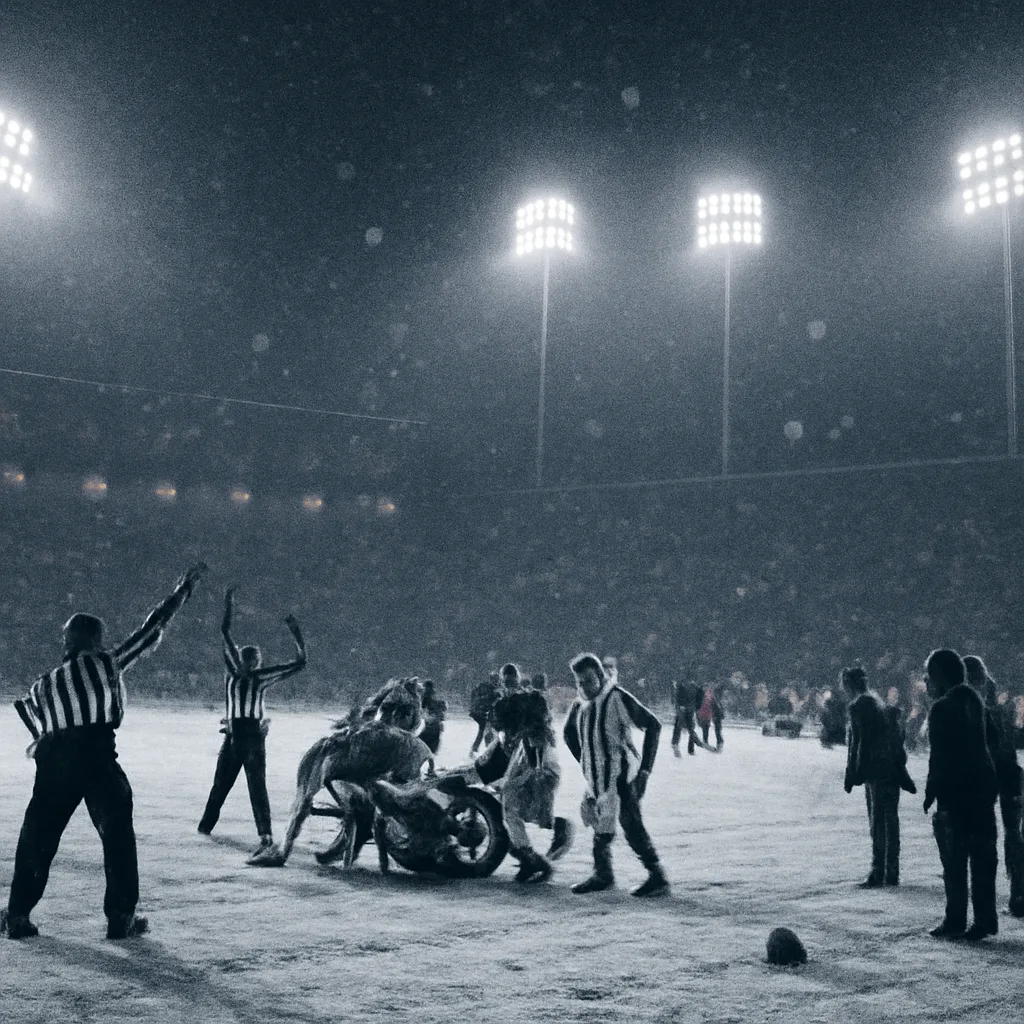
On January 19, 2002, the AFC divisional playoff game at Foxboro Stadium between the Oakland Raiders and New England Patriots became one of the most debated officiating moments in NFL history. With less than two minutes remaining and the Patriots trailing 13–10, Raiders cornerback Charles Woodson stripped Patriots quarterback Tom Brady of the ball as Brady attempted to pull it back to his body after a throw. The official on the field signaled a fumble and the Raiders recovered, which, in regulation circumstances, would have likely ended the Patriots’ season. However, after discussion among officials and a review of the play, referee Walt Coleman invoked the NFL’s so-called "tuck rule." Under the rule, a forward arm motion that begins a passing attempt is considered an incomplete pass if the ball is moving forward and then is knocked loose while the quarterback is attempting to bring it back to his body. The rule treated such losses of the ball as incomplete passes rather than fumbles. Applying that interpretation, officials ruled the play an incomplete pass, returning possession to New England. The Patriots retained the ball, drove into field-goal range, and Adam Vinatieri kicked a 45-yard field goal in swirling snow to tie the game and send it to overtime. In overtime, the Patriots won, 16–13. The victory extended New England’s postseason run; they advanced through subsequent rounds and ultimately won Super Bowl XXXVI, beginning the franchise’s first championship era under head coach Bill Belichick and quarterback Tom Brady. The decision immediately ignited controversy. Critics argued the ruling was counterintuitive and favored the offense in a way that contradicted common-sense notions of possession. Defenders of the call pointed to the letter of the NFL rulebook at the time, which explicitly defined the tucking motion as part of a passing attempt when the arm started moving forward. The incident intensified scrutiny of ambiguous rules and replay procedures in the league. Public and media reaction was intense. Raiders players, coaches, and many analysts decried the reversal as a pivotal error that changed the outcome of the game. The Patriots and their supporters emphasized that officials were applying the existing rule. The episode contributed to long-term debates about fairness, officiating consistency, and the role of replay in correcting—or perpetuating—controversial decisions. The tuck rule itself remained in force for over a decade after the game, but the fallout from the 2002 playoff contest added momentum to calls for rule clarification. In 2013, NFL team owners voted to eliminate the tuck rule, effectively removing that specific interpretation from the rulebook. League officials and commentators note that the rule’s removal reflected both the unusual publicity of the Foxboro incident and broader efforts to simplify and clarify game rules. Historically, the "Tuck Rule" game is remembered not just for the single officiating call but for its larger consequences: it preserved one team’s postseason life, helped catalyze a dynastic run for another franchise, and altered the trajectory of how the NFL handles ambiguous rulings. The snowy conditions, the dramatic late-game timing, and the immediate stakes combined to make the moment emblematic of how a single rule interpretation can ripple through outcomes, public opinion, and eventual rulemaking.