The 1938 Radio Panic: Responses to Orson Welles’s Halloween Broadcast
On the evening of October 30, 1938, Orson Welles’s radio adaptation of H. G. Wells’s The War of the Worlds prompted widespread reports of panic across the United States; historians debate the scale of these reactions and attribute them to factors like news format, local context, and later press amplification.
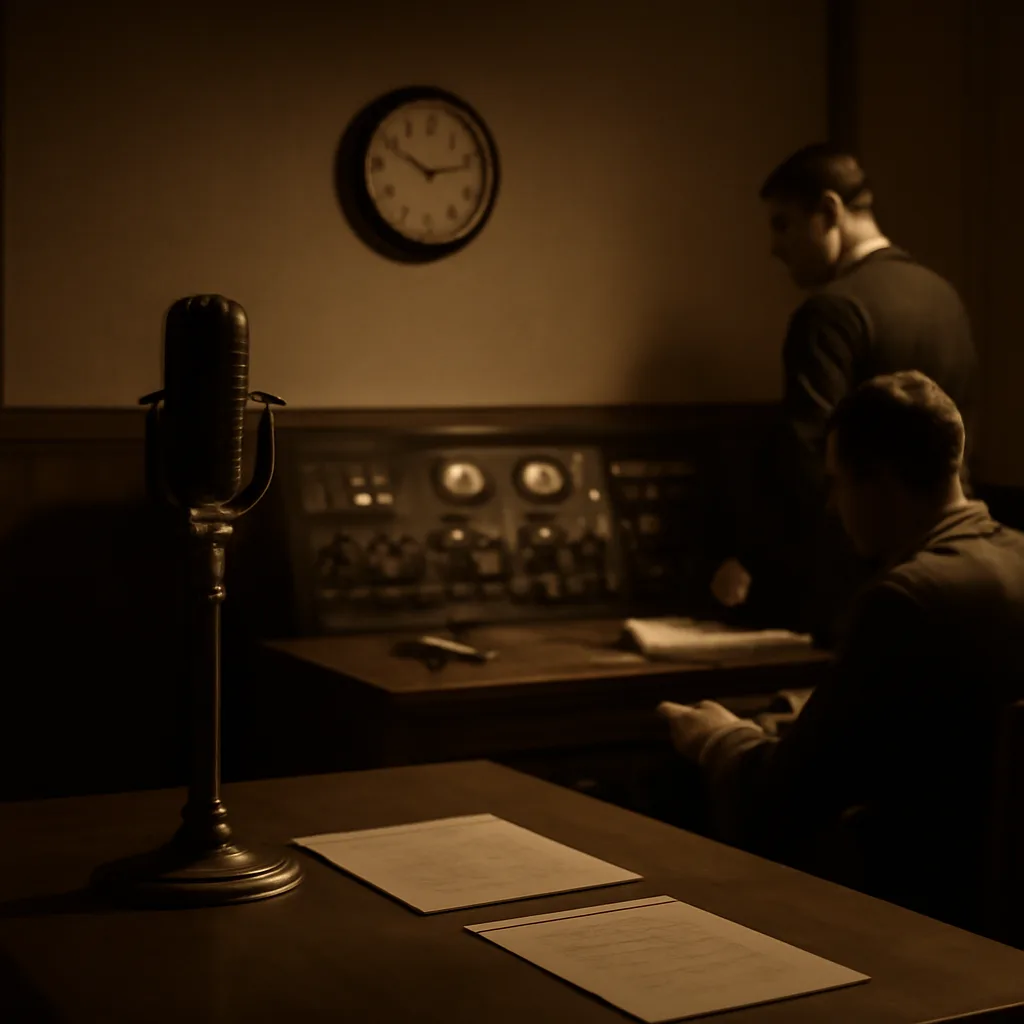
On October 30, 1938, the Mercury Theatre on the Air, directed and narrated by Orson Welles, aired a radio adaptation of H. G. Wells’s The War of the Worlds. The program used a series of simulated news bulletins reporting an invasion by Martians in New Jersey, and it ran during a period when radio drama was a principal source of news and entertainment. Within hours newspapers and officials nationwide reported instances of fear, traffic jams, and frantic phone calls to police. The incident quickly became framed as a “radio panic.”
Contemporary accounts varied widely. Some local police and newspapers reported genuine alarm: listeners who tuned in late missed the disclaimers and, hearing realistic-sounding bulletins, believed an invasion or catastrophe was underway. In other places the reaction was limited to curiosity, amusement, or annoyance. Rival newspapers, concerned about radio’s rising influence, published dramatic accounts that amplified the extent of the disturbance.
Scholarly reassessment beginning in the 1970s has complicated the simple narrative of a nationwide mass hysteria. Media historians, notably Hadley Cantril in a 1940 study, documented cases of fear and suggested that perhaps 1.2 million listeners were “frightened” to some degree; later researchers have questioned Cantril’s methodology and conclusions. Archival research indicates that the scale of panic was smaller than early press reports implied and that many of the most sensational stories were exaggerated or unverified. Factors contributing to the confusion include the program’s realistic format, local conditions (such as recent natural disasters or prevalent rumors), wartime anxieties in Europe, and competition between newspapers and radio for audience attention.
The event remains significant for several reasons. It highlighted the persuasive power of radio and dramatized questions about media responsibility, censorship, and the public’s ability to distinguish entertainment from news. The Federal Communications Commission and Congress held inquiries within weeks, not to censor drama broadly but to debate broadcasting standards and public trust. For Welles and his Mercury Theatre, the broadcast established a mixed legacy: creative acclaim for the program’s technical and dramatic achievement, and controversy over its social effects.
Historians today treat the 1938 broadcast as an instructive case about media effects rather than as a clear instance of a uniform, nationwide mass hallucination. The evidence supports a more nuanced conclusion: the program caused pockets of genuine alarm and prompted widespread coverage that magnified those incidents into a larger moral panic. Researchers emphasize local archival records, contemporary press biases, and methodological limits of early studies when assessing the event’s true scope.
In short, the October 30 broadcast remains a landmark in media history—an example of how format, context, and subsequent reporting can transform a theatrical broadcast into a national story about public credulity, even if the popularly told image of mass hysteria across the country is overstated.