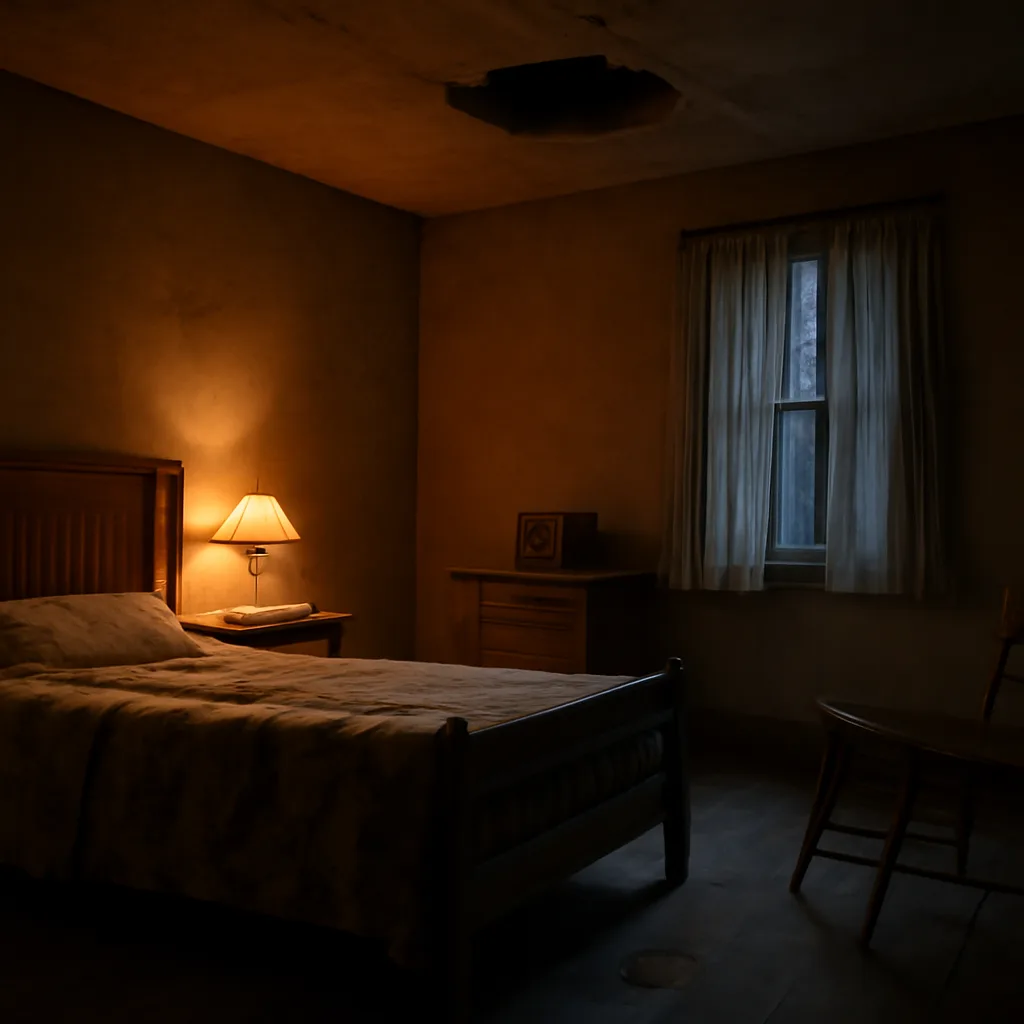
In late November 1954 several regional newspapers carried accounts that a woman in Alabama had been struck, or at least grazed, by a falling space rock while she slept. The story circulated in an era when reports of meteorite falls routinely attracted public and press attention but often lacked the scientific follow-up now expected for authenticated falls. According to the contemporaneous coverage, the incident occurred on or about November 30. Reports described a loud noise waking the household and a small, hot stone found inside the residence. Some accounts said the woman sustained a minor injury or bruise from being struck; others described only shock and damage to household items. The reports vary on precise location within Alabama and on the size and appearance of the object, and modern meteorite databases do not list a well-documented, verified fall matching these details from that date and place. Historical context helps explain why verification was limited. In the 1950s, especially outside major scientific centers, meteorite claims were often reported first by local newspapers and not always subjected to prompt analysis by geologists or institutions such as the Smithsonian or university meteorite collections. Proper verification typically requires field inspection, chemical and mineral analysis, and documentation of the fall circumstances—steps that appear not to be recorded in surviving public sources for this Alabama report. As a result, later compendia of meteorite falls tend to omit incidents without such corroboration. What can be said with reasonable confidence is that: (1) multiple contemporaneous press items exist describing an alleged meteorite strike on a woman in Alabama around the end of November 1954; (2) those items differ on key factual points (exact town, injury severity, object description); and (3) there is no readily available peer-reviewed or institutional confirmation that would meet current standards for an authenticated meteorite fall. Why such stories matter: even unverified accounts illuminate how communities perceived and reported rare natural phenomena in mid-20th-century America. They also underscore the development of scientific procedures for documenting meteorite falls—procedures that became more standardized in subsequent decades. For historians and collectors, unconfirmed reports can offer leads, but they must be treated cautiously unless physical specimens and laboratory analyses survive. If further research is desired, useful avenues include consulting microfilm or archival runs of Alabama newspapers from late November and December 1954, records or correspondence in regional university geology departments from that period, and accession records of major U.S. meteorite collections. Any surviving physical specimen associated with the claim would be crucial: mineralogical analysis (e.g., fusion crust presence, chondrules, nickel-iron content) is the standard method to distinguish true meteorites from terrestrial rocks or man-made fragments. Until such corroborating evidence emerges, the 1954 Alabama case should be treated as an intriguing but unverified report rather than a confirmed meteorite fall.