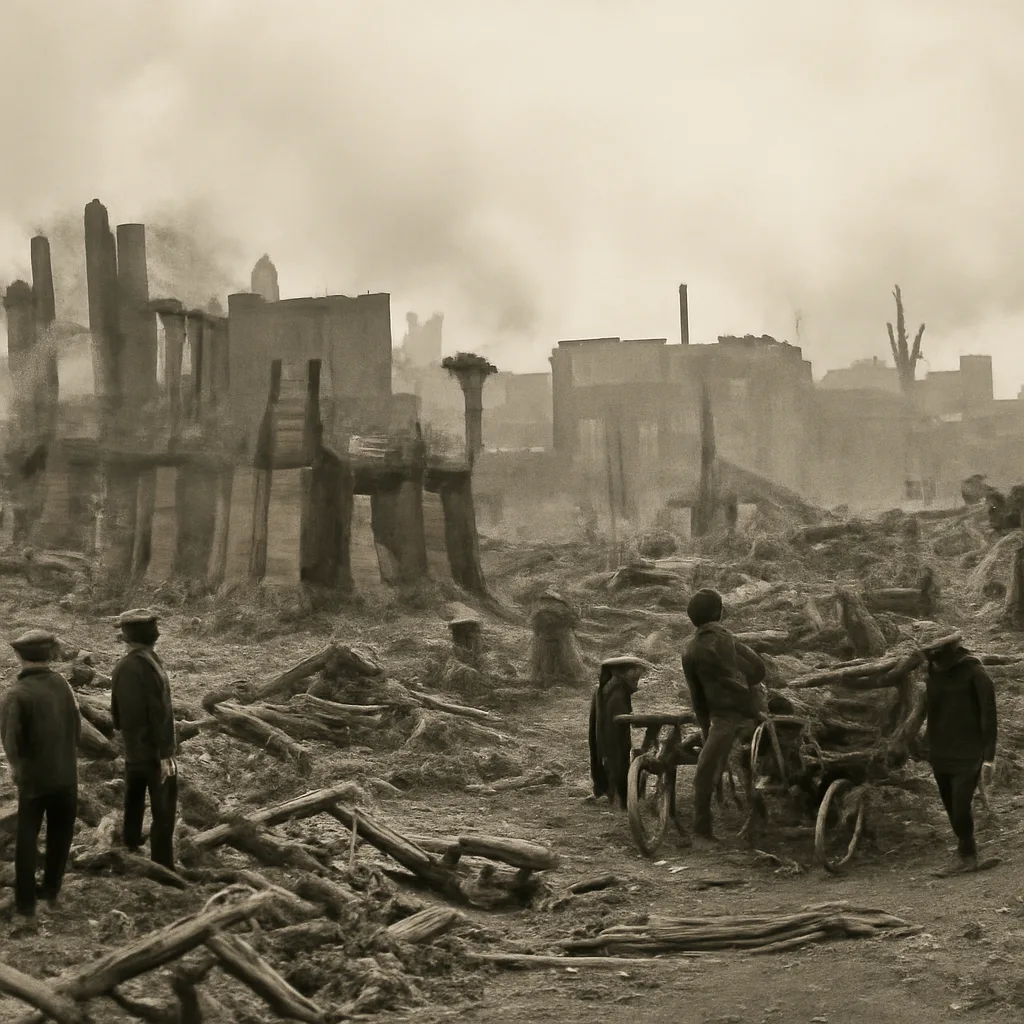
The Great Chicago Fire of October 1871 left a devastated city and an urgent need to rebuild. As survivors and officials moved from rescue toward recovery, attention turned quickly to the army of insurers, brokers, and claimants tasked with assigning monetary value to losses and distributing what insurance could cover. Within months, allegations of impropriety appeared in local and national newspapers and in municipal inquiries, introducing an early chapter of controversy in the city’s reconstruction. Context and immediate pressures Chicago’s blaze destroyed thousands of buildings and rendered tens of thousands homeless, creating both enormous insured losses and numerous uninsured claims. Insurance companies—many based in New York and Europe—faced payouts that threatened their solvency. At the same time, property owners, businesses, and banks sought to recoup value to fund rebuilding. Those competing pressures created incentives for fraud on both sides: overstatement or fabrication of claims by owners and collusion or bad-faith practices by insurers and adjusters. Allegations reported Contemporary press accounts and city records documented several recurring complaints. Some owners were accused of inflating inventories, values, or ownership of destroyed goods; others were alleged to have moved valuable items out of threatened buildings before the fire and then claimed they had burned. Conversely, insurers faced accusations of undervaluing claims, denying coverage by citing preexisting conditions in policies, or using aggressive adjusters to discourage settlements. Investigations and legal responses Municipal officials and charitable committees established lists of suspicious claims and referred matters to courts and grand juries. Insurance companies also conducted internal inquiries. While some cases led to criminal indictments or civil suits, many allegations proved difficult to substantiate amid chaotic records—fires destroyed deeds, ledgers, and inventories that could have proven or disproved claims. Some prosecutions resulted in convictions for arson or fraud where evidence supported them; other allegations faded without formal findings. Impact on recovery and policy The presence of fraud allegations complicated Chicago’s recovery in several ways. They slowed insurance payouts in many cases, delaying rebuilding by businesses and homeowners dependent on settlements. Public mistrust—of insurers, claimants, and sometimes city officials—made coordination harder for relief agencies. At a policy level, the episode reinforced calls for clearer record-keeping, standardized policy language, and improved regulatory oversight of insurance companies and adjusters. In the longer term, these pressures contributed to reforms in underwriting practices and municipal record systems, though reform timelines and effectiveness varied. Sources and limits Contemporary newspapers (both Chicago dailies and out-of-town papers), court dockets, and municipal committee reports from the months following the fire record allegations and some resulting prosecutions. Historians note, however, that the chaotic destruction of records and the partisan nature of press coverage make precise counts and categorical judgments difficult. Where prosecutions occurred, court records provide firmer evidence; where allegations are reported only in newspapers or committee notes, they should be treated as claims rather than established fact. Legacy Allegations of insurance fraud in the wake of the Great Chicago Fire are part of the larger story of how American cities and markets responded to catastrophic urban conflagration in the 19th century. They illuminate tensions between private insurers and public needs, the fragility of documentary proof in disasters, and how crises can prompt both opportunism and institutional reform.