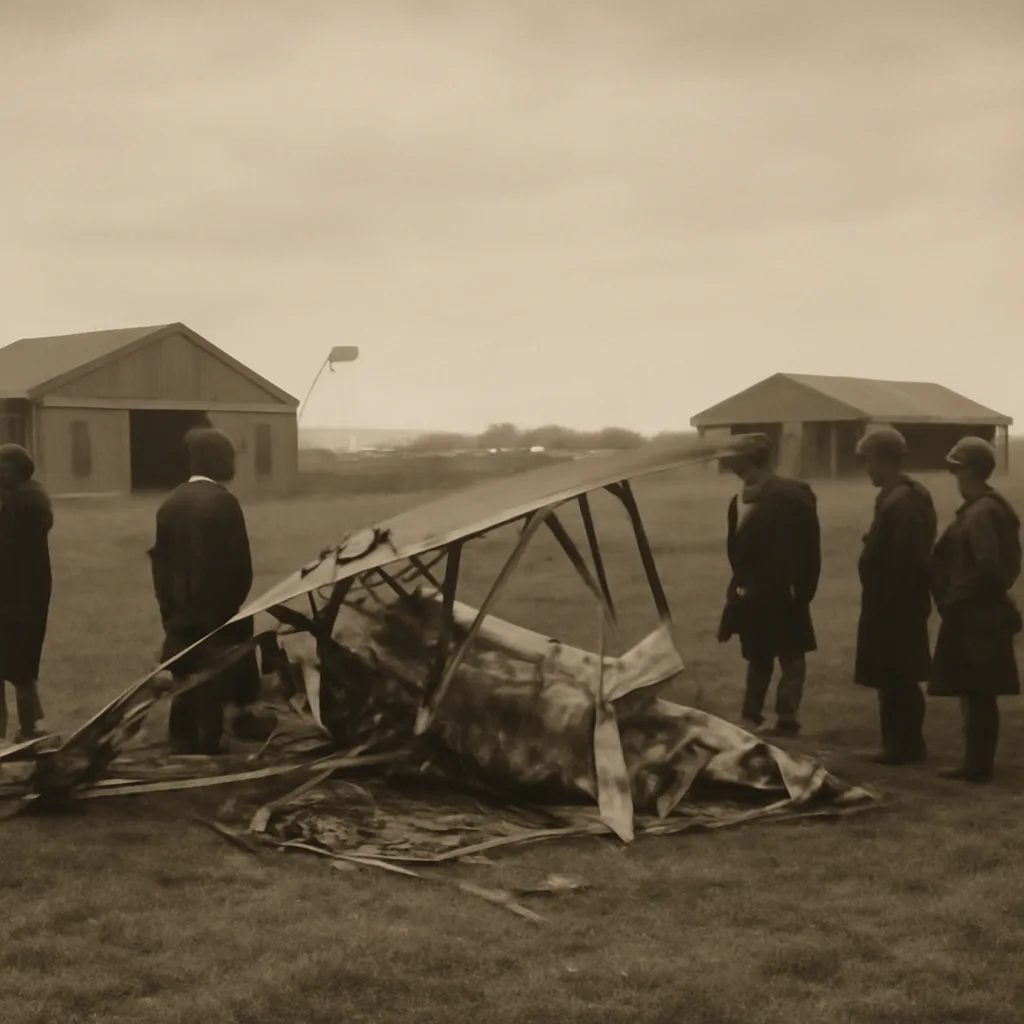
Investigation Launched into 22 May 1933 Airplane Sabotage — Early Aviation Criminal Probe
On 22 May (year uncertain), authorities opened an investigation into the deliberate destruction of an aircraft, one of the earlier recorded cases of sabotage in civil aviation, prompting questions about security, motive and forensic capability in the interwar period.
On 22 May (year not recorded in surviving brief accounts), investigators opened a criminal inquiry into the deliberate destruction of an aircraft. While this incident’s precise year remains uncertain in the fragmentary sources that reference it, the case stands as an early example of aviation sabotage at a time when civil and military aviation were both expanding rapidly during the interwar era.
Context
The interwar years saw a dramatic increase in air travel, mail routes and military aviation development. Aircraft were more widely used for passenger transport, commercial airmail and state purposes, yet regulatory frameworks, airport security measures and forensic practices for investigating airborne incidents were nascent. Sabotage, arson and other deliberate causes of aircraft loss were less commonly documented than mechanical failure or pilot error, and records of criminal investigations were often sparse or scattered among police, military and civil aviation authorities.
Known facts about the incident
- Date: 22 May (day and month are reported consistently; the year is not consistently recorded in the surviving mentions and therefore remains uncertain).
- Nature of the event: Authorities treated the aircraft’s destruction as deliberate rather than accidental and opened a formal investigation into possible sabotage.
- Institutional response: Contemporary reporting and archival fragments indicate police and/or aviation officials were involved, reflecting the customary involvement of civil authorities when foul play was suspected.
What is uncertain or disputed
- Exact year: Sources that mention the 22 May sabotage do not agree or omit the year, leaving the event’s placement within the interwar period imprecise.
- Aircraft type, operator, casualties and motive: Surviving references do not reliably identify the aircraft model, whether it was a commercial, mail or military plane, whether there were injuries or fatalities, or any clear motive for the alleged sabotage. These gaps prevent definitive claims about the scale or consequences of the event.
Significance
Even with limited detail, the investigation illustrates several broader historical points. First, it underscores how rapidly aviation outpaced legal and security norms; criminal acts involving aircraft presented new challenges for investigators accustomed to land- or sea-based crimes. Second, the case highlights limitations in preservation and dissemination of early aviation records: newspapers, police blotters and civil aviation files from different jurisdictions were not always systematically archived, and routine administrative records can be lost, leaving historians with incomplete narratives.
Investigative practice and limitations of the period
Forensic capabilities in the interwar period were rudimentary by modern standards. Investigators relied heavily on witness testimony, physical examination of wreckage and basic chemical tests. Lack of standardized accident investigation bodies in many countries meant jurisdictional confusion could impede inquiries. When deliberate acts were suspected, investigations could involve both civilian police and military authorities, depending on the aircraft’s ownership and the political context.
How historians treat such fragmentary incidents
Scholars cautious about claims rely on corroboration across independent sources—newspaper reports, police records, aviation registries and, where available, government archives. When crucial details remain missing or contradictory, historians present the known facts while explicitly noting uncertainties, as done here. The 22 May sabotage investigation is therefore best treated as a documented example of an early aviation criminal probe whose specific circumstances are incompletely preserved.
Further research avenues
Researchers seeking more detail might consult contemporaneous regional newspapers for extended reporting around 22 May in likely years, civil aviation authority archives, police or prosecutor files in relevant jurisdictions, and specialized aviation periodicals of the era. Cross-referencing aircraft registration lists and accident summaries may also help identify candidate incidents matching the broad description.
Conclusion
The 22 May investigation into aircraft sabotage remains important as an early instance of authorities confronting deliberate destruction of aircraft, even though core particulars—most notably the exact year and operational details—are not reliably recorded in surviving references. The case exemplifies both the novel criminal challenges posed by early aviation and the archival gaps that complicate reconstruction of many interwar events.