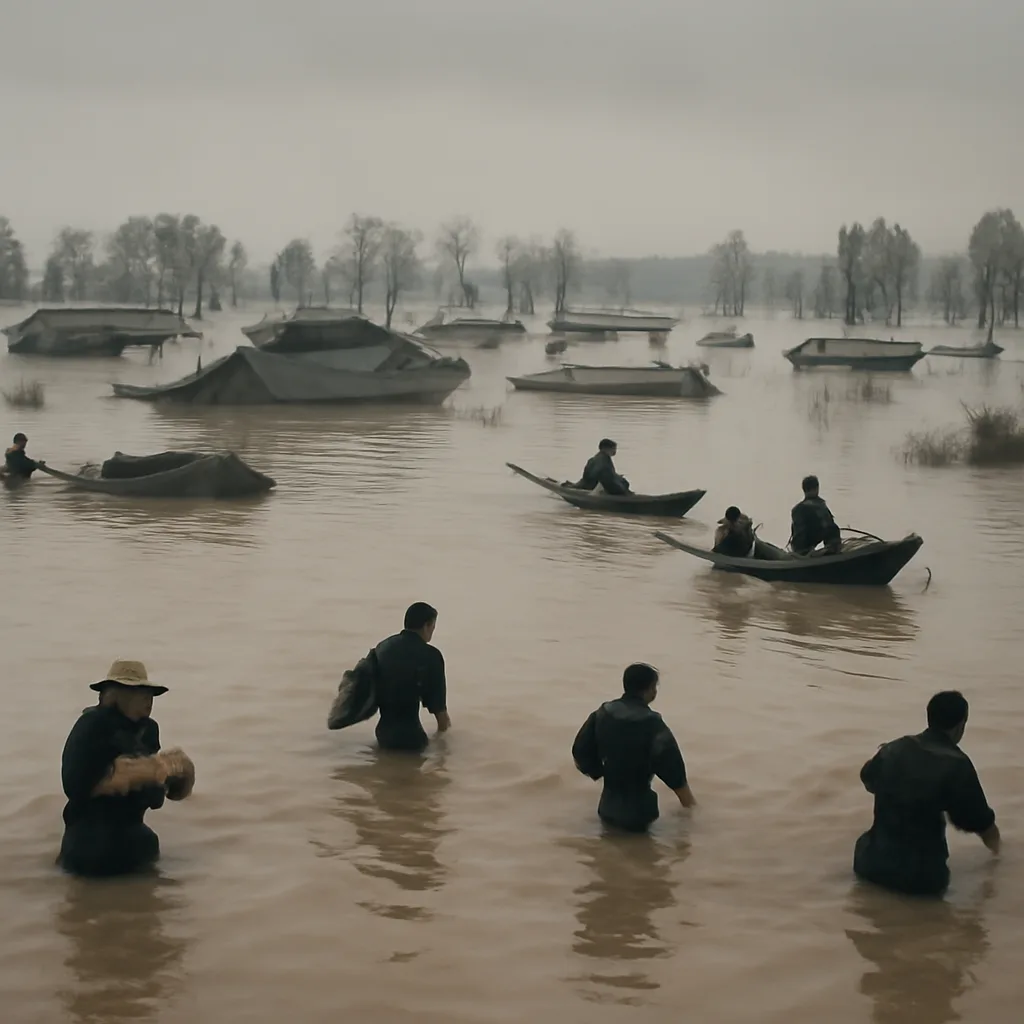
In 1931, central China experienced one of the most destructive flood events in recorded history as the Yangtze River and its tributaries rose to catastrophic levels. Heavy rains beginning in late spring and intensifying through the summer combined with a series of cyclones and prolonged seasonal monsoonal precipitation to swell river systems. Levees and flood-control infrastructure, many weakened by prior storms and limited maintenance, were overtopped and breached in multiple locations. The inundation covered vast plains in the Yangtze basin, including parts of Hubei, Hunan, Jiangxi, Anhui and Jiangsu provinces. Contemporary reports and later historical estimates indicate extremely high human tolls. Mortality figures vary among sources: immediate deaths from drowning are commonly counted in the hundreds of thousands, while subsequent fatalities from famine, exposure and disease raised total death toll estimates into the high hundreds of thousands or, by some broader estimates, over a million. Millions more were rendered homeless as entire villages and agricultural districts were submerged. Transportation and communication lines were disrupted, complicating relief efforts. The flood’s impact on agriculture and food supply was severe. Paddy fields and other croplands lay underwater for extended periods, destroying harvests and seed stocks. Shortages of food and clean water followed, and outbreaks of waterborne diseases—such as cholera and typhoid—along with malaria and other illnesses occurred in the months after inundation, further increasing mortality and suffering. Relief and response were carried out by a mix of local authorities, provincial governments, charitable organizations and international actors. Relief distribution was hampered by the scale of the disaster, damaged infrastructure and the political fragmentation of China in the early 1930s. International aid—ships, donations and relief workers—arrived in some areas, but coordination challenges and limited resources constrained effectiveness. The floods exposed weaknesses in flood control policies and infrastructure. Before 1931, China had long employed traditional and engineered methods—levees, floodways and river training works—to manage the Yangtze, but inadequate maintenance, limited funding and the scale of the rainfall overwhelmed these defenses. The disaster prompted renewed discussions within Chinese governments and among engineers about river management, reservoir construction, and the need for comprehensive flood-control planning, debates that influenced later projects. Environmental and climatic factors have been examined by historians and scientists seeking to understand why the 1931 floods were so extreme. A sequence of unusually heavy seasonal rains, combined with antecedent wet conditions and multiple storm systems, produced higher-than-normal runoff. Later climatological analyses have investigated the role of larger-scale patterns—such as interannual variability in monsoon strength—but attribution to any single cause remains complex. The 1931 Yangtze floods left enduring human and social consequences. Displacement, loss of livelihoods and disruptions to local economies persisted for years in many affected communities. The catastrophe also entered public memory and historiography as a benchmark for riverine disaster in China, shaping subsequent approaches to flood mitigation, emergency response and agricultural resilience. Because contemporary records and subsequent estimates vary, specific figures for deaths and displaced persons differ among sources; historians advise caution when citing single definitive numbers. Nonetheless, the scale of inundation, human suffering and the ensuing humanitarian crisis mark the 1931 Yangtze basin floods as one of the most severe natural disasters of the twentieth century in China.