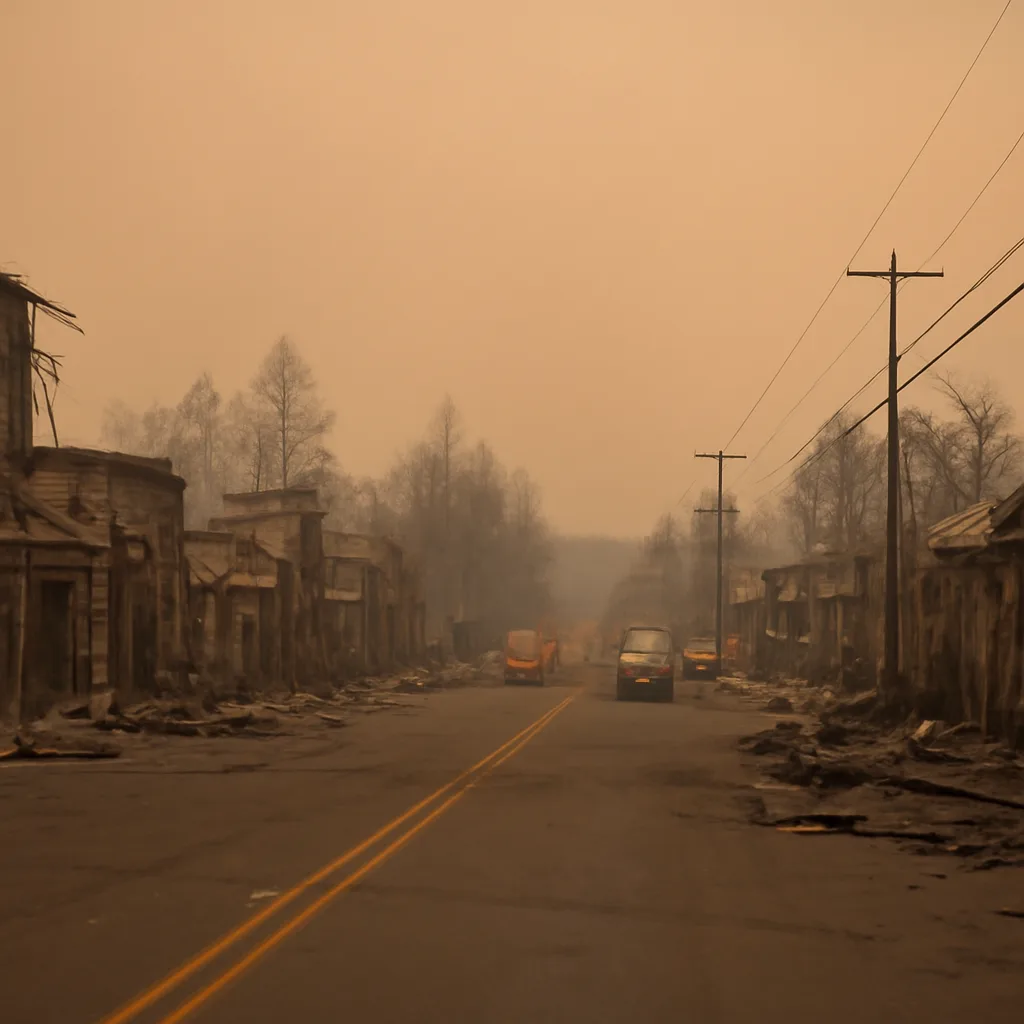
In August 2020, California experienced some of the most destructive wildfire activity in the state's recent history. Beginning in mid-August and peaking around August 18–20, numerous large fires burned across Northern and Central California, in many cases as separate incidents or as parts of larger complexes. Several small towns and rural communities were heavily damaged or effectively destroyed as fires advanced rapidly under high temperatures, low humidity and gusty winds. Conditions and ignition The fires occurred during a period of prolonged heat and drought. A historic heat wave in mid-August elevated temperatures statewide and contributed to extremely dry vegetation. In some areas, strong offshore winds and thunderstorm outflows produced gusts that helped fires spread rapidly. Ignition sources were multiple and included downed power lines, vehicle and equipment problems, lightning from dry thunderstorms, and other causes; investigations into specific fire starts were conducted by local and state agencies, with determinations varying by incident. Communities affected Several small towns and unincorporated communities in Northern and Central California suffered severe damage. Notable among the impacted areas were communities in Shasta, Butte, Napa, Sonoma, Lake, and Mendocino counties, where individual fire incidents destroyed large numbers of homes and commercial buildings. The Dixie Fire (which ignited later in July and continued into August and beyond) and the August Complex (a cluster of fires) also contributed to widespread impacts across large rural areas. In some instances, historic downtown areas, residential neighborhoods and agricultural properties were burned or heavily smoke-damaged. Evacuations and human impact Authorities issued mandatory evacuations for tens of thousands of residents across multiple counties. Evacuation centers and shelters were opened, and emergency responders prioritized life safety and critical infrastructure protection. Tragically, the 2020 wildfire season included civilian fatalities and numerous injuries to residents and firefighters. The fires also caused long-term displacement for many households, with some residents losing entire neighborhoods. Environmental and infrastructure damage Beyond buildings, the fires damaged power lines, roadways and other infrastructure, complicating firefighting and recovery efforts. Widespread smoke affected air quality across California and neighboring states, prompting public-health advisories. Burned landscapes increased the risk of post-fire erosion and flooding during subsequent rain events, threatening watersheds and infrastructure. Response and investigation Local fire departments, Cal Fire, federal agencies and mutual aid partners responded to the outbreaks. Investigations into individual fire causes and the role of utility equipment, human activity and weather were undertaken by appropriate authorities; conclusions varied by fire and were published in official reports where determinations were made. Recovery efforts included debris removal, rebuilding assistance programs, and wildfire mitigation planning aimed at reducing risks in future fire seasons. Context and significance The August 2020 fires were part of an exceptionally active 2020 wildfire season in the western United States. They underscored long-standing concerns about drought, rising temperatures, land management, and infrastructure vulnerabilities in a changing climate. The scale of destruction in some small towns prompted renewed discussion about land-use planning, evacuation preparedness and investments in resilient infrastructure. Notes on sources and uncertainty This account summarizes widely reported patterns from August 2020 wildfire activity in California. Specific impacts and investigations varied by individual fire and community; for authoritative, incident-level details consult official incident reports from Cal Fire, county sheriff offices, and federal agencies.