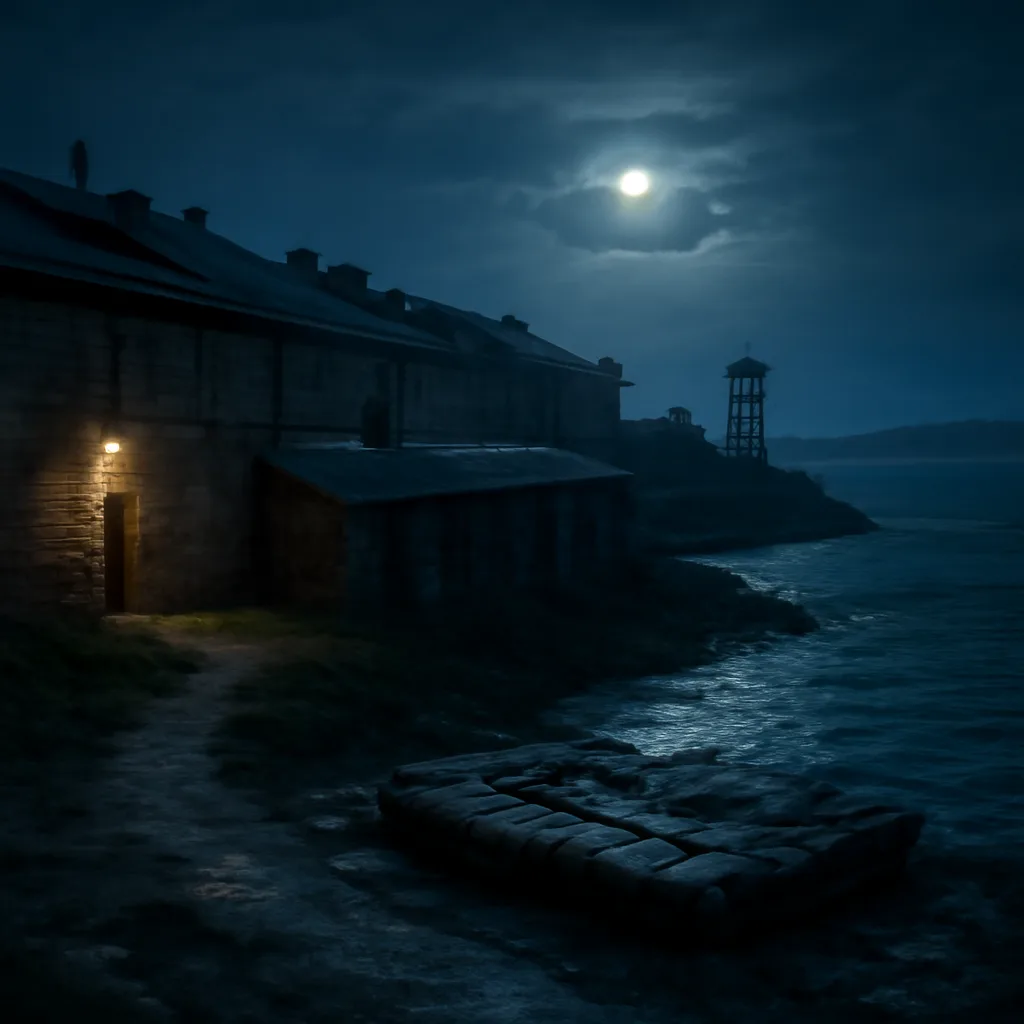
On the night of June 11, 1962, three inmates—Frank Morris and brothers John and Clarence Anglin—left their cells in the maximum-security prison on Alcatraz Island and disappeared into the waters of San Francisco Bay. The escape was the culmination of months of clandestine preparation. The men enlarged ventilation grilles in their cell walls using improvised tools, concealed the work with papier-mâché heads placed in their beds to mimic sleeping inmates during nightly head counts, and assembled a raft and life vests crafted from raincoats and other available materials. Their plan used both deception and adaptation to the island’s strict security. The breakouts originated from a cellblock that had previously held Morris, who was considered intelligent and resourceful, and the Anglin brothers, who had collaborative skills and criminal experience. Over several weeks, they removed sections of the cell walls behind the beds, creating access to an unguarded utility corridor and then to a roof hatch. From the roof they descended to the island’s shoreline, where they launched a makeshift raft constructed from tightly sewn raincoats and inflated with air held in vacuum-formed chambers. The raft and life vests were reportedly disguised and stored in places where guards would be unlikely to notice them during regular inspections. At approximately 11:30 p.m., guards conducting rounds discovered the papier-mâché heads in the beds and found the three cells empty. A comprehensive search followed, involving the U.S. Marshals Service, the Coast Guard, and prison staff. A partially inflated life vest and some personal items believed to belong to the escapees were later found on nearby Angel Island and along the San Francisco shoreline, but no bodies were recovered at the time. Authorities initially treated the incident as a probable drowning, citing the cold, strong currents of the bay and the implausibility of surviving a crossing in a flimsy raft. Consequently, Alcatraz prison records and subsequent official positions often listed the three as presumed drowned. However, the absence of conclusive physical evidence and later tips and sightings left the question open. Over the decades, investigators and journalists have pursued leads suggesting the men might have reached the mainland and dispersed. Families of the Anglin brothers produced photographs and anecdotal accounts in later years that they asserted showed the fugitives alive after 1962; U.S. marshals and other agencies investigated many such leads but produced no universally accepted confirmation. The escape prompted a significant review of Alcatraz’s security measures and attracted intense public and media attention. It became one of the most famous prison escapes in U.S. history, in part because of the combination of ingenuity and mystery: while the escape itself is well documented, what happened afterward is not definitively resolved. The Bureau of Prisons closed Alcatraz in 1963, a year after the escape, citing high operating costs and deteriorating facilities; the 1962 incident contributed to the public perception of the prison and its difficulties. Officially, the U.S. Marshals Service continues to list the three men as fugitives, and the case remains open in some records. Historians note that the most likely outcomes are either that the escapees drowned in the bay or that they successfully reached shore and evaded recapture; both possibilities are supported by elements of the record and contradicted by others. Because no incontrovertible evidence—such as verified later-life documentation or remains—has been accepted, the ultimate fate of Morris and the Anglin brothers remains a subject of investigation and public fascination. This account concentrates on the documented methods of escape, the immediate search and response, and the enduring uncertainty about the escapees’ fate. Where details are disputed or unverified—such as reported post-1962 sightings or family claims—this piece notes the existence of differing accounts rather than asserting them as fact.