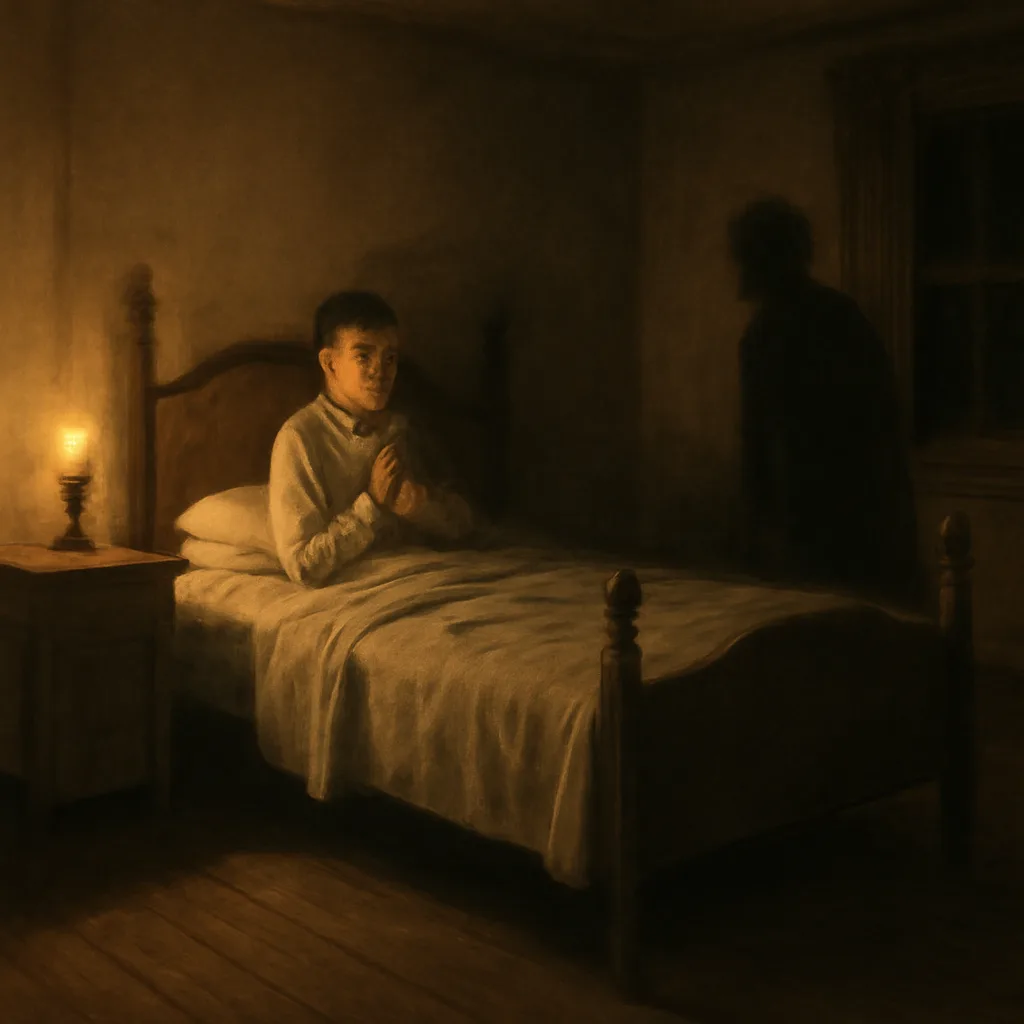
In mid-February 1903 several Boston-area physicians and newspapers reported an unusual pattern of sudden nocturnal paralysis accompanied by vivid, often frightening hallucinations. Patients described waking unable to move or speak, sensing a pressure on the chest, and seeing shadowy figures at the bedside. Those accounts were compiled and discussed in medical correspondence and local press coverage, and historians generally identify these reports as the earliest documented instance in which sleep paralysis was treated as a communitywide outbreak rather than isolated clinical cases. Medical context At the turn of the 20th century, sleep disorders were poorly categorized. Physicians knew of isolated cases of “night terrors” and catalepsy, and neurological and psychiatric specialties were still defining diagnostic boundaries. The 1903 Boston cluster drew attention because multiple unrelated individuals experienced similar nocturnal episodes in a short period. Clinicians of the day debated whether the phenomenon was a form of hysteria, mass psychogenic illness, infectious cause, or an underrecognized sleep disorder. Contemporary medical reports tended to use descriptive terms (sleep paralysis, nightmare, catalepsy) without the modern framework of REM-related parasomnias. Symptoms described Accounts from 1903 emphasize classic features now associated with isolated sleep paralysis: temporary inability to move or speak upon waking or falling asleep, intense fear, and vivid sensory phenomena such as perceived pressure on the chest, auditory sensations, or visual apparitions. Many sufferers reported the episodes lasting seconds to several minutes, resolving spontaneously. There was no consistent pattern of daytime neurological deficits in the reports, and no clear evidence of a transmissible agent. Public and professional reaction Local newspapers covered the cluster in a way that reflected both public alarm and medical uncertainty. Some articles framed the events as a curious medical mystery; others suggested moral or environmental explanations common to the era, such as fatigue, poor ventilation, or overstimulation from urban life. Physicians who corresponded about the events called for careful clinical observation and cautioned against sensationalizing the phenomenon. The episode prompted some clinicians to pay closer attention to nocturnal paralysis and related experiences when taking patient histories. Legacy and interpretation Modern scholars view the 1903 Boston reports as significant because they represent an early instance of sleep paralysis being documented beyond single case reports and being discussed as a phenomenon affecting multiple people in a community. Retrospective interpretation places the events within the spectrum of REM-related parasomnias—episodes that occur at sleep–wake transitions when muscle atonia of REM sleep persists into wakefulness, producing immobility and dreams or hallucinations. However, contemporary diagnostic language and sleep physiology were not available to clinicians in 1903, so historical sources must be read cautiously. Uncertainties and caveats Primary sources from 1903 vary in detail and reliability. Newspaper accounts sometimes amplified fear; medical correspondence provides more clinical descriptions but lacks modern diagnostic testing (EEG, polysomnography) that would confirm REM-related mechanisms. There is no definitive evidence that the cluster represented a novel disease or infectious outbreak; social, environmental, and cultural factors likely influenced both the occurrence and reporting of episodes. Historians therefore regard the event as the first clearly documented cluster that brought sleep paralysis to broader medical and public attention, rather than as proof of a unique biological epidemic. Why it matters The 1903 reports illustrate how cultural context, media attention, and emerging medical networks shape recognition of disorders. They mark a turning point in which sleep-related paralysis moved from folklore and isolated clinical anecdotes into the orbit of modern medical discussion—paving the way for later 20th-century research that connected such experiences to sleep physiology and REM sleep.