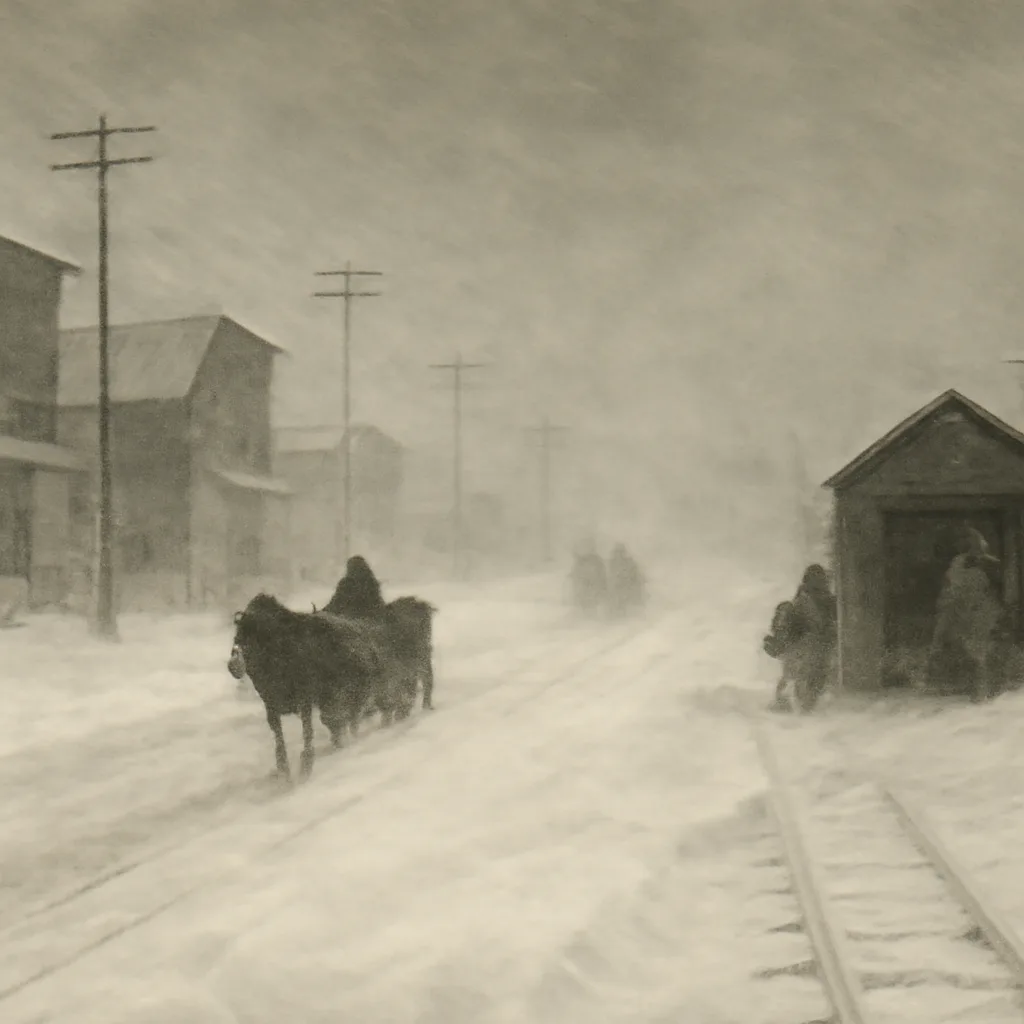
The Great White Hurricane of 1912: A Deadly February Blizzard
On February 2, 1912, a massive blizzard known as the Great White Hurricane struck the American Midwest and Great Plains, bringing extreme cold, heavy snow, and high winds that trapped people, stalled transportation, and caused thousands of deaths and widespread disruption.
On February 2, 1912, a severe blizzard—often called the Great White Hurricane—moved across the central United States, bringing heavy snowfall, whiteout conditions, gale-force winds, and intense cold. The storm affected large portions of the Midwest and Great Plains at a time when telecommunication and transportation networks were far less resilient than today, amplifying its human and economic impact.
Meteorological context
A strong arctic air mass pushed southward into the Plains and Midwest in late January and early February 1912. Interaction between this cold air and moist air from the Gulf of Mexico produced widespread precipitation that fell as snow across vast areas. Wind-driven blowing snow created blizzard conditions and drifting that quickly buried roads and railroad tracks.
Human impact and transportation disruption
Railroads were the primary long-distance transportation system in 1912, and many passenger and freight trains stalled or were delayed for days as snowdrifts blocked lines and stations. Local roads became impassable; rural communities reliant on seasonal supplies faced shortages. Reports from the period describe stranded travelers, isolated farmsteads, and difficulties in delivering mail and medical aid. Heating failures and exposure were recurrent hazards, particularly for those who could not reach shelter.
Casualties and public health
Contemporary accounts attribute thousands of deaths to the storm, with fatalities resulting from exposure, hypothermia, automobile and railroad accidents, and secondary effects such as inability to access food or medical care. Precise casualty figures vary among sources and are difficult to verify because record-keeping and communication were uneven across affected regions. Urban centers, railroad workers, homesteaders, and people traveling at the time of the storm were among the most vulnerable.
Response and aftermath
Local authorities, volunteer crews, and railroad companies mobilized snow removal and rescue efforts where possible. Communities improvised by organizing shelters, sharing fuel and food, and using horse-drawn teams to clear paths. The storm highlighted vulnerabilities in early 20th-century infrastructure and underscored the need for better coordination of emergency responses, more robust sheltering options, and improvements in communications.
Historical significance
The Great White Hurricane of 1912 stands as one of several extreme winter storms in U.S. history that revealed the limits of contemporary technology and preparedness. While exact death tolls and economic costs remain uncertain, the storm is remembered for its scale, the depth of disruption it caused to daily life and transportation, and the peril it posed to communities across a wide region. Historians and meteorologists studying early 20th-century storms cite the event when examining how societies adapted to severe winter weather before modern forecasting and infrastructure improvements.
Uncertainties and sources
Many details about the event—especially precise casualty counts and economic losses—are inconsistently reported in surviving newspapers, municipal records, and railroad reports. Where specific numbers appear in period accounts, they should be treated with caution. The broad outlines of a major February 1912 blizzard that produced heavy snow, high winds, and significant disruption across the Midwest and Plains are well-attested in contemporary reportage and later historical summaries.