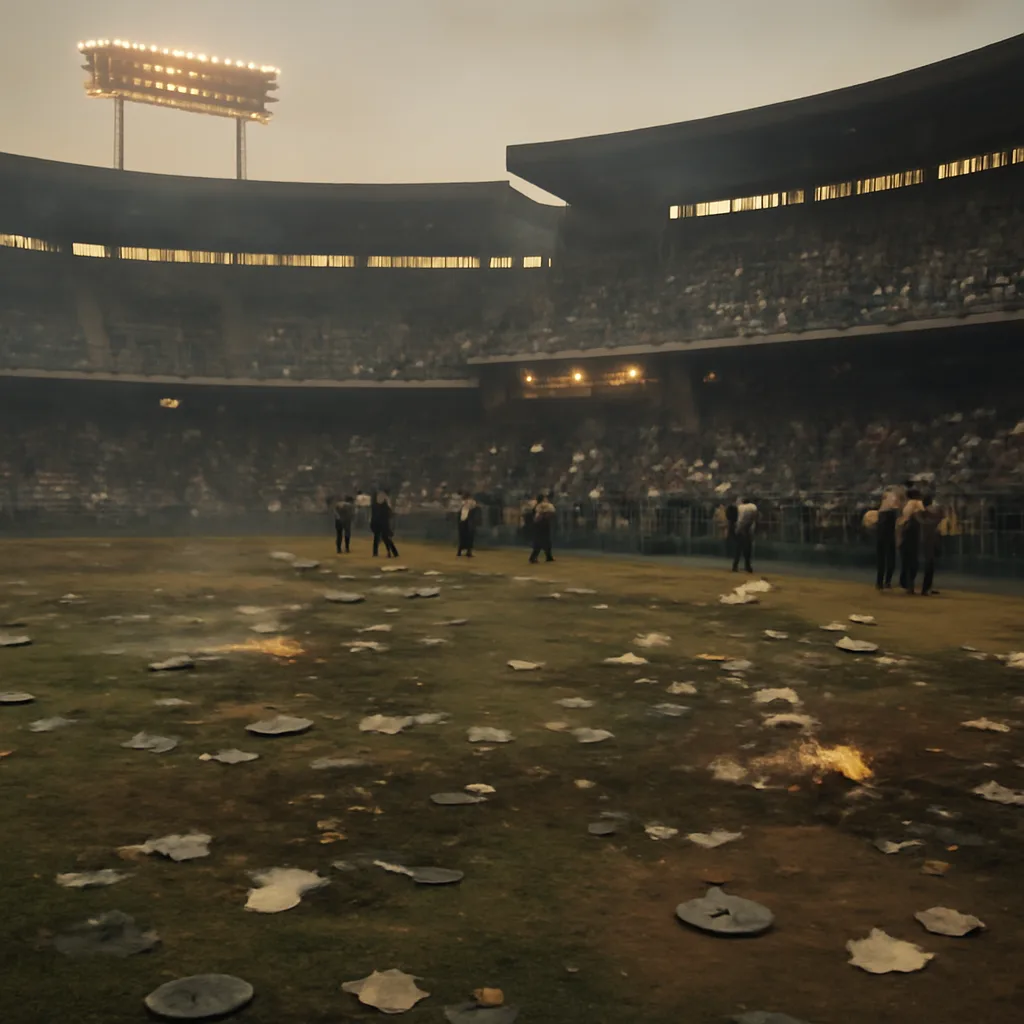
On July 12, 1979, Comiskey Park in Chicago hosted “Disco Demolition Night,” a promotional stunt organized by radio station WLUP (The Loop) during a White Sox–Tigers doubleheader. Fans were invited to bring disco records to the stadium and, for a discounted ticket price, deposit them in exchange for admission to the second game. The promotion culminated in the public destruction of a large crate of disco albums between the games. What followed exceeded organizers’ intentions. After the records were blown up on the field, thousands of spectators—many intoxicated—surged from the stands onto the playing surface. Fans tore up the grass and hurled debris; fires were started from vinyl and paper; and bottles and other projectiles were thrown. The chaos made it impossible to prepare the field for safe play in a timely manner. White Sox manager Tony La Russa and club officials initially attempted to clear the field and continue, but Major League Baseball officials and the home club judged the playing conditions and public-safety concerns unacceptable. Umpires eventually declared the field unplayable, and the American League awarded the Tigers a forfeit victory for the second game of the doubleheader. The incident had immediate and lasting consequences. The White Sox organization and the radio station faced heavy criticism for poor planning and inadequate crowd control. The event became a cultural touchpoint in the backlash against disco music and is frequently cited as emblematic of tensions in late-1970s American popular culture. It also prompted Major League Baseball and teams to reconsider how promotional nights were organized and policed. Contemporary reports describe significant property damage to the field and nearby facilities and note several arrests and injuries, though accounts vary on the totals. While some participants framed the event as anti-disco sentiment, others emphasize that the chaotic atmosphere was fueled by a combination of alcohol, poor security, and an underestimation of the crowd’s size and mood. Historians and journalists continue to debate how much Disco Demolition Night reflected broader cultural hostilities versus being primarily a promotional fiasco that got out of control. Regardless, the July 12 night at Comiskey Park remains one of the most notorious examples of a sports promotion gone wrong, remembered both for its immediate disruption to a major-league game and for its place in late-20th-century American cultural history.