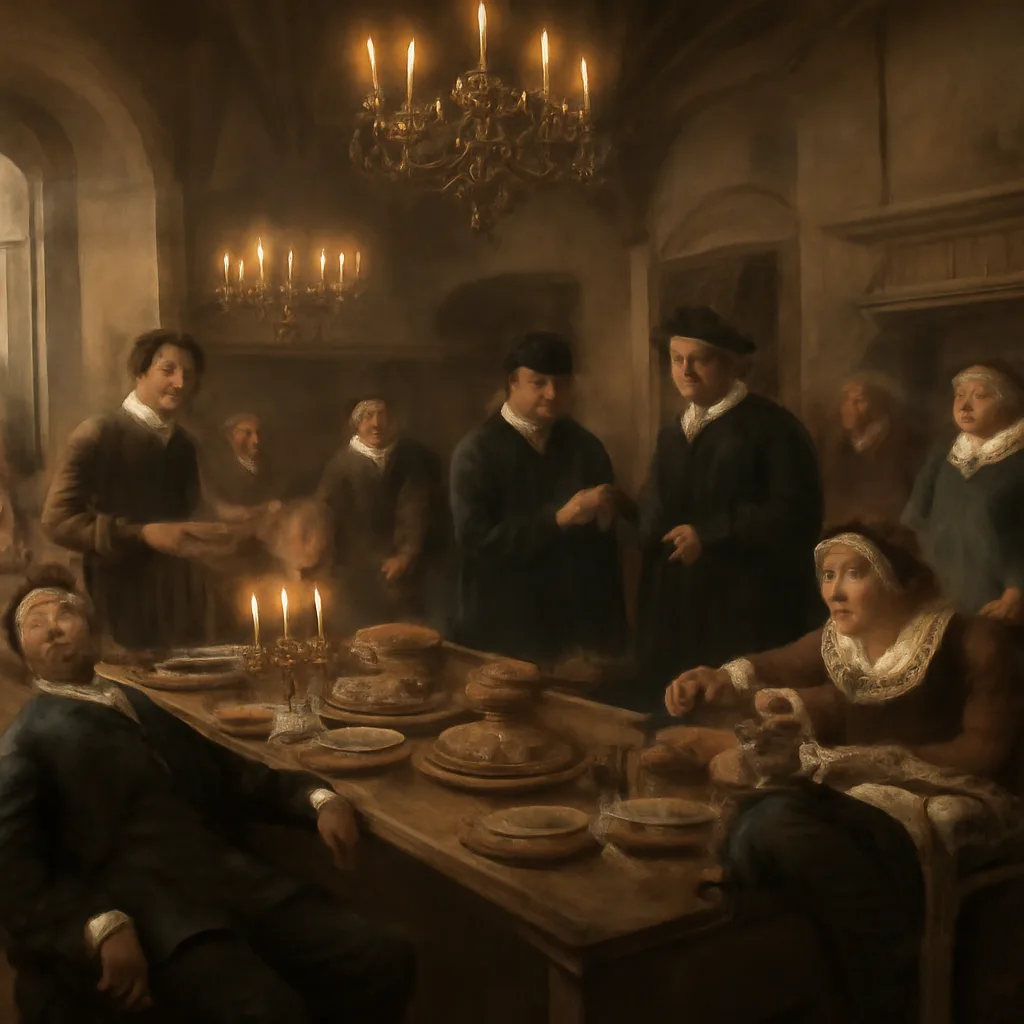
On 25 February 1599 chroniclers and local records describe what is generally cited as the earliest documented case of mass poisoning at a communal banquet. Accounts vary by region and source, but they converge on a single defining fact: multiple guests at the same meal became ill in quick succession, and at least some of them died. The incident was significant to contemporaries because it implicated communal food and trust among social equals, and it entered legal and medical discussions about food safety, culpability, and the causes of sudden mass illness. Context Late 16th-century Europe saw frequent large social meals associated with civic, noble, or ecclesiastical occasions. Food was often prepared and shared communally, and preservation and hygiene knowledge were limited by modern standards. Contemporary observers lacked germ theory and relied on explanations such as contaminated provisions, deliberate poisoning, food spoilage, or miasma. The 1599 banquet incident stands out because multiple attendees suffered acute, similar symptoms within hours of eating the same dishes, prompting official attention. What the sources say Surviving references come from municipal records, legal proceedings, and chroniclers rather than modern forensic reports. These primary sources typically list the names of hosts and victims, describe the menu in broad terms, and record inspections or inquests that followed. Medical testimony, where recorded, used terms and diagnoses of the period—phrases like “noxious humours,” “corrupted meat,” or “poisoned broth”—which reflect contemporary medical thinking rather than modern toxicology. Later historians have cited these documents when identifying the event as the first known mass poisoning at a banquet, while noting limitations in specific causal attribution. Possible causes and uncertainties Modern readers might ask whether the episode was deliberate poisoning, foodborne illness from bacterial contamination, fungal toxins (mycotoxins), or accidental ingestion of a natural toxin (e.g., certain wild plants or contaminated fish). The primary sources do not permit a definitive modern diagnosis. Deliberate poisoning was a plausible contemporary fear—high-status gatherings could be occasions for revenge or political violence—and legal records sometimes pursued suspects. However, cases of widespread foodborne illness from insufficiently preserved meat, spoiled dairy, or contaminated communal dishes were also common and could present with rapid, severe symptoms in that era. Consequences and meaning The immediate consequences included local investigations, possible prosecutions, and disruptions to the social circle involved. More broadly, the episode contributed to ongoing debates about food safety and the responsibilities of hosts and cooks. It also illustrates how early modern communities attempted to make sense of sudden mass illness without modern scientific tools, relying instead on testimonial evidence, inspection of provisions, and legal inquiry. Historiographical note Scholars treat the 25 February 1599 banquet as an important early documented instance of mass poisoning at a social meal, but they emphasize caution: the term “poisoning” in sources of the period can encompass deliberate poisoning, accidental contamination, and other forms of foodborne harm. Where modern analyses speculate about specific toxins or pathogens, they are reconstructive hypotheses rather than firm diagnoses. This episode is best understood as a window into early modern anxieties about communal food, the limits of contemporary medical knowledge, and the social ramifications when many people fell ill after sharing a meal.