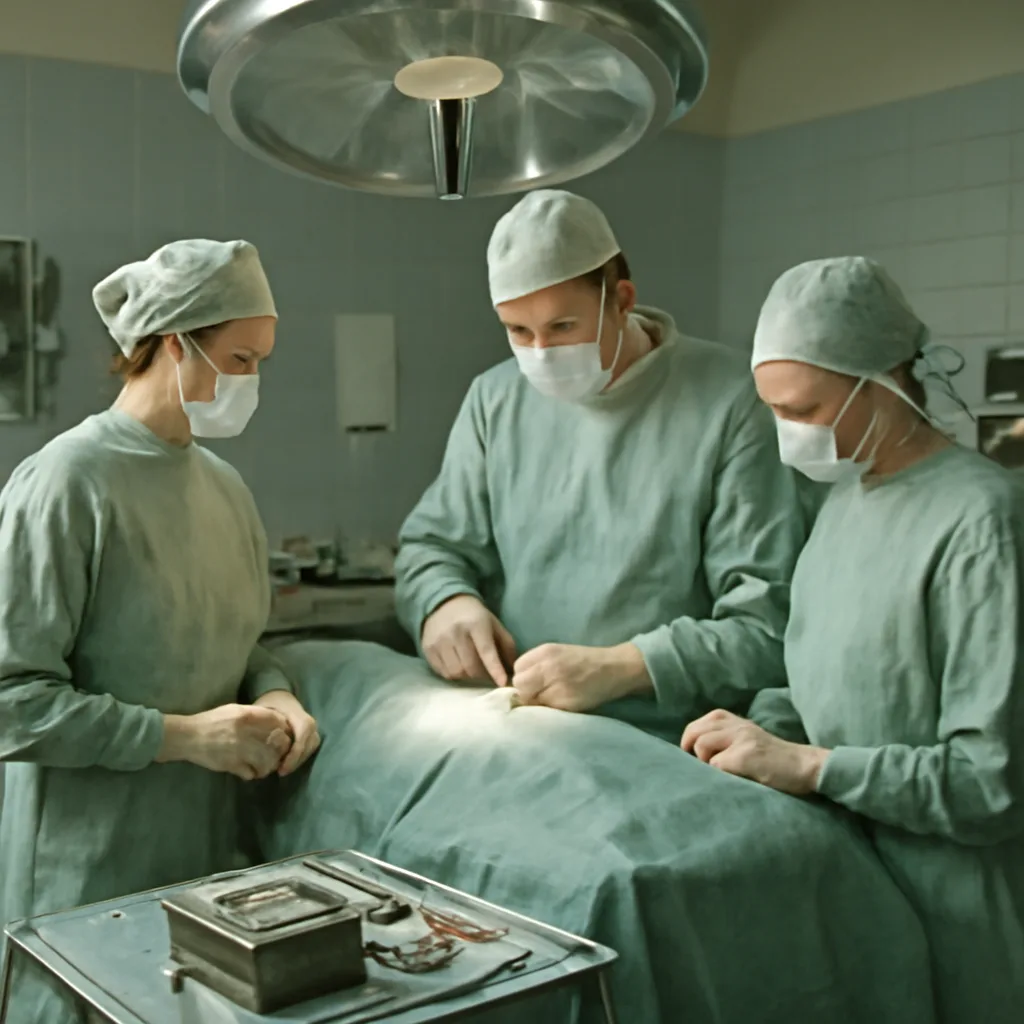
On 25 February 1958 Swedish surgeon Åke Senning and inventor/engineer Rune Elmqvist implanted the first fully implanted, battery-powered cardiac pacemaker into a human patient at the Karolinska Hospital in Stockholm. The device was placed under the skin of 43-year-old electrical engineer Arne Larsson, who had recurrent, symptomatic bradycardia (slow heart rate) that put him at risk of fainting and early death. Prior to this procedure, temporary external pacing devices and earlier attempts at implantable stimulators had limited longevity, reliability, or caused severe infection. The pacemaker used in the 1958 operation had been developed by Elmqvist while working at Siemens-Elema (then Elema-Schönander) and was connected to electrodes sewn onto the myocardium by Senning. The implanted unit was powered by rechargeable external equipment early on; the first generator lasted only a short time and required replacement. Larsson underwent multiple subsequent pacemaker replacements over his lifetime as technology advanced, and he ultimately outlived both Senning and Elmqvist, dying in 2001. His long survival is often cited to illustrate both the procedure’s clinical impact and the rapid evolution of pacemaker technology. The 1958 implant followed decades of research into cardiac electrophysiology and electrical stimulation. Early 20th-century physiologists had established the heart’s electrical nature; by the 1920s–1940s clinicians experimented with external pacing and rudimentary internal stimulators. Significant technical obstacles remained—miniaturizing components, developing reliable leads and insulation, and creating power sources safe for long-term implantation. The Senning–Elmqvist device addressed some of these challenges but was still primitive by later standards: early implants used bulky cells with limited life and leads that required surgical revision. This operation in Stockholm catalyzed further research and commercialization. Over the 1960s and 1970s, improvements included longer-lasting batteries, transistorized circuits, improved lead designs, rate-responsive pacing, and better surgical techniques—all contributing to wider clinical adoption. The milestone is not a story of a single invention but of iterative advances by clinicians, engineers, and manufacturers across multiple countries. Historical accounts note some nuance and occasional confusion: earlier attempts at internal pacing and temporary external pacing had been reported in other countries, and what constitutes the "first" pacemaker can depend on whether one counts temporary devices, externally powered implants, or fully implanted battery-powered systems. The 25 February 1958 operation is widely recognized in medical histories as the first successful implantation of a fully implanted pacemaker that sustained long-term pacing support in a human. The legacy of the 1958 implant is the transformation of arrhythmia management. Modern pacemakers are far smaller, more reliable, and programmable, with MRI-conditional models and leadless options. The ethical and regulatory frameworks governing implantable devices also evolved alongside the technology, shaped by early clinical experience and later large-scale studies that established indications, safety, and longevity standards. Sources for this summary include contemporary medical literature and later historical reviews of cardiac pacing and device development. Where earlier or contemporaneous attempts at pacing are discussed, historians distinguish temporary external devices and experimental stimulators from the implanted, battery-powered systems that became the foundation for modern pacemakers.