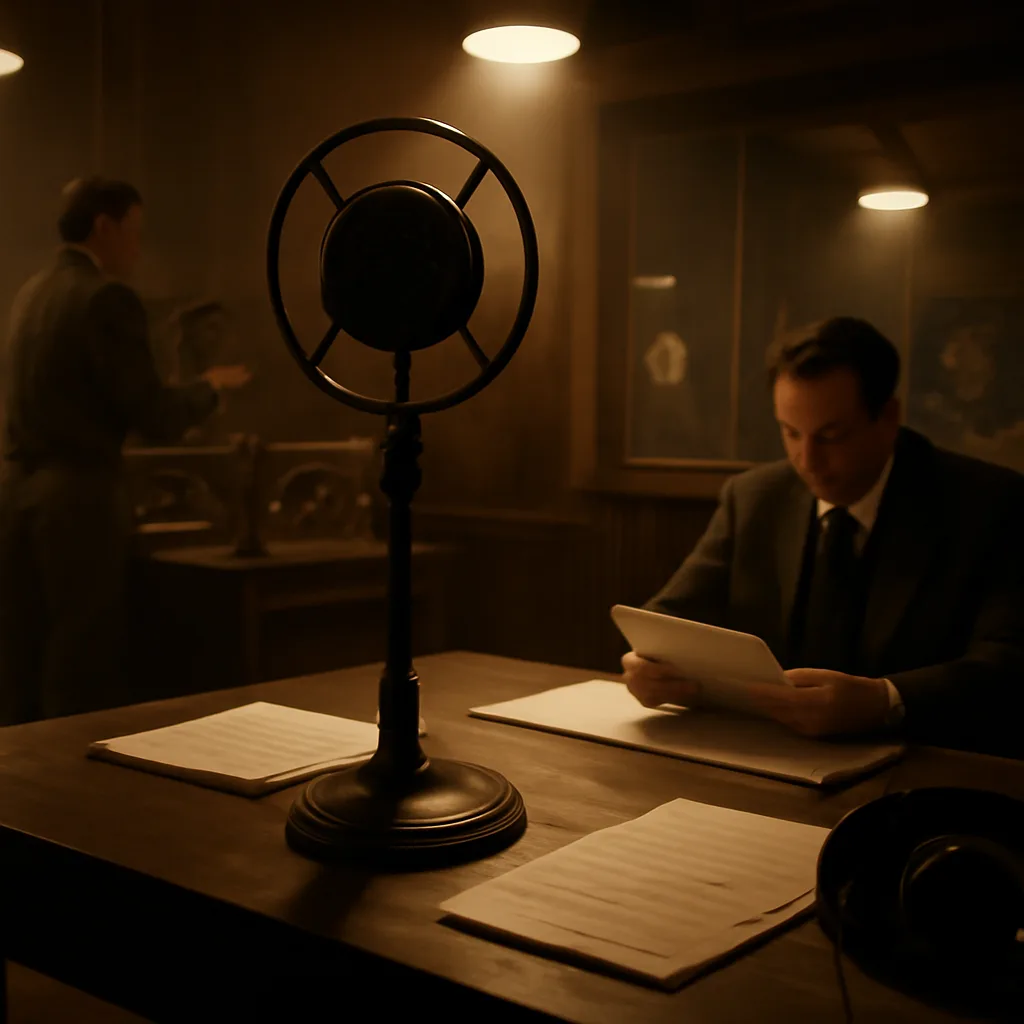
On October 30, 1938, the Mercury Theatre on the Air—directed and narrated by Orson Welles—aired a radio adaptation of H.G. Wells’s The War of the Worlds on the Columbia Broadcasting System (CBS). The program was presented in the style of simulated news bulletins, interrupting musical programming with reports of a Martian invasion in Grovers Mill, New Jersey, and subsequent attacks on cities. The broadcast ran for about an hour beginning at 8 p.m. Eastern Time. Contemporary accounts and later scholarship agree that the program frightened some listeners. Reports of panic—people fleeing homes, jamming highways, and calling police—appeared in newspapers the following day. Some listeners missed or did not hear the program’s repeated announcements that it was a dramatic adaptation, and the realistic delivery and news bulletin format helped create uncertainty for some audiences. The scale of the panic has been debated. Early newspaper accounts and sensational headlines suggested mass hysteria across the country, but later historians and media scholars have found that the extent of the disorder was likely overstated by press reports and by broadcasters themselves. Research indicates that audience size for the program varied by market, and many listeners who did hear the broadcast recognized it as fiction. Nevertheless, there were documented cases of frightened individuals and calls to police and newspapers, plus at least a few reported injuries and one disputed fatality linked by some contemporaries to panic. The episode took place in a media environment very different from today: radio was a dominant mass medium, and live dramatic programming could lend itself to immediacy. The broadcast’s timing—on Halloween Eve—and its realistic presentation amplified its impact. The incident prompted a public debate over broadcast responsibility and the power of media to influence public behavior. The Federal Communications Commission and congressional hearings followed in the months after, contributing to evolving professional standards for broadcasters. Scholars now view the 1938 broadcast as an important case study in communication, rumor, and mass psychology rather than as a simple, uniform outbreak of nationwide panic. It illustrates how format, context, and audience expectations shape media effects. The event also contributed to Orson Welles’s national fame and remains a frequently cited example of how realistic storytelling can be interpreted as fact under certain circumstances. In sum, the 1938 War of the Worlds broadcast produced real fear among some listeners and sparked wider public concern, though later analysis suggests initial reports exaggerated the scale of the panic. The episode endures in cultural memory as a touchstone for discussions about media responsibility, public trust, and the dynamics of mass reaction to alarming information.