The 1938 Radio Broadcast That Sparked Nationwide Panic
On the evening of October 30, 1938, Orson Welles’s radio adaptation of The War of the Worlds aired as a Halloween episode, and its realistic news-style format led many listeners to believe an actual Martian invasion was underway, prompting widespread alarm and a lasting debate about media influence.
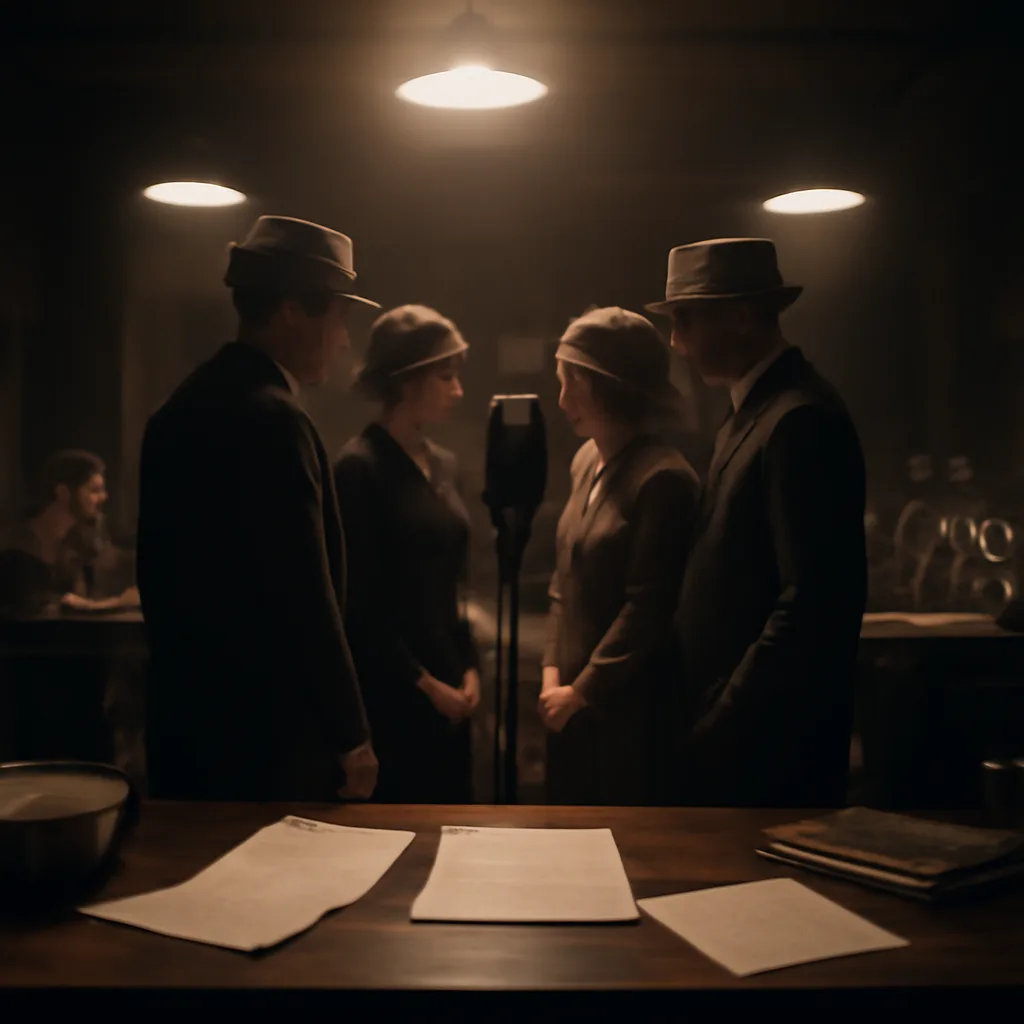
On the night of October 30, 1938, the Mercury Theatre on the Air, directed and narrated by Orson Welles, presented a radio adaptation of H. G. Wells’s novel The War of the Worlds. Broadcast on CBS, the program used a series of simulated news bulletins and on-the-scene reports that interrupted musical numbers. The format — combined with believable actors, convincing sound effects, and the relative novelty of radio as an immediate mass medium — caused some listeners to mistake the drama for real news.
The program began with a brief announcement identifying the performance as a drama, but many listeners tuned in after that preface or were listening to other stations and only heard the interrupting ‘news’ segments. Reports of explosions in Grover’s Mill, New Jersey, and of widespread panic in nearby communities circulated quickly. Newspaper accounts the following day amplified the perception of mass hysteria, reporting stories of frightened crowds, traffic jams, and people fleeing their homes.
Scholars and historians have since debated the scale and nature of the panic. Contemporary press coverage likely exaggerated the extent of the disorder: later research indicates that while significant alarm occurred in some places, many listeners recognized the program as fiction or were not listening when the dramatic news bulletins began. Factors contributing to the confusion included the realism of the presentation, the current social anxieties of the late 1930s (including European tensions and recent technological advances), and competitive tensions between newspapers and radio stations, which may have influenced how newspapers framed the story.
The broadcast had immediate consequences. CBS received thousands of phone calls and letters. Radio stations and networks began to re-evaluate broadcast practices and the presentation of simulated news. The Federal Communications Commission (FCC) launched an inquiry into broadcast practices, though it ultimately took no severe punitive action against Welles or CBS. The incident became a classic case study in media effects, misinformation, and public reaction to emergent communication technologies.
Beyond the immediate aftermath, the 1938 broadcast entered American cultural memory as an example of the power of mass media to shape perception. It influenced later discussions on media responsibility, led to clearer guidelines about dramatizations presented in news formats, and remained a touchstone in debates over panic, rumor, and credibility.
Historians caution that the story of a single broadcast causing nationwide hysteria is an oversimplification. Reliable accounts show a more complex picture: instances of real alarm existed alongside widespread indifference or amusement. The episode’s lasting significance lies less in the literal scope of panic and more in how institutions, the press, and the public interpreted and retold the event, shaping a narrative about media power that has endured for decades.