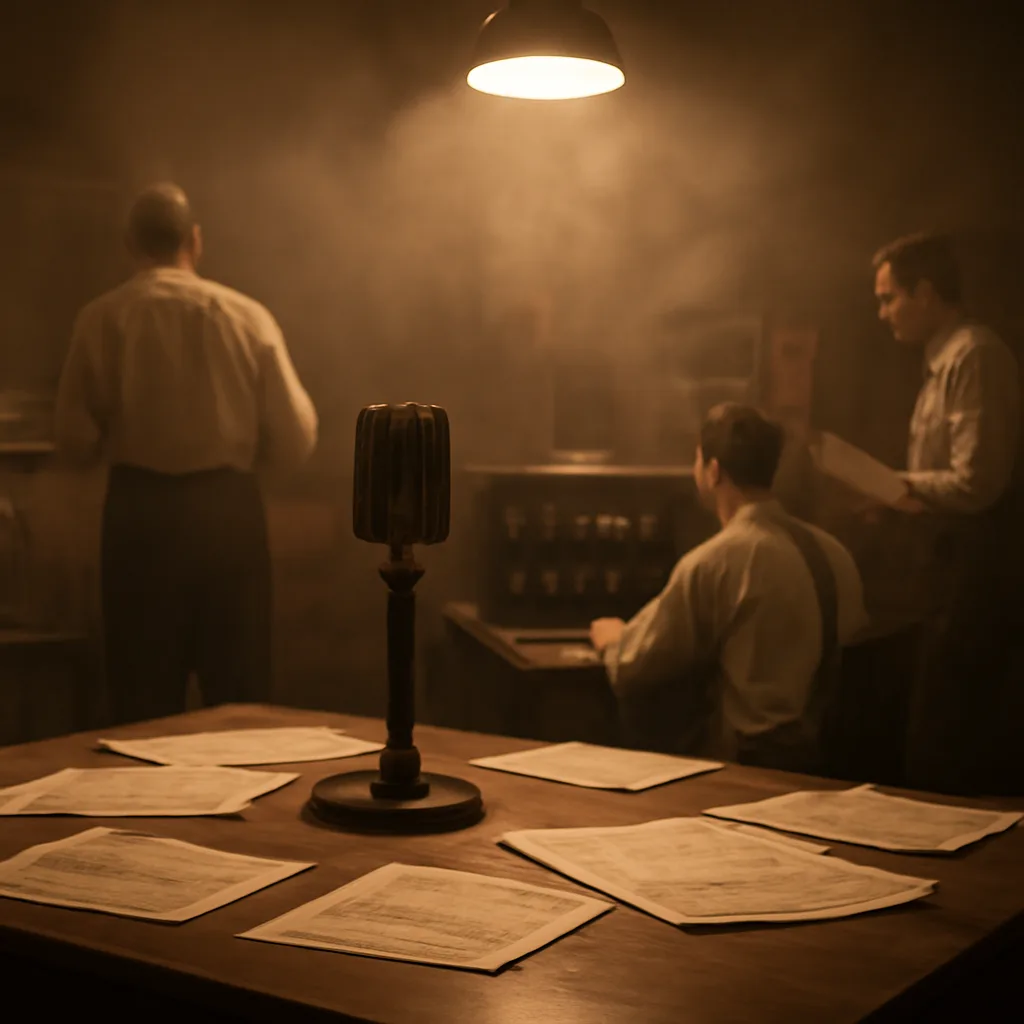
On the evening of October 30, 1938, the CBS radio series The Mercury Theatre on the Air presented a 60-minute adaptation of H. G. Wells’s The War of the Worlds, directed and narrated by Orson Welles. The program used a breaking-news format and simulated news bulletins describing a Martian invasion of Earth centered on Grovers Mill, New Jersey. The production aimed for dramatic immediacy but began with a standard announcement that it was a dramatization; that announcement was made after the program’s opening musical number in some versions, and some listeners tuning in late missed it. Contemporary newspapers and officials reported that the broadcast caused widespread panic, with accounts of stampedes, disrupted traffic, and calls to police and newspapers. Sensational newspaper coverage the next day amplified those claims. Media scholars and historians who have examined archival documents, listener surveys, police records and contemporaneous press coverage conclude that panic occurred in some places but was far from universal. Many listeners were aware of the program’s fictional nature; others were alarmed, especially where local radio schedules or announcer conventions differed, or where listeners were predisposed to fear due to the international tensions of the late 1930s. Key factors help explain why reports of panic were overstated. Newspapers faced economic and competitive pressure and sometimes used dramatic headlines to sell papers. Radio stations, networks and their sponsors—caught between the program’s popularity and the resulting outrage—also had incentives to shape the narrative. Subsequent academic studies, notably analyses of audience research and original police records, show that calls to authorities were often routine inquiries or requests for information rather than reports of mass hysteria. Arrests and casualties directly attributed to the broadcast are not substantiated by reliable records. The event’s cultural impact, however, was real. The episode propelled Orson Welles and the Mercury Theatre to national fame and sparked debate about broadcast responsibility, media effects and regulatory oversight. The fallout helped prompt discussions within the Federal Communications Commission and influenced later broadcasting practices, including clearer disclaimers and changes in how news formats were used for drama. The War of the Worlds broadcast has persisted in public memory as an emblematic case study in media influence, often simplified into a parable about mass gullibility. Historians stress nuance: the broadcast revealed both the power of radio drama and the complexities of measuring public reaction. The incident also illustrates how secondary reporting and institutional interests can shape collective memory. While instances of fear and confusion did occur, the widely repeated image of nationwide panic is largely a creation of contemporary sensationalism and later repetition. The 1938 broadcast remains a turning point in American media history—important not because it caused a national catastrophe, but because it exposed how modern mass media, journalism and public perception interact under conditions of uncertainty.