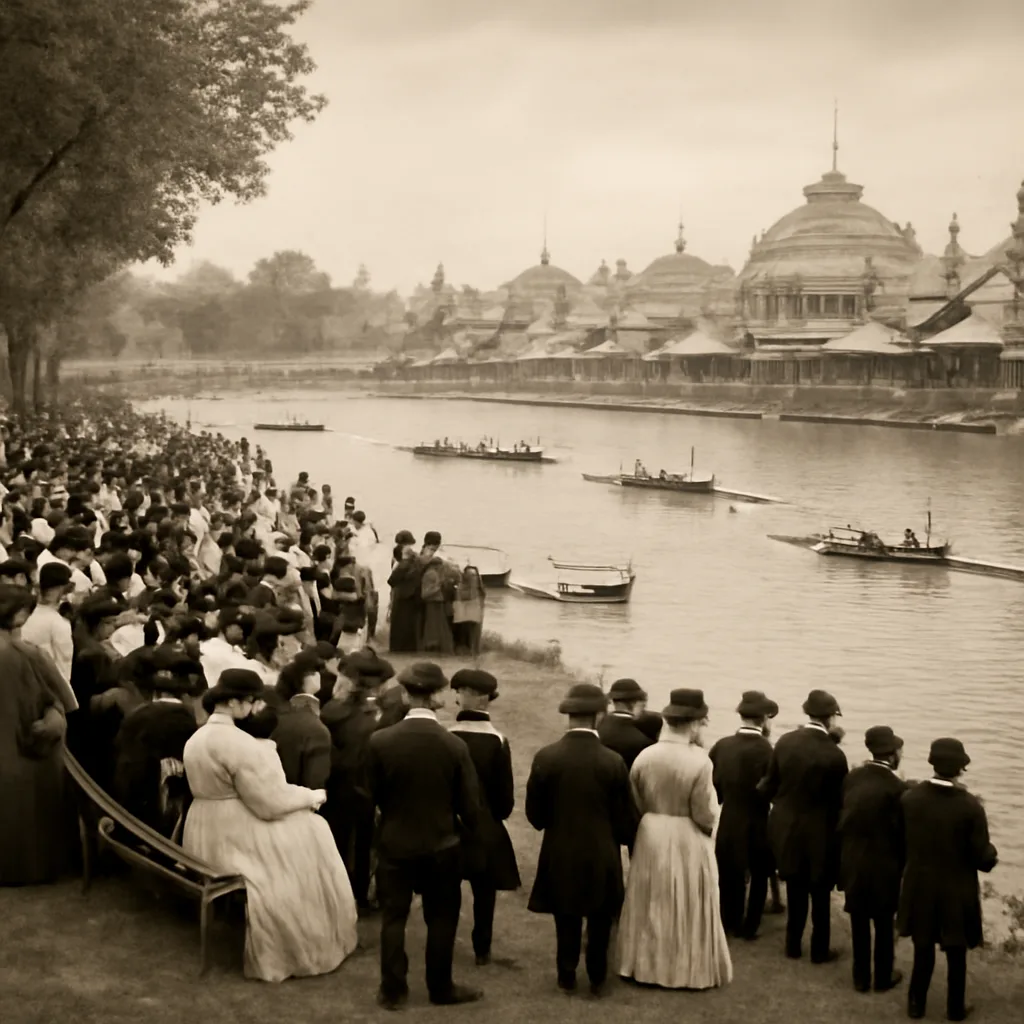
In 1896 Athens had hosted what is widely recognized as the first modern Olympic Games, organized under the leadership of Pierre de Coubertin. Two years later, during the Exposition Universelle in Paris, an array of international sporting contests took place beginning on 14 May 1900. These events—held over several months and integrated into the world’s fair—are commonly counted as the second modern Olympic Games, though their status and organization were markedly different from later Olympic editions. Organization and context The 1900 competitions were organized without a single, dedicated Olympic committee overseeing a compact, discrete programme. Instead, many events were administered by existing French sporting bodies and by Exposition organizers. The Games stretched from May to October, featured a wide variety of sports (including athletics, swimming, rowing, gymnastics, equestrian events, and others) and introduced several disciplines never repeated in the same form at later Olympics. Women competed for the first time in events such as tennis and golf. Venues and setting Events took place at multiple Paris-area sites: the Bois de Boulogne, the river Seine, and other grounds associated with the Exposition Universelle. The Exposition’s international and celebratory atmosphere meant that sporting contests were presented alongside industrial displays, cultural exhibitions, and amusement attractions. This blending of fair and sport contributed to contemporary confusion about which contests were explicitly “Olympic.” Participants and entries Athletes from numerous countries took part, though national teams were not organized in the compact national delegations familiar from later Games. Competitors often entered individually or represented clubs. Record keeping varied widely: some events documented winners carefully, while other contests left ambiguous status about whether they were Olympic events or part of the Exposition’s sporting programme. Legacy and controversies Historians and the International Olympic Committee (IOC) later retroactively classified many of the 1900 events as Olympic, but debate remains over which competitions should be counted. The informal, dispersed character of the Paris programme—its long duration, mixed organization, and reporting inconsistencies—contrasts with the standardized protocols developed for later Olympic Games. The 1900 Games are significant for expanding the international scope of modern Olympic competition and for the first participation by women, but they also highlight early organizational challenges in reviving an ancient tradition for the modern world. Notable facts - The 1900 competitions introduced several sports and experimental events; some never reappeared in later Olympics. - Women competed for the first time in Olympic-associated events (tennis and golf). - Many events were staged as part of the Exposition Universelle and lacked clear Olympic branding, producing historical uncertainty about the official Olympic programme. Conclusion The May 14 opening of competitive events in Paris in 1900 represents an important, if unconventional, chapter in Olympic history. While organizationally diffuse and sometimes ambiguous in status, the Paris contests extended the international revival started in Athens in 1896 and helped shape later efforts to standardize the Olympic movement.