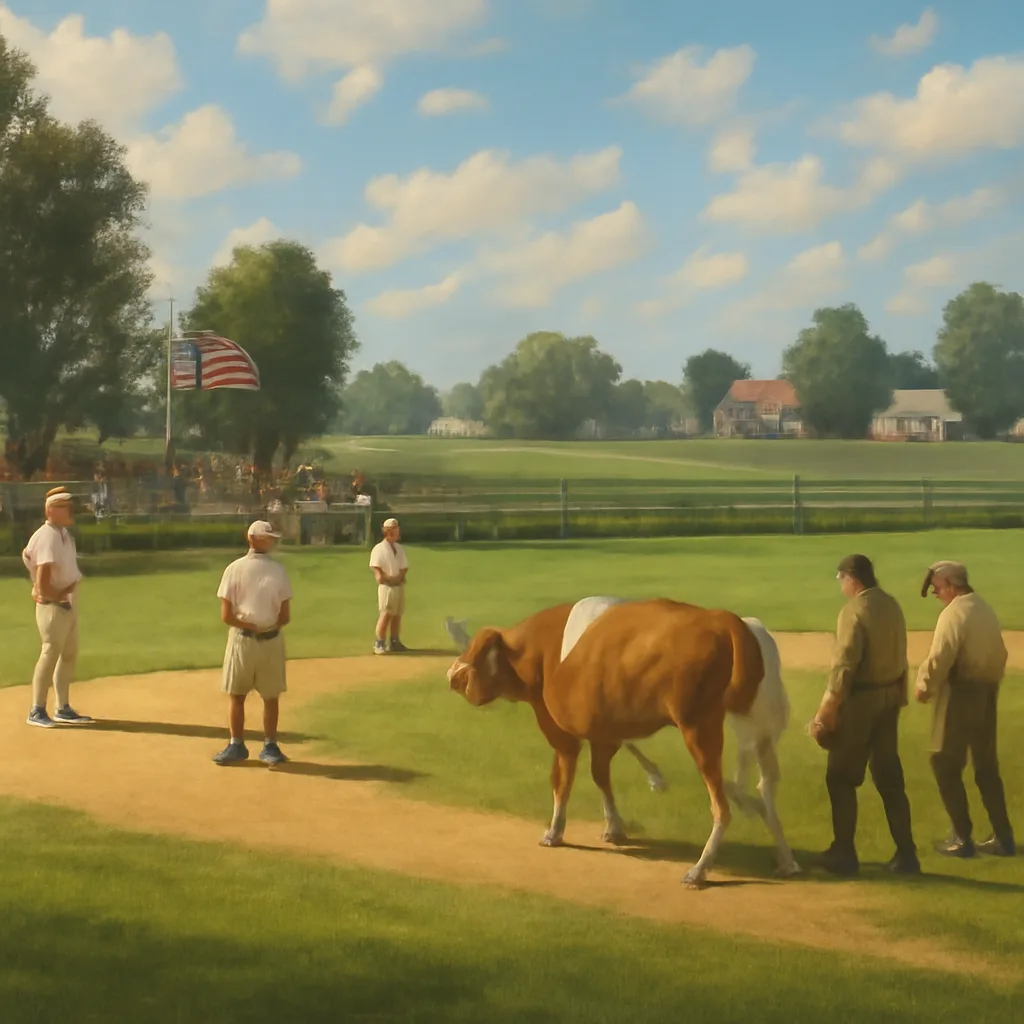
On July 4, play at a local baseball game was interrupted when a cow entered the field of play, causing officials to pause the game until the animal could be removed. The incident took place during a holiday contest where spectators had gathered to watch; the animal’s arrival prompted players and staff to step away from active play and for groundskeepers or animal handlers to guide the cow back to a safe area. Reports from similar incidents indicate that such interruptions are typically brief. Game officials generally follow safety protocols: halting play, keeping players and fans at a safe distance, and contacting whoever is responsible for the animal—often the owner or local animal control—so it can be returned to its enclosure. In many cases, no people are injured and property damage is minor, though officials inspect the field and equipment before resuming the game. The presence of livestock at sporting events is uncommon but not unprecedented, especially in venues near farms or rural areas where fences or barriers can fail. Factors that can allow a cow to reach a field include gaps in perimeter fencing, gates left open, or animals spooked by nearby noise such as fireworks, which are common on Independence Day. Organizers of events in such settings sometimes take extra precautions around holidays known for loud noises to prevent animals from becoming frightened and wandering. Eyewitness accounts of comparable events typically emphasize the novelty and humor of the situation rather than serious danger. Spectators often take photos or videos, and players may lull briefly before the game resumes once the animal is safely removed. Local authorities or venue staff usually conduct a quick assessment to ensure the playing surface is intact and that no equipment has been damaged. If the event’s date and location are of interest to local historians or reporters, verifying details with venue officials, animal control, or local law enforcement will provide authoritative accounts and any follow-up actions taken. Because specifics such as the animal’s ownership, whether anyone was injured, or the length of the delay vary by incident, those particulars should be confirmed from primary sources before being reported as fact. Incidents like this highlight the intersection of community events and rural life, especially on holidays when both people and animals may be more active or stressed. While unusual, these interruptions are typically resolved without lasting consequence and often become a lighthearted anecdote in local coverage of holiday festivities.