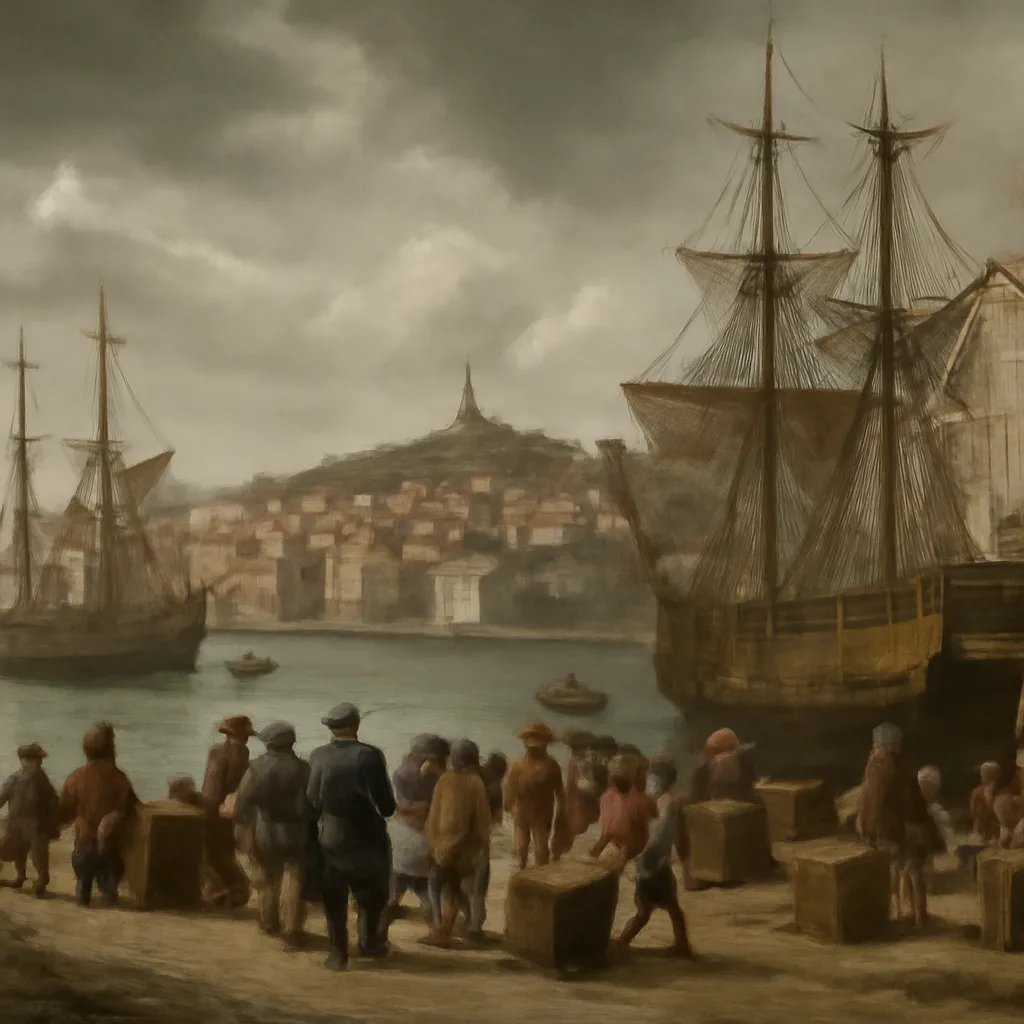
In late May 1720 the merchant ship Grand-Saint-Antoine arrived at the port of Marseille from the Levant carrying cargo and crew who were suspected of carrying infectious disease. Despite quarantine laws and the objections of local health officials, commercial pressure and political considerations led to the ship being allowed to unload. Within weeks, cases of fever and swollen buboes appeared among dockworkers and in the city. The disease spread rapidly through Marseille and then throughout Provence, producing what is often called the last major outbreak of bubonic plague on continental Europe. Contemporary physicians and later historians identified Yersinia pestis—the bacterium responsible for bubonic plague—as the cause, consistent with the constellation of symptoms reported: swollen lymph nodes (buboes), high fever, and rapid mortality in many victims. The plague in Marseille was not the first appearance of plague in early modern Europe, but it stands out for its scale in the 18th century and for the administrative and medical responses it provoked. Estimates of mortality vary by source and method. Marseille's population of roughly 90,000 before the outbreak is commonly cited; the city itself lost an estimated 30,000 people over the course of the epidemic. In the surrounding province of Provence, combined deaths may have reached 40,000–50,000 or more, though precise figures are disputed because of inconsistent record-keeping, migration, and secondary mortality from famine and disruption. Authorities attempted containment through cordons sanitaires, quarantines, and isolation hospitals (lazarets). Marseille's municipal council and royal officials both played roles, and their actions—sometimes contradictory—affected the course of the outbreak. Notably, the nearby island lazaret of Pomègues and other quarantine stations were used, but enforcement was uneven. The experience exposed weaknesses in existing public-health institutions and prompted reforms in quarantine practice and municipal hygiene in France and elsewhere. Medical treatments of the time were limited and based on contemporary understandings of disease: bloodletting, purgatives, and topical remedies were commonly used, often with little benefit. Some practitioners advocated for aggressive isolation and disinfection measures. Religious and social responses were profound: public processions were restricted or banned at various points; burial practices changed to cope with high mortality; and social tensions rose as panic, flight, and scapegoating occurred alongside charitable efforts. The Marseille outbreak had wider political and economic effects. Trade was disrupted as ports closed or imposed stricter controls; the crisis revealed conflicts between commercial interests and public health priorities. Following the epidemic, French and other European officials reviewed and adjusted quarantine regulations, and the episode became a touchstone in debates over state responsibility for epidemic control. While historians continue to debate details—exact death tolls, the full chain of infection, and the weight given to specific policy decisions—the broad outline is well established: the arrival and unloading of an infected ship in Marseille in 1720 triggered a major plague epidemic that caused substantial mortality, revealed limits in early 18th‑century public-health systems, and influenced subsequent approaches to epidemic management in Europe.