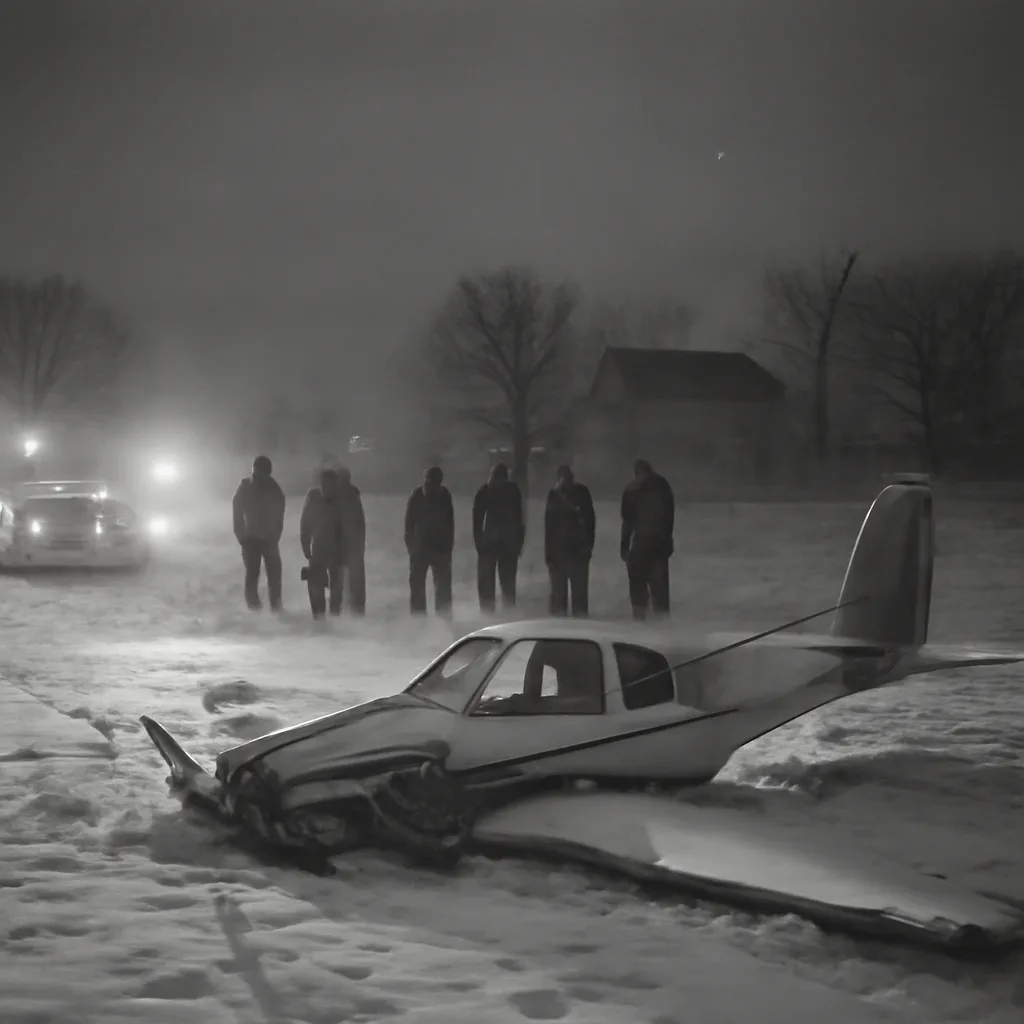
Plane crash on Feb. 3, 1959, kills Buddy Holly and two other musicians
On February 3, 1959, a small charter plane carrying rock-and-roll musicians Buddy Holly, Ritchie Valens and J.P. “The Big Bopper” Richardson crashed shortly after takeoff near Clear Lake, Iowa, killing all on board and marking a turning point in popular music history.
On the night of February 2–3, 1959, three rising stars of early rock and roll—singer-songwriter Buddy Holly, singer Ritchie Valens and disc jockey–musician J.P. “The Big Bopper” Richardson—died when the small charter plane that had transported them from Fargo, North Dakota, to a show in Clear Lake, Iowa, crashed shortly after takeoff. The pilot, Roger A. Peterson, also perished. The incident came during the “Winter Dance Party” tour, a grueling multi-city itinerary that had long bus rides between venues and was already plagued by cold weather and mechanical problems with tour buses.
Background: the tour and the decision to fly
The Winter Dance Party tour featured several acts traveling by bus between Midwest towns in January and early February 1959. On February 2, after a concert in Moorhead, Minnesota, near Fargo, the tour bus suffered heating and mechanical issues, and the long, overnight drive to the next venue in Clear Lake prompted frustration among the performers. Buddy Holly, who had chartered the single-engine Beechcraft Bonanza 35 to reach the next stop more quickly, gave up his seat on the plane to Richardson, who was suffering from flu. Ritchie Valens, who had been unable to secure a seat on the bus and unsuccessfully sought to find another ride, got a seat on the plane. The assignment of seats has been widely recounted and is sometimes described as decided by a coin toss, though specific details have been subject to differing accounts.
The crash and immediate aftermath
Shortly after midnight on February 3, at about 1:00 a.m. local time, the plane took off from the Mason City Municipal Airport. Within minutes it crashed into a farm field near Clear Lake. All four people aboard were killed. Local responders and investigators arrived and soon determined there were no survivors. News of the deaths spread rapidly and shocked the public, given the performers’ youth and popularity.
Investigation and findings
The Civil Aeronautics Board (the predecessor of today’s National Transportation Safety Board) investigated the accident. Investigators concluded that the probable cause was pilot spatial disorientation in poor weather conditions—heavy snow and low visibility—combined with the pilot’s limited instrument flight experience and the aircraft’s limitations. The pilot, Roger Peterson, was 21 years old and relatively inexperienced in instrument flying. No mechanical defect was found to have caused the crash.
Impact and legacy
The deaths of Holly, Valens and Richardson were widely mourned and had an enduring cultural impact. The event was later dubbed “The Day the Music Died” in Don McLean’s 1971 song “American Pie,” a phrase that cemented the crash’s place in popular memory. Buddy Holly was 22, Ritchie Valens 17 and J.P. Richardson 28. Each had made notable contributions: Holly as an influential songwriter and bandleader whose work helped shape rock and pop recording practices; Valens as a pioneering Mexican-American rock-and-roll star; and Richardson as a popular radio personality and performer.
The crash prompted renewed attention to tour logistics and musician safety, and it remains one of the most discussed tragedies in rock history. Memorials and tributes have been established in Clear Lake and at other sites, and the accident has been the subject of books, documentaries and continued historical research. Some details of seating and the exact sequence of decisions that led to the three musicians boarding the plane have been recounted differently by participants and in later retellings; where accounts differ, historians note those discrepancies.
The crash stands as a defining and somber moment in 20th-century American music history, marking the abrupt loss of several young artists whose influence would continue to be felt for decades.